Seafarer Retention, Human Factors, and the Limits of Compliance with Claire Georgeson

Seafarer Retention, Human Factors, and the Limits of Compliance with Claire Georgeson

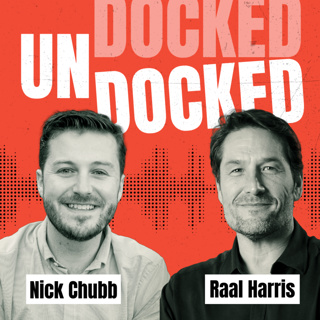
Claire Georgeson joins UnDocked to discuss why shipping’s human element remains under-measured despite mounting operational pressures. From piracy-era chartering to founding PsyFyi, she argues the industry must treat seafarers as strategic assets rather than operational costs. The conversation explores crew benchmarking, paperwork fatigue, retention risks, and the growing commercial value of human-centred operational data.

  • 03:03 Falling into shipping via dry bulk and Maersk Broker
  • 05:27 Commercial shipping culture and disconnect from seafarers
  • 10:57 What PsyFyi does and how the platform works
  • 12:48 Why Claire left Intertanko to found a company
  • 16:05 Data privacy, benchmarking, and owner reluctance
  • 20:09 Measuring organisational culture and communication gaps
  • 28:26 Asking better questions and listening properly
  • 30:45 Crew engagement rates and using WhatsApp at sea
  • 32:23 Charterers, paperwork fatigue, and operational impact
  • 37:48 OCIMF, human factors, and enclosed space fatalities
  • 42:00 Why shipping struggles to use human element data
  • 47:39 Linking crew data to operational KPIs
  • 50:09 Advice for women entering maritime
  • 51:21 Bootstrapping a maritime technology company

Claire Georgeson joins UnDocked to discuss one of shipping’s most persistent blind spots: the gap between operational performance and the lived reality of seafarers.

Drawing on a career spanning commercial tanker operations, Intertanko, and now her own company PsyFyi, Claire explains why she became increasingly concerned by the disconnect between shore-side commercial decision-making and the operational realities on board vessels. The conversation revisits piracy-era chartering decisions, the industry’s fixation on asset value, and the assumption that crew resilience can endlessly absorb operational pressure.

The discussion then turns to PsyFyi’s approach to collecting human element data directly from seafarers through low-friction messaging platforms such as WhatsApp and Telegram. Claire outlines how anonymised daily feedback allows owners to benchmark communication, motivation, recognition, safety culture, and organisational performance across fleets and crew populations.

Nick and Raal explore why shipping remains highly sophisticated in technical and commercial data collection, yet comparatively immature when it comes to understanding people. Claire argues that fragmented reporting structures, cultural gaps on board, paperwork fatigue, and charterer-driven administrative demands are now materially affecting vessel performance, retention, and safety outcomes.

The episode also examines enclosed space fatalities, the limits of traditional training approaches, and the growing focus on human factors from organisations such as OCIMF. Throughout, the conversation returns to a central question: if seafarers are fundamental to operational performance, why are they still largely treated as a cost centre rather than a strategic asset?

Episode Partner

This episode is sponsored by Danelec.

Danelec’s new report, The Great Integration, explores why shipping’s growing volume of disconnected systems and operational data is undermining decision-making across the industry. Produced with Thetius, the report examines how owners can move from fragmented tools to integrated operational intelligence.

Download the report here

Denne episoden er hentet fra en åpen RSS-feed og er ikke publisert av Podme. Den kan derfor inneholde annonser.

Episoder(63)

Shipping’s 2050 Fuel Forecast, Helium Supply Shortages, and 54,000 Sea Miles for One Sausage Roll

Shipping’s 2050 Fuel Forecast, Helium Supply Shortages, and 54,000 Sea Miles for One Sausage Roll

This week, Nick and Raal examine how geopolitical disruption is exposing hidden dependencies across shipping: from helium shortages and future-fuel investment choices to soaring freight markets and cy...

24 Sep 54min

Could Crew Welfare Decide Who Gets Fuel, South Korea's Public AI Bet, and Armageddon

Could Crew Welfare Decide Who Gets Fuel, South Korea's Public AI Bet, and Armageddon

This week, Nick and Raal ask whether bunker suppliers could become an unlikely force for crew welfare, examine why the world map may finally change, and explore South Korea’s bet on sovereign AI. They...

17 Sep 57min

What SMM 2026 Signals for Shipping, the Rise of the Meat Proxy, and the Return of the Spreadsheet

What SMM 2026 Signals for Shipping, the Rise of the Meat Proxy, and the Return of the Spreadsheet

Nick returns from SMM Hamburg with a read on where maritime innovation is actually moving: wind propulsion, nuclear, AI, class and new technology hubs. Raal then digs into digital judgement, conflicti...

10 Sep 53min

Shipping’s Digital Ambition Is Outpacing Its IT Maturity, with Steven Hemmings

Shipping’s Digital Ambition Is Outpacing Its IT Maturity, with Steven Hemmings

Steve Hemmings joins Nick and Raal to examine why maritime IT maturity still lags other sectors, what shipping can learn from cruise and banking, and why cyber resilience, asset visibility, data archi...

3 Sep 56min

Who’s Liable When Ship Control Moves Ashore? Cyber Risk and Maritime Law

Who’s Liable When Ship Control Moves Ashore? Cyber Risk and Maritime Law

This week, Nick and Raal examine what happens when maritime technology moves faster than the legal frameworks around it, from remote ship control and pollution liability to cyber risk and seaworthines...

27 Aug 59min

Extreme Heat Hits Trade, Ships Generate Green Hydrogen, and AI Content Gets Watermarked

Extreme Heat Hits Trade, Ships Generate Green Hydrogen, and AI Content Gets Watermarked

Nick Chubb and Raal Harris examine how extreme heat is reshaping trade, from Rhine water levels and Panama Canal draught limits to pressure on energy systems. They also explore Drift Energy’s hydrogen...

20 Aug 57min

Why AI Could Make Markets More Volatile and Bridgetown’s $500k Port Transformation

Why AI Could Make Markets More Volatile and Bridgetown’s $500k Port Transformation

Nick and Raal examine what good maritime digital transformation looks like, from Bridgetown Port’s low-cost community system to shared vessel inspections and procurement pooling. They then explore AI’...

13 Aug 1h 1min

Are We Making Seafaring Harder Than It Needs to Be? With Steven Jones

Are We Making Seafaring Harder Than It Needs to Be? With Steven Jones

Steven Jones joins Nick Chubb and Raal Harris to examine what the latest Seafarers Happiness Index reveals about life at sea, crew relationships, shore-based wellbeing.Chapters02:16 The origins of the...

6 Aug 57min
Populært innen Teknologi

teknisk-sett
lydartikler-fra-aftenposten
tomprat-med-gunnar-tjomlid
energi-og-klima
elektropodden
hans-petter-og-co
rss-ki-praten
shifter
smart-forklart
rss-alt-som-gar-pa-strom
nasjonal-sikkerhetsmyndighet-nsm
rss-ai-forklart
fornybaren
teknologi-og-mennesker
rss-teknologioptimistene-en-podkast-om-teknologi-og-mennesker
rss-snakk-om-sikkerhet
rss-ki-til-kaffen
pedagogisk-intelligens
rss-alt-vi-kan
rss-heis