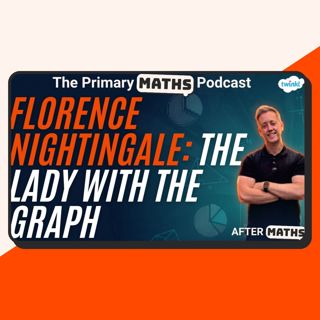
Florence Nightingale: The Lady with the Graph

Florence Nightingale: The Lady with the Graph

In this lighter half-term Aftermaths episode, Jon and Becky take a wander through some of the unexpected maths hiding in everyday life.

First up: Samba the escaped capybara, who, at the time of recording, was still causing confusion somewhere near Hampshire. Is it a capybara? Is it a muntjac deer? Has someone accidentally taken in the world’s largest “stray cat”? Hard to say.

Becky then takes us into the very British world of weather watching, comparing forecasts, choosing the one we like best, and wondering what a “40% chance of rain” actually means. Along the way, there’s discussion of probability, percentages, wind speed, temperature, 24-hour time, tide times, and the slightly chaotic business of trying to predict British weather.

Jon then shares the story of Florence Nightingale, not just as “the Lady with the Lamp”, but as something else entirely: the Lady with the Graph. Through her use of statistics, record keeping and visual data, Nightingale helped show that far more soldiers were dying from disease and poor hospital conditions than from battle wounds. Her famous polar area diagram became a powerful argument for reform, showing how maths can be used not just to describe the world, but to change it. The Science Museum describes her diagram as showing causes of soldiers’ deaths across two years in Crimea, while the National Army Museum notes the dire conditions at Scutari, where the hospital was dirty, vermin-ridden and lacking basic equipment.

There’s also a Derbyshire connection, as Jon explains Florence Nightingale’s links to Lea Hurst near Matlock, the Nightingale family’s Derbyshire home.

In this episode
  • The ongoing mystery of Samba the capybara
  • Why weather apps are full of maths
  • What “chance of rain” really means
  • British weather, rounding, chaos theory and hedging your bets
  • Florence Nightingale’s Derbyshire connections
  • How Nightingale used data visualisation to argue for hospital reform
  • Why graphs can sometimes tell a story more powerfully than tables of numbers

Denne episoden er hentet fra en åpen RSS-feed og er ikke publisert av Podme. Den kan derfor inneholde annonser.

Episoder(90)

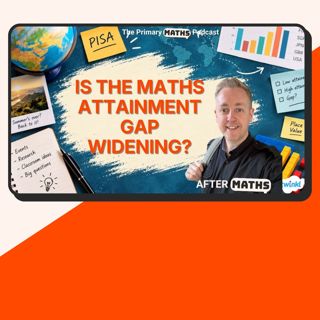
Is the maths attainment gap getting wider?

Is the maths attainment gap getting wider?

Why do some pupils seem to thrive in maths while others struggle to access the same lesson?Jon and Becky discuss the latest PISA findings and the widening gap between higher and lower attainers, befor...

18 Sep 38min
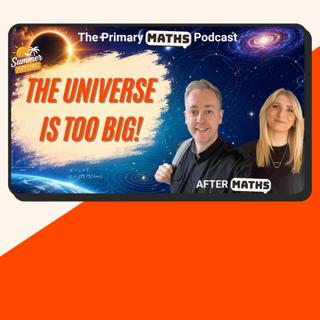
How Big Is the Universe? | AfterMaths Summer Special

How Big Is the Universe? | AfterMaths Summer Special

How can the universe be 13.8 billion years old but the observable universe be around 93 billion light years across?In this AfterMaths Summer Special, Jon is joined by primary science specialist Sarah ...

4 Sep 42min

Can Maths Help You Win at Games?

Can Maths Help You Win at Games?

Can maths help you win at games?In this AfterMaths Summer Special, Jon and Becky explore the line between luck and strategy — and whether understanding the maths behind a game can actually give you an...

28 Aug 25min
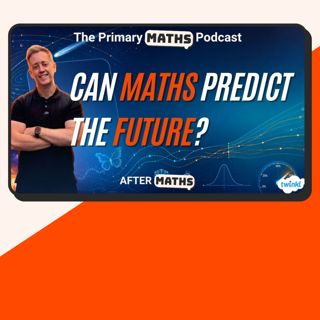
Can Maths Predict the Future?

Can Maths Predict the Future?

Can maths really predict the future?We can predict the return of a comet decades in advance, but tomorrow's weather can still catch us completely by surprise. In this AfterMaths Summer Special, Jon an...

24 Aug 26min
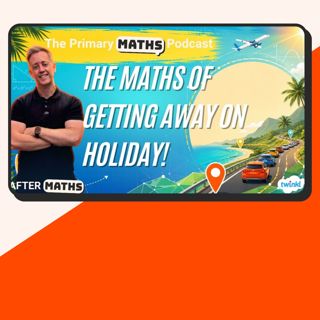
The Maths of Getting Away: Routes, Queues & Google Maps

The Maths of Getting Away: Routes, Queues & Google Maps

Podcast Show NotesWhat makes a route the best route? The shortest distance? The quickest journey? The cheapest option? Or simply whichever one Google tells you to take?In this AfterMaths Summer Specia...

21 Aug 31min
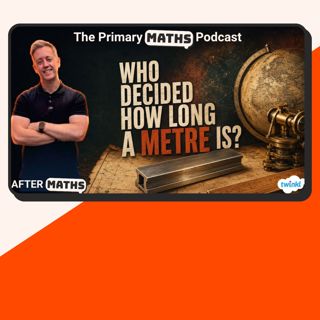
Who Decided How Long a Metre Is? AfterMaths Summer Special 3

Who Decided How Long a Metre Is? AfterMaths Summer Special 3

Who decided how long a metre should be? Why is a mile 1,760 yards? And what connects the French Revolution, an expedition from Dunkirk to Barcelona and the speed of light?In this AfterMaths Summer Spe...

7 Aug 22min
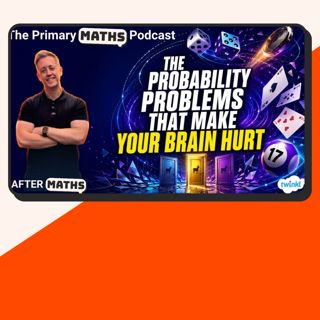
The Probability Problems That Make Your Brain Hurt - AfterMaths Summer Special 2 2026

The Probability Problems That Make Your Brain Hurt - AfterMaths Summer Special 2 2026

Probability often feels as though it should be intuitive, right up until the mathematics tells us that our instincts are completely wrong.In this AfterMaths Summer Special, Jon and Becky explore the s...

31 Jul 30min
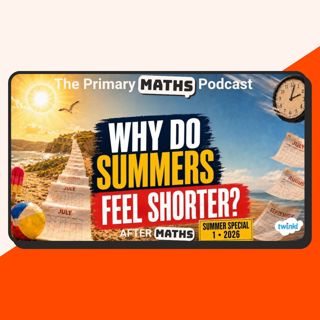
Why Do Summer Holidays Feel Shorter As We Get Older? Summer Special 1 2026

Why Do Summer Holidays Feel Shorter As We Get Older? Summer Special 1 2026

Why did the six-week summer holiday feel endless when we were children, yet now seems to disappear almost as soon as it begins?In the first of the 2026 Aftermaths Summer Specials, Jon and Becky explor...

28 Jul 29min

Populært innen Fakta

fastlegen
dine-penger-pengeradet
relasjonspodden-med-dora-thorhallsdottir-kjersti-idem
rss-strid
treningspodden
foreldreradet
rss-bisarr-historie
jakt-og-fiskepodden
rss-orjasater
hverdagspsyken
rss-kunsten-a-leve
takk-og-lov-med-anine-kierulf
sinnsyn
mikkels-paskenotter
rss-impressions-2
gravid-uke-for-uke
psykt-interessant
tomprat-med-gunnar-tjomlid
fryktlos
level-up-med-anniken-binz