New Rules For Heredity (Non-Mendelian Inheritance of Epigenetics) (EP 44)

New Rules For Heredity (Non-Mendelian Inheritance of Epigenetics) (EP 44)

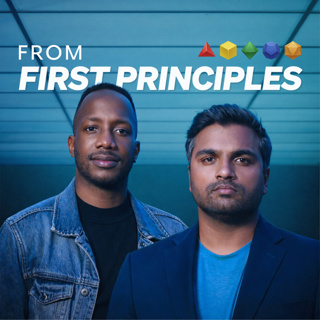
Hosted by Lester Nare and Krishna Choudhary, this episode marks Krishna’s return to the studio after paternity leave — and the timing could not be more fitting. Today’s deep dive is about inheritance: not just the classic Mendelian rules most of us learned in biology class, but the stranger, more dynamic world of non-Mendelian epigenetic inheritance.

Starting from Gregor Mendel and his pea plants, Lester and Krishna rebuild the foundations of genetics from first principles: dominant and recessive alleles, Punnett squares, chromosomes, fruit flies, DNA, and the physical mechanism behind inherited traits. Then they move into the “software layer” of biology: epigenetics, DNA methylation, chromatin packaging, RNA interference, and paramutation — cases where the genetic code is present, but the cell’s machinery silences or rewrites how that code is used.

The episode centers on a new Nature Genetics paper, “Non-Mendelian inheritance of DNA methylation patterns in mice,” which suggests that non-Mendelian epigenetic inheritance may be more widespread in mammals than previously understood. The conversation also covers why Oxford Nanopore sequencing made this kind of analysis possible, why methylation patterns can be hard to trace across generations, and what all of this could mean for disease risk, drug response, sex differences, evolution, and the long-running nature-versus-nurture debate.


Summary

  • Mendel’s rules — how pea plants, true-breeding lines, dominant and recessive traits, and Punnett squares gave us the first mathematical laws of inheritance.
  • The first cracks in Mendel — how chromosomes, fruit flies, sex-linked traits, and linked genes showed that inheritance is more complicated than independent assortment.
  • DNA as hardware, epigenetics as software — why having a gene is not the same thing as expressing it, and how methylation and chromatin packaging can silence parts of the genome.
  • Paramutation — how one allele can change the expression state of another allele across generations, creating inheritance patterns that do not follow standard Mendelian expectations.
  • Oxford Nanopore and the technology shift — why long-read sequencing and direct methylation detection make it possible to trace epigenetic marks back to the parent they came from.
  • The mouse methylation paper — how researchers used collaborative cross mice to show that most methylation inheritance looks Mendelian, but a meaningful fraction appears to follow stranger non-Mendelian rules.
  • Why it matters — potential implications for clinical genetics, disease risk, drug efficacy, sex-specific biology, and the relationship between nature and nurture.

Support the show

Donate: FFPod.com/donate
Follow: @FFPod on X / Instagram / TikTok / Facebook

Denne episoden er hentet fra en åpen RSS-feed og er ikke publisert av Podme. Den kan derfor inneholde annonser.

Episoder(58)

What OpenAI Actually Did to Navier-Stokes (EP 58)

What OpenAI Actually Did to Navier-Stokes (EP 58)

What does it mean to solve an equation that describes almost every fluid around us, from the air over a wing to the water swirling down a drain?In Episode 58 of From First Principles, Lester Nare and ...

24 Sep 4h 9min

What’s Next in Science? Nobel Prizes, Space Missions & More (EP 57)

What’s Next in Science? Nobel Prizes, Space Missions & More (EP 57)

What science should you be watching this fall? From Nobel Prize season to NASA’s Roman Space Telescope, Mars’ moons and Mercury, Lester Nare and Krishna Choudhary take a relaxed tour of the discoverie...

14 Sep 1h 3min

The Yak Mutation That Could Help Repair the Brain (EP 56)

The Yak Mutation That Could Help Repair the Brain (EP 56)

What can a yak living thousands of meters above sea level teach us about repairing the human brain?In Episode 56 of From First Principles, Lester Nare and Krishna Choudhary break down a new Neuron pap...

7 Sep 1h 35min

Why Spin Qubits Will Win the Quantum Race (Part 2) (EP 55)

Why Spin Qubits Will Win the Quantum Race (Part 2) (EP 55)

Which quantum computer will actually scale?In Part 2 of our quantum computing deep dive, Lester Nare and Krishna Choudhary move from theory to hardware—comparing superconducting qubits, trapped ions, ...

31 Aug 3h 46min

How Quantum Computing Actually Works (Part 1) (EP 54)

How Quantum Computing Actually Works (Part 1) (EP 54)

Quantum computers do not simply “try every answer at once.” So what do they actually do—and why have governments and technology companies spent billions trying to build them?In Part 1 of our two-part ...

20 Aug 2h 11min

What Claude Actually Did to the Riemann Hypothesis (EP 53)

What Claude Actually Did to the Riemann Hypothesis (EP 53)

Claude did not solve the Riemann Hypothesis. But what it actually did may be one of the clearest examples yet of how rapidly AI systems are changing the way difficult mathematics can be attacked.In Ep...

14 Aug 1h 47min

The Amazon’s Hidden Civilization (One Year Anniversary) (EP 52)

The Amazon’s Hidden Civilization (One Year Anniversary) (EP 52)

In this anniversary episode, Lester Nare and Krishna Choudhary look back at how two longtime friends turned their regular conversations about science into a show now shared by millions of people aroun...

6 Aug 1h 47min

The Tech Elon Has Been Waiting For (EP 51)

The Tech Elon Has Been Waiting For (EP 51)

What happens when electronics can operate at temperatures hot enough to melt aluminum?In this deep-dive episode, Lester Nare and Krishna Choudhary examine a new high-temperature memory device develope...

31 Jul 1h 44min

Populært innen Vitenskap

fastlegen
romkapsel
tingenes-tilstand
jss
liberal-halvtime
forskningno
rekommandert
sinnsyn
tomprat-med-gunnar-tjomlid
villmarksliv
rss-paradigmepodden
fjellsportpodden
rss-nysgjerrige-norge
nordnorsk-historie
grunnstoffene
rss-rekommandert
tidlose-historier
rss-inn-til-kjernen-med-sunniva-rose
psykopoden
smart-forklart