Antibodies, Automation, and the Fight for Reproducibility (Alon Goren)

Antibodies, Automation, and the Fight for Reproducibility (Alon Goren)

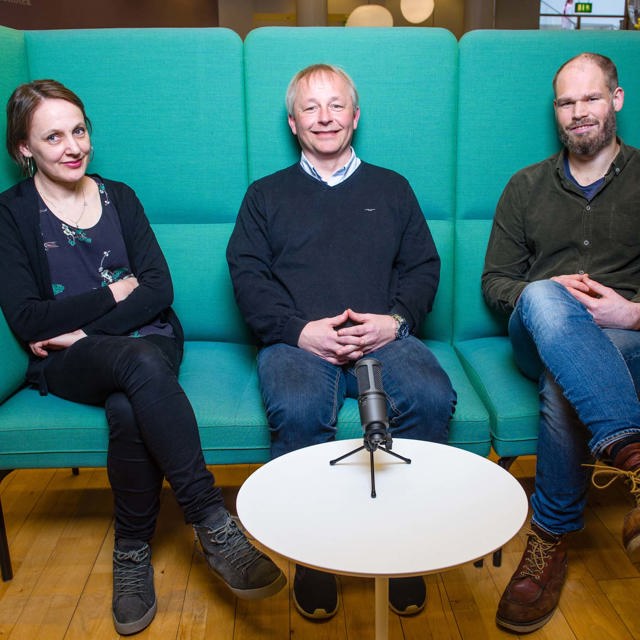
In this episode we speak with Alon Goren from UC San Diego about his work at the intersection of genomic technology development and chromatin biology. We discuss how his lab studies how the epigenome is regulated, how disruption of that regulation contributes to disease, and how technology can be improved to make results more robust and reproducible.

We talk about his early interest in biology, how that developed through medical research training, and how a molecular biology lab shaped the direction of his career. He explains how curiosity about how cells and organisms work led him toward genomics and chromatin research.

We then discuss several methods from his career, including early direct sequencing approaches for small amounts of DNA and RNA, ChIP-based methods for chromatin regulators, and work on improving ChIP-seq workflows. He explains why antibody choice matters, why monoclonal antibodies can improve reproducibility, and how automation helped scale the process.

We also cover his work on spike-in normalization, including the risks of using exogenous chromatin incorrectly and the need for better safeguards in genome-wide comparisons. He describes a newer approach that uses two spike-ins to provide multiple checks on normalization.

Finally, we discuss his work on short tandem repeats, zebrafish heart regeneration, and SIRT6-related polymerase pausing, as well as a newer platform that converts molecular interactions into sequencing-readable barcodes. He closes by stressing the importance of validation, careful protocol design, and methods that can be used reliably by multiple people.

References
  • Ram, O., Goren, A., Amit, I., Shoresh, N., Yosef, N., Ernst, J., Kellis, M., Gymrek, M., Issner, R., Coyne, M., Durham, T., Zhang, X., Donaghey, J., Epstein, C. B., Regev, A., & Bernstein, B. E. (2011). Combinatorial patterning of chromatin regulators uncovered by genome-wide location analysis in human cells. Cell, 147(7), 1628–1639. https://doi.org/10.1016/j.cell.2011.09.057
  • Busby, M., Xue, C., Li, C., Farjoun, Y., Gienger, E., Yofe, I., Gladden, A., Epstein, C. B., Cornett, E. M., Rothbart, S. B., Nusbaum, C., & Goren, A. (2016). Systematic comparison of monoclonal versus polyclonal antibodies for mapping histone modifications by ChIP-seq. Epigenetics & chromatin, 9, 49. https://doi.org/10.1186/s13072-016-0100-6
  • Patel, L. A., Cao, Y., Mendenhall, E. M., Benner, C., & Goren, A. (2024). The Wild West of spike-in normalization. Nature biotechnology, 42(9), 1343–1349. https://doi.org/10.1038/s41587-024-02377-y
  • Ben-Yair, R., Butty, V. L., Busby, M., Qiu, Y., Levine, S. S., Goren, A., Boyer, L. A., Burns, C. G., & Burns, C. E. (2019). H3K27me3-mediated silencing of structural genes is required for zebrafish heart regeneration. Development (Cambridge, England), 146(19), dev178632. https://doi.org/10.1242/dev.178632
  • Patel, L., Cao, Y., Xu, T., Modolo, E., Dishon, T., Zhang, L., Mendenhall, E., Heinz, S., Simon, I., Benner, C., & Goren, A. (2025). Improved spike-in normalization clarifies the relationship between active histone modifications and transcription. Genomics. https://doi.org/10.1101/2025.11.25.690627
  • Xu, T., Wang, J., Shin, Y., Cao, Y., Zhang, L., Modolo, E., Dishon, T., Fisher, J., Norton, M., Fry, C. J., Farjoun, Y., Mendenhall, E., Heinz, S., Benner, C., & Goren, A. (2026). Multiplexed measurements of protein-protein interactions and protein abundance across cellular conditions using Prod&PQ-seq. Genomics. https://doi.org/10.64898/2026.01.01.697286
Related Episodes Contact

Denne episoden er hentet fra en åpen RSS-feed og er ikke publisert av Podme. Den kan derfor inneholde annonser.

Episoder(184)

CpG Islands, Polycomb, and the Regulation of Transcription (Rob Klose)

CpG Islands, Polycomb, and the Regulation of Transcription (Rob Klose)

In this episode we speak with Rob Klose, Professor of Genetics at the University of Oxford, about how CpG islands help control gene expression and chromatin regulation during development. We discuss h...

24 Sep 40min

Epigenetics of the Cannabinoid System (Onder Albayram)

Epigenetics of the Cannabinoid System (Onder Albayram)

In this episode of the Epigenetics Podcast, we talked with Onder Albayram from the Medical University of South Carolina about the role of the endocannabinoid system in brain aging and neuroprotection....

10 Sep 46min

Chromatin State Reprogramming in Cancer Progression (Kunal Rai)

Chromatin State Reprogramming in Cancer Progression (Kunal Rai)

In this episode of the Epigenetics Podcast, we talked with Kunal Rai from MD Anderson Cancer Center about his work on chromatin state reprogramming in cancer progression. A major part of the convers...

27 Aug 45min

Statistical Physics Approaches to DNA Methylation and Aging (Steffen Rulands)

Statistical Physics Approaches to DNA Methylation and Aging (Steffen Rulands)

In this episode of the Epigenetics Podcast, we talked with Steffen Rulands from the Ludwig Maximilian University of Munich about how methods from statistical physics can be used to study collective ph...

13 Aug 54min

From GAL4 to targeted DAM-ID: Tools for Studying Gene Expression In Vivo (Andrea Brand)

From GAL4 to targeted DAM-ID: Tools for Studying Gene Expression In Vivo (Andrea Brand)

In this episode, we speak with Andrea Brand, Chair of the Department of Cell Biology at NYU Grossman School of Medicine and Director of the Regenerative Medicine Institute. We discuss her scientific p...

30 Jul 44min

Long-Term Maintenance of Neuronal Identity (Tomohisa Toda)

Long-Term Maintenance of Neuronal Identity (Tomohisa Toda)

In this episode of the Epigenetics Podcast, we talked with Tomohisa Toda from the Max-Planck-Zentrum für Physik und Medizin about his work on the long-term maintenance of neuronal identity, with a foc...

2 Jul 38min

Enhancer RNAs: Discovery and Function (Tae-Kyung Kim)

Enhancer RNAs: Discovery and Function (Tae-Kyung Kim)

In this episode of the Epigenetics Podcast, we talked with Tae-Kyung Kim from POSTECH in South Korea about the discovery and characterisation of enhancer RNAs. Dr. Kim describes joining Danny Reinbe...

18 Jun 43min

Populært innen Vitenskap

fastlegen
romkapsel
tingenes-tilstand
jss
liberal-halvtime
forskningno
sinnsyn
rekommandert
villmarksliv
rss-paradigmepodden
fjellsportpodden
tomprat-med-gunnar-tjomlid
grunnstoffene
nordnorsk-historie
rss-nysgjerrige-norge
tidlose-historier
psykopoden
rss-rekommandert
rss-inn-til-kjernen-med-sunniva-rose
smart-forklart