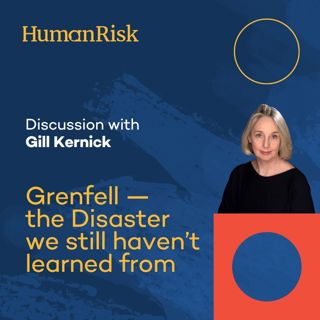
Gill Kernick on Grenfell -  the disaster we still haven't learned from

Gill Kernick on Grenfell - the disaster we still haven't learned from

When something goes badly wrong, we investigate it. Reports are written. Recommendations are made. Lessons are identified. But do we actually learn them?

Episode Summary
Returning to the show, Gill Kernick joins me to discuss the substantially revised second edition of her book about the Grenfell Tower disaster, following the publication of the Grenfell Inquiry's final report. Gill has a unique perspective on Grenfell. She lived on the 21st floor of the tower before moving out three years before the fire. Professionally, she has spent decades helping organisations in high-hazard industries understand leadership, safety and major accidents.

When Gill first appeared on the podcast, the Inquiry was still underway. Seven years later, its conclusions have revealed an even more disturbing picture—not of one catastrophic mistake, but of systemic failure involving government, regulators, manufacturers, certification bodies and the construction industry.

But this episode isn't just about Grenfell. It's about why organisations struggle to learn from failure, why compliance isn't the same as understanding, why we crave simple explanations for complex problems, and why genuine learning is much harder than writing another report. If you haven't already listened to Gill's previous appearances on the podcast, I'd strongly recommend doing so. Together, the conversations chart how understanding evolves as new evidence emerges.

What you'll learn In this episode
In a wide-ranging discussion, we explore:
  • Why Gill decided to write a second edition after the Grenfell Inquiry concluded
  • The shocking scale of the systemic failures uncovered by the Inquiry
  • Why disasters rarely have a single root cause
  • The hidden dangers of deregulation and "compliance theatre"
  • Why organisations identify lessons but rarely learn them
  • The importance of understanding the spirit—not just the letter—of regulation
  • Why complexity requires different kinds of leadership
  • How AI might help organisations learn lessons in real time
  • Why hope is, as Gill puts it, "an act of resistance"
AI-Generated.Timestamp Summary
00:00 – Do we really learn lessons from disasters?
02:45 – Gill's personal connection to Grenfell Tower
05:15 – Why the second edition became necessary after the Inquiry
06:30 – The Inquiry's most shocking findings
10:00 – When regulators knew the risks—but failed to act
12:00 – Implicit trust and why we rely on systems we don't understand
13:00 – Deregulation and the unintended consequences of political narratives
17:00 – Compliance versus understanding the intent behind regulation
20:00 – Why regulations struggle to keep pace with technology and complexity
24:00 – Hope as an act of resistance 25:00 – Why we don't actually learn lessons
27:00 – Is a seven-year inquiry too long?
33:00 – Why "post-Grenfell" reforms miss the real point
37:00 – Communities of grief and change
39:00 – Why Gill rewrote the book instead of writing a new one
44:00 – How the experience changed Gill's own thinking
50:00 – Speaking up in ways that actually get heard
53:30 – Practical advice for learning in complex systems
55:00 – "Lessons learning" instead of "lessons learned"
59:00 – Final reflections

Links
Gill's website, The Grenfell Enquirer


Her book 'Catastrophe & Systemic Change'

Gill's LinkedIn:


Her previous show appearancesTopics discussedPeople and ideas mentionedBackground incidents referenced

Denne episoden er hentet fra en åpen RSS-feed og er ikke publisert av Podme. Den kan derfor inneholde annonser.

Episoder(382)

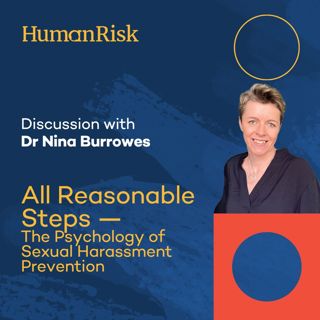
Dr Nina Burrowes on All Reasonable Steps: The Psychology of Sexual Harassment Prevention

Dr Nina Burrowes on All Reasonable Steps: The Psychology of Sexual Harassment Prevention

What does it actually take to prevent sexual harassment at work? Policies, training, reporting mechanisms and statements of zero tolerance are one thing. Creating a workplace where sexual harassment i...

25 Sep 1h 6min
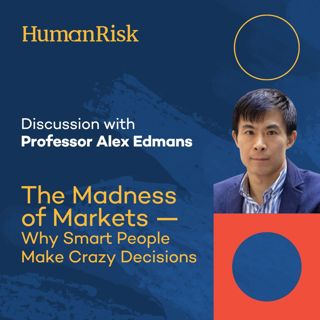
Professor Alex Edmans on the Madness of Markets — Why Smart People Make Crazy Decisions

Professor Alex Edmans on the Madness of Markets — Why Smart People Make Crazy Decisions

What can financial markets teach us about human behaviour? Why might the size of a CEO’s signature tell us something useful about the company they run? And why, even when smart investors know somethin...

13 Sep 1h 1min
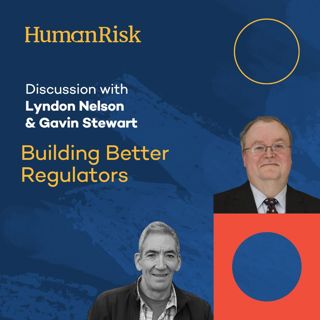
Lyndon Nelson & Gavin Stewart on Building Better Regulators

Lyndon Nelson & Gavin Stewart on Building Better Regulators

What if understanding regulation could help us spot when politicians are promising the impossible? Regulation sounds simple in theory. Something poses a risk, so we create rules and a regulator to con...

7 Sep 1h 23min
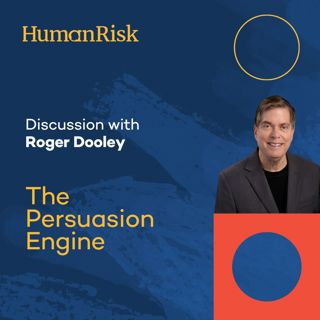
Roger Dooley on The Persuasion Engine

Roger Dooley on The Persuasion Engine

What if AI could help us understand people better, rather than simply replacing what humans do?Episode summaryHow can we use AI to become better at persuasion, communication and understanding human be...

1 Sep 59min
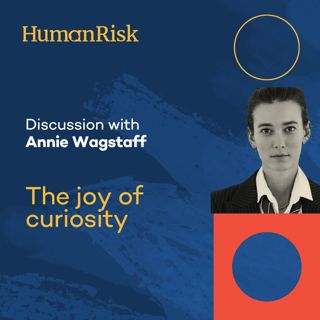
Annie Wagstaff on The Joy of Curiosity

Annie Wagstaff on The Joy of Curiosity

What’s the last thing you learned simply because you wanted to know?Episode summaryWhy do we feel the need to justify what we learn? My guest on this episode is Annie Wagstaff, a musician and composer...

23 Aug 1h
Paul Craven on Living With Uncertainty

Paul Craven on Living With Uncertainty

What happens when someone who spends his life thinking about risk, decision-making and human behaviour is confronted with an uncertainty he simply can’t control?Episode summaryMy guest is Paul Craven,...

15 Aug 51min
Benji Wilson on why we rate everything

Benji Wilson on why we rate everything

Why do we rate everything and why do we do so on a scale of one to five stars? What happens when systems designed to help us make better choices start influencing our behaviour in ways we don’t necess...

8 Aug 1h 4min
Mark Heywood on The Stories We Tell About Ourselves

Mark Heywood on The Stories We Tell About Ourselves

What parts of yourself have you learned to hide in order to be taken seriously? My guest on this episode is Mark Heywood, a friend of the show, returning guest and someone I've collaborated with on a ...

2 Aug 1h 21min

Populært innen Vitenskap

fastlegen
romkapsel
tingenes-tilstand
jss
liberal-halvtime
forskningno
sinnsyn
rekommandert
villmarksliv
rss-paradigmepodden
fjellsportpodden
tomprat-med-gunnar-tjomlid
grunnstoffene
nordnorsk-historie
rss-nysgjerrige-norge
tidlose-historier
psykopoden
rss-rekommandert
rss-inn-til-kjernen-med-sunniva-rose
smart-forklart