Attachment Styles and the Neurology of Relationships
Trauma Rewired16 Feb 2021

Attachment Styles and the Neurology of Relationships

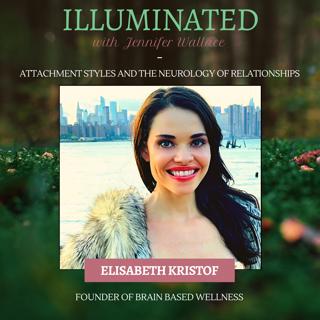
She's back ya'll, co-host Elisabeth Kristof, founder of Brain Based Wellness joins me again this week as we dive into attachment theory and share stories of our own relationships that highlight the research. We will be exploring the three attachment styles - anxious, dismissive, and fearful and how these relate to our dating styles and relationships with friends and the people that we care about.

In this episode, I share:

  • [3:52] In neurology there is no morality
  • [5:28] Early childhood development - Moms, don't be too hard on yourself
  • [6:07] Learning how to heal is our life's work
  • [6:34] Neurology is the science of hope
  • [8:00] Elisabeth shares the history of attachment theory
  • [10:54] Overlap between trauma response and attachment style
  • [12:45] Parental separation and codependency
  • [14:22] Five conditions that the attachment styles are based around
  • [15:08] Other areas of our lives that attachment styles show up
  • [16:13] Elisabeth shares her attachment styles in relation to her childhood
  • [18:58] Sacrificing yourself to get love from others
  • [21:31] My attachment styles in relation to my childhood
  • [24:06] Intimacy in avoidant dismissive attachment and anxious attachment
  • [25:23] Codependency in friendships
  • [30:44] It is normal to prioritize human connection
  • [31:30] When codependency becomes problematic
  • [32:24] Trauma bonds
  • [35:37] Somatic practices to self regulate
  • [36:29] The vagus nerve and dysregulation
  • [37:53] Regulating our nervous systems and healing trauma responses
  • [40:10] Life cycles of relationships
  • [43:10] Recovery from relationships and an increase in secure attachment
  • [44:32] Elisabeth shares how she regulates her nervous system
  • [46:24] Getting regulation from a variety of sources
  • [47:32] Thought loops are connected with physical sensations
  • [48:38] Inner child work
  • [50:57] Movement and affirmations
  • [52:14] Self-regulation, reflection, and stability in relationships


Resources From This Episode:

Take the 'Attachment Style Quiz' to find out your attachment style →HERE

Virtual Workshop 'Own Your Pleasure' → Get your tickets HERE

Friday, February 26, 6pm-8pm CST

~ Join Neuro Performance Specialist Elisabeth Kristof, and Embodied Healer Melanie Holst-Collins for a 2-hour virtual workshop.

Work with Jennifer

25% Off a Private Coaching Session → HERE

Work with Elisabeth

FREE intro to applied neurology course and morning practice → HERE

Connect with Jennifer

Website

Facebook

Instagram

Connect with Elizabeth

Website

Instagram

Facebook

Denne episoden er hentet fra en åpen RSS-feed og er ikke publisert av Podme. Den kan derfor inneholde annonser.

Episoder(302)

Why Post-Traumatic Growth Requires Nervous System Reorganization

Why Post-Traumatic Growth Requires Nervous System Reorganization

*]:pointer-events-auto R6Vx5W_threadScrollVars scroll-mb-[calc(var(--scroll-root-safe-area-inset-bottom,0px)+var(--thread-response-height))] scroll-mt-[calc(var(--header-height)+min(200px,max(70px,20s...

21 Sep 1h

How Trauma Creates High Achievers: Fight Response, Perfectionism & Burnout

How Trauma Creates High Achievers: Fight Response, Perfectionism & Burnout

Success can become a survival strategy when the nervous system learns that achievement equals safety. In this episode of Trauma Rewired, Jennifer Wallace and Elisabeth Kristof are joined by entreprene...

14 Sep 52min

Why Trauma Changes the Brain: Complex Trauma, Inflammation & Neuroplasticity

Why Trauma Changes the Brain: Complex Trauma, Inflammation & Neuroplasticity

Trauma doesn't just shape your memories. It changes how your brain predicts, interprets, and responds to the world. In this episode, Jennifer and Elisabeth sit down with clinical neuroscientist Dr. Mb...

7 Sep 1h 4min

Undiagnosed TBI: Why Brain Injuries Are Often Missed and Misunderstood

Undiagnosed TBI: Why Brain Injuries Are Often Missed and Misunderstood

Traumatic brain injuries are incredibly common, yet many mild TBIs and concussions go unrecognized. And when the symptoms of a brain injury overlap with the effects of complex trauma, it can become di...

31 Aug 49min

The Science of Feeling Safe in Your Body: Emotional Regulation and Trauma

The Science of Feeling Safe in Your Body: Emotional Regulation and Trauma

Episode Summary Why do you know you're safe logically, but your body still reacts as though you're in danger? Emotional regulation isn't about staying calm, avoiding difficult emotions, or suppressing...

24 Aug 1h 2min

Boundaries, Attachment, and the Fear of Losing Connection

Boundaries, Attachment, and the Fear of Losing Connection

Most people think boundaries are about saying "no," protecting themselves, or keeping others at a distance. But from a nervous system perspective, boundaries are something much deeper. They are not wa...

17 Aug 1h

Sexual Fawning: When Survival Gets Mistaken for Intimacy

Sexual Fawning: When Survival Gets Mistaken for Intimacy

Why do so many trauma survivors say "yes" when every part of their body is saying "no"? In this deeply compassionate episode of Trauma Rewired, Jennifer Wallace and Elisabeth Kristof are joined by som...

10 Aug 57min

The Fawn Response Explained

The Fawn Response Explained

The fawn response is one of the most common—and most misunderstood—trauma adaptations. While many people recognize it as people-pleasing, saying yes too often, or avoiding conflict, fawning is far mor...

3 Aug 55min

Populært innen Fakta

fastlegen
dine-penger-pengeradet
relasjonspodden-med-dora-thorhallsdottir-kjersti-idem
rss-strid
foreldreradet
treningspodden
jakt-og-fiskepodden
rss-bisarr-historie
rss-orjasater
hverdagspsyken
rss-kunsten-a-leve
sinnsyn
mikkels-paskenotter
takk-og-lov-med-anine-kierulf
branncast
level-up-med-anniken-binz
gravid-uke-for-uke
rss-impressions-2
psykt-interessant
fryktlos