#4 - Howie Lempel on pandemics that kill hundreds of millions and how to stop them

#4 - Howie Lempel on pandemics that kill hundreds of millions and how to stop them

What disaster is most likely to kill more than 10 million human beings in the next 20 years? Terrorism? Famine? An asteroid?

Actually it’s probably a pandemic: a deadly new disease that spreads out of control. We’ve recently seen the risks with Ebola and swine flu, but they pale in comparison to the Spanish flu which killed 3% of the world’s population in 1918 to 1920. A pandemic of that scale today would kill 200 million.

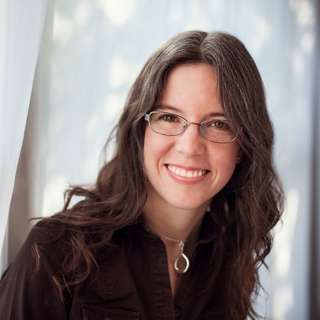
In this in-depth interview I speak to Howie Lempel, who spent years studying pandemic preparedness for the Open Philanthropy Project. We spend the first 20 minutes covering his work at the foundation, then discuss how bad the pandemic problem is, why it’s probably getting worse, and what can be done about it.

Full transcript, apply for personalised coaching to help you work on pandemic preparedness, see what questions are asked when, and read extra resources to learn more.

In the second half we go through where you personally could study and work to tackle one of the worst threats facing humanity.

Want to help ensure we have no severe pandemics in the 21st century? We want to help.

We’ve helped dozens of people formulate their plans, and put them in touch with academic mentors. If you want to work on pandemic preparedness safety, apply for our free coaching service.

APPLY FOR COACHING

2m - What does the Open Philanthropy Project do? What’s it like to work there?
16m27s - What grants did OpenPhil make in pandemic preparedness? Did they work out?
22m56s - Why is pandemic preparedness such an important thing to work on?
31m23s - How many people could die in a global pandemic? Is Contagion a realistic movie?
37m05s - Why the risk is getting worse due to scientific discoveries
40m10s - How would dangerous pathogens get released?
45m27s - Would society collapse if a billion people die in a pandemic?
49m25s - The plague, Spanish flu, smallpox, and other historical pandemics
58m30s - How are risks affected by sloppy research security or the existence of factory farming?
1h7m30s - What's already being done? Why institutions for dealing with pandemics are really insufficient.
1h14m30s - What the World Health Organisation should do but can’t.
1h21m51s - What charities do about pandemics and why they aren’t able to fix things
1h25m50s - How long would it take to make vaccines?
1h30m40s - What does the US government do to protect Americans? It’s a mess.
1h37m20s - What kind of people do you know work on this problem and what are they doing?
1h46m30s - Are there things that we ought to be banning or technologies that we should be trying not to develop because we're just better off not having them?
1h49m35s - What kind of reforms are needed at the international level?
1h54m40s - Where should people who want to tackle this problem go to work?
1h59m50s - Are there any technologies we need to urgently develop?
2h04m20s - What about trying to stop humans from having contact with wild animals?
2h08m5s - What should people study if they're young and choosing their major; what should they do a PhD in? Where should they study, and with who?
More...

Episoder(333)

#138 Classic episode – Sharon Hewitt Rawlette on why pleasure and pain are the only things that intrinsically matter

#138 Classic episode – Sharon Hewitt Rawlette on why pleasure and pain are the only things that intrinsically matter

What in the world is intrinsically good — good in itself even if it has no other effects? Over the millennia, people have offered many answers: joy, justice, equality, accomplishment, loving god, wisd...

22 Jan 20252h 25min
#134 Classic episode – Ian Morris on what big-picture history teaches us

#134 Classic episode – Ian Morris on what big-picture history teaches us

Wind back 1,000 years and the moral landscape looks very different to today. Most farming societies thought slavery was natural and unobjectionable, premarital sex was an abomination, women should obe...

15 Jan 20253h 40min

#140 Classic episode – Bear Braumoeller on the case that war isn’t in decline

#140 Classic episode – Bear Braumoeller on the case that war isn’t in decline

Is war in long-term decline? Steven Pinker's The Better Angels of Our Nature brought this previously obscure academic question to the centre of public debate, and pointed to rates of death in war to a...

8 Jan 20252h 48min

2024 Highlightapalooza! (The best of The 80,000 Hours Podcast this year)

2024 Highlightapalooza! (The best of The 80,000 Hours Podcast this year)

"A shameless recycling of existing content to drive additional audience engagement on the cheap… or the single best, most valuable, and most insight-dense episode we put out in the entire year, depend...

27 Des 20242h 50min

#211 – Sam Bowman on why housing still isn't fixed and what would actually work

#211 – Sam Bowman on why housing still isn't fixed and what would actually work

Rich countries seem to find it harder and harder to do anything that creates some losers. People who don’t want houses, offices, power stations, trains, subway stations (or whatever) built in their ar...

19 Des 20243h 25min
#210 – Cameron Meyer Shorb on dismantling the myth that we can’t do anything to help wild animals

#210 – Cameron Meyer Shorb on dismantling the myth that we can’t do anything to help wild animals

"I really don’t want to give the impression that I think it is easy to make predictable, controlled, safe interventions in wild systems where there are many species interacting. I don’t think it’s eas...

29 Nov 20243h 21min

#209 – Rose Chan Loui on OpenAI’s gambit to ditch its nonprofit

#209 – Rose Chan Loui on OpenAI’s gambit to ditch its nonprofit

One OpenAI critic calls it “the theft of at least the millennium and quite possibly all of human history.” Are they right?Back in 2015 OpenAI was but a humble nonprofit. That nonprofit started a for-p...

27 Nov 20241h 22min
#208 – Elizabeth Cox on the case that TV shows, movies, and novels can improve the world

#208 – Elizabeth Cox on the case that TV shows, movies, and novels can improve the world

"I think stories are the way we shift the Overton window — so widen the range of things that are acceptable for policy and palatable to the public. Almost by definition, a lot of things that are going...

21 Nov 20242h 22min

Populært innen Fakta

fastlegen
dine-penger-pengeradet
relasjonspodden-med-dora-thorhallsdottir-kjersti-idem
treningspodden
foreldreradet
rss-strid-de-norske-borgerkrigene
mikkels-paskenotter
jakt-og-fiskepodden
rss-bisarr-historie
sinnsyn
rss-sunn-okonomi
hverdagspsyken
rss-sarbar-med-lotte-erik
hagespiren-podcast
rss-kunsten-a-leve
gravid-uke-for-uke
level-up-med-anniken-binz
rss-kull
ukast
fryktlos