#13 - Claire Walsh on testing which policies work & how to get governments to listen to the results

#13 - Claire Walsh on testing which policies work & how to get governments to listen to the results

In both rich and poor countries, government policy is often based on no evidence at all and many programs don’t work. This has particularly harsh effects on the global poor - in some countries governments only spend $100 on each citizen a year so they can’t afford to waste a single dollar.

Enter MIT’s Poverty Action Lab (J-PAL). Since 2003 they’ve conducted experiments to figure out what policies actually help recipients, and then tried to get them implemented by governments and non-profits.

Claire Walsh leads J-PAL’s Government Partnership Initiative, which works to evaluate policies and programs in collaboration with developing world governments, scale policies that have been shown to work, and generally promote a culture of evidence-based policymaking.

Summary, links to career opportunities and topics discussed in the show.

We discussed (her views only, not J-PAL’s):

* How can they get evidence backed policies adopted? Do politicians in the developing world even care whether their programs actually work? Is the norm evidence-based policy, or policy-based evidence?
* Is evidence-based policy an evidence-based strategy itself?
* Which policies does she think would have a particularly large impact on human welfare relative to their cost?
* How did she come to lead one of J-PAL’s departments at 29?
* How do you evaluate the effectiveness of energy and environment programs (Walsh’s area of expertise), and what are the standout approaches in that area?
* 80,000 Hours has warned people about the downsides of starting your career in a non-profit. Walsh started her career in a non-profit and has thrived, so are we making a mistake?
* Other than J-PAL, what are the best places to work in development? What are the best subjects to study? Where can you go network to break into the sector?
* Is living in poverty as bad as we think?

And plenty of other things besides.

We haven’t run an RCT to test whether this episode will actually help your career, but I suggest you listen anyway. Trust my intuition on this one.

Episoder(333)

#28 - Owen Cotton-Barratt on why scientists should need insurance, PhD strategy & fast AI progresses

#28 - Owen Cotton-Barratt on why scientists should need insurance, PhD strategy & fast AI progresses

A researcher is working on creating a new virus – one more dangerous than any that exist naturally. They believe they’re being as careful as possible. After all, if things go wrong, their own life and...

27 Apr 20181h 3min
#27 - Dr Tom Inglesby on careers and policies that reduce global catastrophic biological risks

#27 - Dr Tom Inglesby on careers and policies that reduce global catastrophic biological risks

How about this for a movie idea: a main character has to prevent a new contagious strain of Ebola spreading around the world. She’s the best of the best. So good in fact, that her work on early detect...

18 Apr 20182h 16min
#26 - Marie Gibbons on how exactly clean meat is made & what's needed to get it in every supermarket

#26 - Marie Gibbons on how exactly clean meat is made & what's needed to get it in every supermarket

First, decide on the type of animal. Next, pick the cell type. Then take a small, painless biopsy, and put the cells in a solution that makes them feel like they’re still in the body. Once the cells a...

10 Apr 20181h 44min

#25 - Robin Hanson on why we have to lie to ourselves about why we do what we do

#25 - Robin Hanson on why we have to lie to ourselves about why we do what we do

On February 2, 1685, England’s King Charles II was struck by a sudden illness. Fortunately his physicians were the best of the best. To reassure the public they kept them abreast of the King’s treatme...

28 Mar 20182h 39min
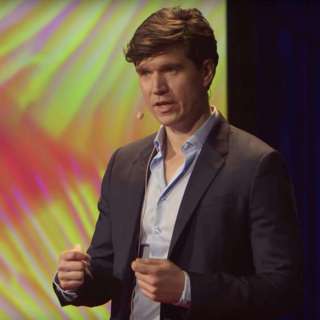
#24 - Stefan Schubert on why it’s a bad idea to break the rules, even if it’s for a good cause

#24 - Stefan Schubert on why it’s a bad idea to break the rules, even if it’s for a good cause

How honest should we be? How helpful? How friendly? If our society claims to value honesty, for instance, but in reality accepts an awful lot of lying – should we go along with those lax standards? Or...

20 Mar 201855min

#23 - How to actually become an AI alignment researcher, according to Dr Jan Leike

#23 - How to actually become an AI alignment researcher, according to Dr Jan Leike

Want to help steer the 21st century’s most transformative technology? First complete an undergrad degree in computer science and mathematics. Prioritize harder courses over easier ones. Publish at lea...

16 Mar 201845min

#22 - Leah Utyasheva on the non-profit that figured out how to massively cut suicide rates

#22 - Leah Utyasheva on the non-profit that figured out how to massively cut suicide rates

How people kill themselves varies enormously depending on which means are most easily available. In the United States, suicide by firearm stands out. In Hong Kong, where most people live in high rise ...

7 Mar 20181h 8min

#21 - Holden Karnofsky on times philanthropy transformed the world & Open Phil’s plan to do the same

#21 - Holden Karnofsky on times philanthropy transformed the world & Open Phil’s plan to do the same

The Green Revolution averted mass famine during the 20th century. The contraceptive pill gave women unprecedented freedom in planning their own lives. Both are widely recognised as scientific breakthr...

27 Feb 20182h 35min

Populært innen Fakta

fastlegen
dine-penger-pengeradet
relasjonspodden-med-dora-thorhallsdottir-kjersti-idem
rss-strid-de-norske-borgerkrigene
foreldreradet
mikkels-paskenotter
treningspodden
rss-bisarr-historie
jakt-og-fiskepodden
rss-sunn-okonomi
sinnsyn
tomprat-med-gunnar-tjomlid
rss-kunsten-a-leve
hagespiren-podcast
rss-bak-luftfarten
ukast
fryktlos
hverdagspsyken
rss-mind-body-podden
gravid-uke-for-uke