#25 - Robin Hanson on why we have to lie to ourselves about why we do what we do

#25 - Robin Hanson on why we have to lie to ourselves about why we do what we do

On February 2, 1685, England’s King Charles II was struck by a sudden illness. Fortunately his physicians were the best of the best. To reassure the public they kept them abreast of the King’s treatment regimen. King Charles was made to swallow a toxic metal; had blistering agents applied to his scalp; had pigeon droppings attached to his feet; was prodded with a red-hot poker; given forty drops of ooze from “the skull of a man that was never buried”; and, finally, had crushed stones from the intestines of an East Indian goat forced down his throat. Sadly, despite these heroic efforts, he passed away the following week.

Why did the doctors go this far?

Prof, Robin Hanson, Associate Professor of Economics at George Mason University suspects that on top of any medical beliefs they also had a hidden motive: it needed to be clear, to the king and the public, that the physicians cared enormously about saving His Royal Majesty. Only by going ‘all out’ would they be protected against accusations of negligence should the King die.

Full transcript, summary, and links to articles discussed in the show.

If you believe Hanson, the same desire to be seen to care about our family and friends explains much of what’s perverse about our medical system today.

And not just medicine - Robin thinks we’re mostly kidding ourselves when we say our charities exist to help others, our schools exist to educate students and our politics are about choosing wise policies.

So important are hidden motives for navigating our social world that we have to deny them to ourselves, lest we accidentally reveal them to others.

Robin is a polymath economist, who has come up with surprising and novel insight in a range of fields including psychology, politics and futurology. In this extensive episode we discuss his latest book with Kevin Simler, *The Elephant in the Brain: Hidden Motives in Everyday Life*, but also:

* What was it like being part of a competitor group to the ‘World Wide Web’, and being beaten to the post?
* If people aren’t going to school to learn, what’s education all about?
* What split brain patients tell us about our ability to justify anything
* The hidden motivations that shape religions
* Why we choose the friends we do
* Why is our attitude to medicine mysterious?
* What would it look like if people were focused on doing as much good as possible?
* Are we better off donating now, when we’re older, or even wait until well after our deaths?
* How much of the behavior of ‘effective altruists’ can we assume is genuinely motivated by wanting to do as much good as possible?
* What does Robin mean when he refers to effective altruism as a youth movement? Is that a good or bad thing?
* And much more...

Episoder(333)

#12 - Beth Cameron works to stop you dying in a pandemic. Here’s what keeps her up at night.

#12 - Beth Cameron works to stop you dying in a pandemic. Here’s what keeps her up at night.

“When you're in the middle of a crisis and you have to ask for money, you're already too late.” That’s Dr Beth Cameron, who leads Global Biological Policy and Programs at the Nuclear Threat Initiative...

25 Okt 20171h 45min

#11 - Spencer Greenberg on speeding up social science 10-fold & why plenty of startups cause harm

#11 - Spencer Greenberg on speeding up social science 10-fold & why plenty of startups cause harm

Do most meat eaters think it’s wrong to hurt animals? Do Americans think climate change is likely to cause human extinction? What is the best, state-of-the-art therapy for depression? How can we make ...

17 Okt 20171h 29min

#10 - Nick Beckstead on how to spend billions of dollars preventing human extinction

#10 - Nick Beckstead on how to spend billions of dollars preventing human extinction

What if you were in a position to give away billions of dollars to improve the world? What would you do with it? This is the problem facing Program Officers at the Open Philanthropy Project - people l...

11 Okt 20171h 51min
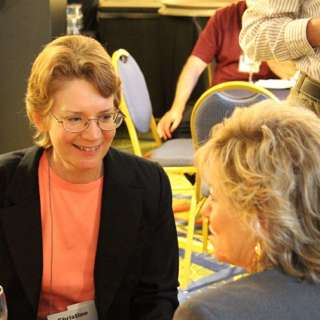
#9 - Christine Peterson on how insecure computers could lead to global disaster, and how to fix it

#9 - Christine Peterson on how insecure computers could lead to global disaster, and how to fix it

Take a trip to Silicon Valley in the 70s and 80s, when going to space sounded like a good way to get around environmental limits, people started cryogenically freezing themselves, and nanotechnology l...

4 Okt 20171h 45min
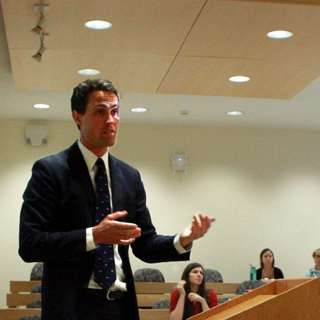
#8 - Lewis Bollard on how to end factory farming in our lifetimes

#8 - Lewis Bollard on how to end factory farming in our lifetimes

Every year tens of billions of animals are raised in terrible conditions in factory farms before being killed for human consumption. Over the last two years Lewis Bollard – Project Officer for Farm An...

27 Sep 20173h 16min

#7 - Julia Galef on making humanity more rational, what EA does wrong, and why Twitter isn’t all bad

#7 - Julia Galef on making humanity more rational, what EA does wrong, and why Twitter isn’t all bad

The scientific revolution in the 16th century was one of the biggest societal shifts in human history, driven by the discovery of new and better methods of figuring out who was right and who was wrong...

13 Sep 20171h 14min
#6 - Toby Ord on why the long-term future matters more than anything else & what to do about it

#6 - Toby Ord on why the long-term future matters more than anything else & what to do about it

Of all the people whose well-being we should care about, only a small fraction are alive today. The rest are members of future generations who are yet to exist. Whether they’ll be born into a world th...

6 Sep 20172h 8min
#5 - Alex Gordon-Brown on how to donate millions in your 20s working in quantitative trading

#5 - Alex Gordon-Brown on how to donate millions in your 20s working in quantitative trading

Quantitative financial trading is one of the highest paying parts of the world’s highest paying industry. 25 to 30 year olds with outstanding maths skills can earn millions a year in an obscure set of...

28 Aug 20171h 45min

Populært innen Fakta

fastlegen
dine-penger-pengeradet
relasjonspodden-med-dora-thorhallsdottir-kjersti-idem
rss-strid-de-norske-borgerkrigene
foreldreradet
mikkels-paskenotter
treningspodden
rss-bisarr-historie
jakt-og-fiskepodden
rss-sunn-okonomi
sinnsyn
tomprat-med-gunnar-tjomlid
rss-kunsten-a-leve
hagespiren-podcast
rss-bak-luftfarten
ukast
fryktlos
hverdagspsyken
rss-mind-body-podden
gravid-uke-for-uke