#28 - Owen Cotton-Barratt on why scientists should need insurance, PhD strategy & fast AI progresses

#28 - Owen Cotton-Barratt on why scientists should need insurance, PhD strategy & fast AI progresses

A researcher is working on creating a new virus – one more dangerous than any that exist naturally. They believe they’re being as careful as possible. After all, if things go wrong, their own life and that of their colleagues will be in danger. But if an accident is capable of triggering a global pandemic – hundreds of millions of lives might be at risk. How much additional care will the researcher actually take in the face of such a staggering death toll?

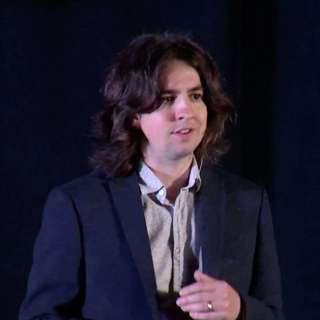
In a new paper Dr Owen Cotton-Barratt, a Research Fellow at Oxford University’s Future of Humanity Institute, argues it’s impossible to expect them to make the correct adjustments. If they have an accident that kills 5 people – they’ll feel extremely bad. If they have an accident that kills 500 million people, they’ll feel even worse – but there’s no way for them to feel 100 million times worse. The brain simply doesn’t work that way.

So, rather than relying on individual judgement, we could create a system that would lead to better outcomes: research liability insurance.

Links to learn more, summary and full transcript.

Once an insurer assesses how much damage a particular project is expected to cause and with what likelihood – in order to proceed, the researcher would need to take out insurance against the predicted risk. In return, the insurer promises that they’ll pay out – potentially tens of billions of dollars – if things go really badly.

This would force researchers think very carefully about the cost and benefits of their work – and incentivize the insurer to demand safety standards on a level that individual researchers can’t be expected to impose themselves.

***Get this episode by subscribing to our podcast on the world’s most pressing problems and how to solve them: type '80,000 Hours' into your podcasting app.***

Owen is currently hiring for a selective, two-year research scholars programme at Oxford.

In this wide-ranging conversation Owen and I also discuss:

* Are academics wrong to value personal interest in a topic over its importance?
* What fraction of research has very large potential negative consequences?
* Why do we have such different reactions to situations where the risks are known and unknown?
* The downsides of waiting for tenure to do the work you think is most important.
* What are the benefits of specifying a vague problem like ‘make AI safe’ more clearly?
* How should people balance the trade-offs between having a successful career and doing the most important work?
* Are there any blind alleys we’ve gone down when thinking about AI safety?
* Why did Owen give to an organisation whose research agenda he is skeptical of?

Get this episode by subscribing to our podcast on the world’s most pressing problems and how to solve them: search for '80,000 Hours' in your podcasting app.

The 80,000 Hours Podcast is produced by Keiran Harris.

Episoder(333)

#12 - Beth Cameron works to stop you dying in a pandemic. Here’s what keeps her up at night.

#12 - Beth Cameron works to stop you dying in a pandemic. Here’s what keeps her up at night.

“When you're in the middle of a crisis and you have to ask for money, you're already too late.” That’s Dr Beth Cameron, who leads Global Biological Policy and Programs at the Nuclear Threat Initiative...

25 Okt 20171h 45min
#11 - Spencer Greenberg on speeding up social science 10-fold & why plenty of startups cause harm

#11 - Spencer Greenberg on speeding up social science 10-fold & why plenty of startups cause harm

Do most meat eaters think it’s wrong to hurt animals? Do Americans think climate change is likely to cause human extinction? What is the best, state-of-the-art therapy for depression? How can we make ...

17 Okt 20171h 29min
#10 - Nick Beckstead on how to spend billions of dollars preventing human extinction

#10 - Nick Beckstead on how to spend billions of dollars preventing human extinction

What if you were in a position to give away billions of dollars to improve the world? What would you do with it? This is the problem facing Program Officers at the Open Philanthropy Project - people l...

11 Okt 20171h 51min
#9 - Christine Peterson on how insecure computers could lead to global disaster, and how to fix it

#9 - Christine Peterson on how insecure computers could lead to global disaster, and how to fix it

Take a trip to Silicon Valley in the 70s and 80s, when going to space sounded like a good way to get around environmental limits, people started cryogenically freezing themselves, and nanotechnology l...

4 Okt 20171h 45min
#8 - Lewis Bollard on how to end factory farming in our lifetimes

#8 - Lewis Bollard on how to end factory farming in our lifetimes

Every year tens of billions of animals are raised in terrible conditions in factory farms before being killed for human consumption. Over the last two years Lewis Bollard – Project Officer for Farm An...

27 Sep 20173h 16min
#7 - Julia Galef on making humanity more rational, what EA does wrong, and why Twitter isn’t all bad

#7 - Julia Galef on making humanity more rational, what EA does wrong, and why Twitter isn’t all bad

The scientific revolution in the 16th century was one of the biggest societal shifts in human history, driven by the discovery of new and better methods of figuring out who was right and who was wrong...

13 Sep 20171h 14min
#6 - Toby Ord on why the long-term future matters more than anything else & what to do about it

#6 - Toby Ord on why the long-term future matters more than anything else & what to do about it

Of all the people whose well-being we should care about, only a small fraction are alive today. The rest are members of future generations who are yet to exist. Whether they’ll be born into a world th...

6 Sep 20172h 8min
#5 - Alex Gordon-Brown on how to donate millions in your 20s working in quantitative trading

#5 - Alex Gordon-Brown on how to donate millions in your 20s working in quantitative trading

Quantitative financial trading is one of the highest paying parts of the world’s highest paying industry. 25 to 30 year olds with outstanding maths skills can earn millions a year in an obscure set of...

28 Aug 20171h 45min

Populært innen Fakta

fastlegen
dine-penger-pengeradet
relasjonspodden-med-dora-thorhallsdottir-kjersti-idem
rss-strid-de-norske-borgerkrigene
foreldreradet
mikkels-paskenotter
treningspodden
rss-bisarr-historie
jakt-og-fiskepodden
rss-sunn-okonomi
sinnsyn
tomprat-med-gunnar-tjomlid
rss-kunsten-a-leve
hagespiren-podcast
rss-bak-luftfarten
ukast
fryktlos
hverdagspsyken
rss-mind-body-podden
gravid-uke-for-uke