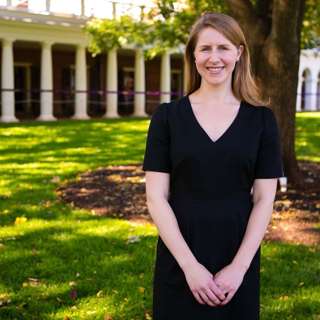

#83 - Jennifer Doleac on preventing crime without police and prisons

#83 - Jennifer Doleac on preventing crime without police and prisons

The killing of George Floyd has prompted a great deal of debate over whether the US should reduce the size of its police departments. The research literature suggests that the presence of police officers does reduce crime, though they're expensive and as is increasingly recognised, impose substantial harms on the populations they are meant to be protecting, especially communities of colour.

So maybe we ought to shift our focus to effective but unconventional approaches to crime prevention, approaches that don't require police or prisons and the human toll they bring with them.

Today’s guest, Jennifer Doleac — Associate Professor of Economics at Texas A&M University, and Director of the Justice Tech Lab — is an expert on empirical research into policing, law and incarceration. In this extensive interview, she highlights three alternative ways to effectively prevent crime: better street lighting, cognitive behavioral therapy, and lead reduction.

One of Jennifer’s papers used switches into and out of daylight saving time as a 'natural experiment' to measure the effect of light levels on crime. One day the sun sets at 5pm; the next day it sets at 6pm. When that evening hour is dark instead of light, robberies during it roughly double.

Links to sources for the claims in these show notes, other resources to learn more, and a full transcript.

The idea here is that if you try to rob someone in broad daylight, they might see you coming, and witnesses might later be able to identify you. You're just more likely to get caught.

You might think: "Well, people will just commit crime in the morning instead". But it looks like criminals aren’t early risers, and that doesn’t happen.

On her unusually rigorous podcast Probable Causation, Jennifer spoke to one of the authors of a related study, in which very bright streetlights were randomly added to some public housing complexes but not others. They found the lights reduced outdoor night-time crime by 36%, at little cost.

The next best thing to sun-light is human-light, so just installing more streetlights might be one of the easiest ways to cut crime, without having to hassle or punish anyone.

The second approach is cognitive behavioral therapy (CBT), in which you're taught to slow down your decision-making, and think through your assumptions before acting.

There was a randomised controlled trial done in schools, as well as juvenile detention facilities in Chicago, where the kids assigned to get CBT were followed over time and compared with those who were not assigned to receive CBT. They found the CBT course reduced rearrest rates by a third, and lowered the likelihood of a child returning to a juvenile detention facility by 20%.

Jennifer says that the program isn’t that expensive, and the benefits are massive. Everyone would probably benefit from being able to talk through their problems but the gains are especially large for people who've grown up with the trauma of violence in their lives.

Finally, Jennifer thinks that lead reduction might be the best buy of all in crime prevention…

Blog post truncated due to length limits. Finish reading the full post here.

In today’s conversation, Rob and Jennifer also cover, among many other things:

• Misconduct, hiring practices and accountability among US police
• Procedural justice training
• Overrated policy ideas
• Policies to try to reduce racial discrimination
• The effects of DNA databases
• Diversity in economics
• The quality of social science research

Get this episode by subscribing: type 80,000 Hours into your podcasting app.

Producer: Keiran Harris.
Audio mastering: Ben Cordell.
Transcriptions: Zakee Ulhaq.

Episoder(333)

#12 - Beth Cameron works to stop you dying in a pandemic. Here’s what keeps her up at night.

#12 - Beth Cameron works to stop you dying in a pandemic. Here’s what keeps her up at night.

“When you're in the middle of a crisis and you have to ask for money, you're already too late.” That’s Dr Beth Cameron, who leads Global Biological Policy and Programs at the Nuclear Threat Initiative...

25 Okt 20171h 45min

#11 - Spencer Greenberg on speeding up social science 10-fold & why plenty of startups cause harm

#11 - Spencer Greenberg on speeding up social science 10-fold & why plenty of startups cause harm

Do most meat eaters think it’s wrong to hurt animals? Do Americans think climate change is likely to cause human extinction? What is the best, state-of-the-art therapy for depression? How can we make ...

17 Okt 20171h 29min
#10 - Nick Beckstead on how to spend billions of dollars preventing human extinction

#10 - Nick Beckstead on how to spend billions of dollars preventing human extinction

What if you were in a position to give away billions of dollars to improve the world? What would you do with it? This is the problem facing Program Officers at the Open Philanthropy Project - people l...

11 Okt 20171h 51min
#9 - Christine Peterson on how insecure computers could lead to global disaster, and how to fix it

#9 - Christine Peterson on how insecure computers could lead to global disaster, and how to fix it

Take a trip to Silicon Valley in the 70s and 80s, when going to space sounded like a good way to get around environmental limits, people started cryogenically freezing themselves, and nanotechnology l...

4 Okt 20171h 45min
#8 - Lewis Bollard on how to end factory farming in our lifetimes

#8 - Lewis Bollard on how to end factory farming in our lifetimes

Every year tens of billions of animals are raised in terrible conditions in factory farms before being killed for human consumption. Over the last two years Lewis Bollard – Project Officer for Farm An...

27 Sep 20173h 16min

#7 - Julia Galef on making humanity more rational, what EA does wrong, and why Twitter isn’t all bad

#7 - Julia Galef on making humanity more rational, what EA does wrong, and why Twitter isn’t all bad

The scientific revolution in the 16th century was one of the biggest societal shifts in human history, driven by the discovery of new and better methods of figuring out who was right and who was wrong...

13 Sep 20171h 14min

#6 - Toby Ord on why the long-term future matters more than anything else & what to do about it

#6 - Toby Ord on why the long-term future matters more than anything else & what to do about it

Of all the people whose well-being we should care about, only a small fraction are alive today. The rest are members of future generations who are yet to exist. Whether they’ll be born into a world th...

6 Sep 20172h 8min
#5 - Alex Gordon-Brown on how to donate millions in your 20s working in quantitative trading

#5 - Alex Gordon-Brown on how to donate millions in your 20s working in quantitative trading

Quantitative financial trading is one of the highest paying parts of the world’s highest paying industry. 25 to 30 year olds with outstanding maths skills can earn millions a year in an obscure set of...

28 Aug 20171h 45min

Populært innen Fakta

fastlegen
dine-penger-pengeradet
relasjonspodden-med-dora-thorhallsdottir-kjersti-idem
rss-strid-de-norske-borgerkrigene
foreldreradet
mikkels-paskenotter
treningspodden
rss-bisarr-historie
jakt-og-fiskepodden
rss-sunn-okonomi
sinnsyn
tomprat-med-gunnar-tjomlid
rss-kunsten-a-leve
hagespiren-podcast
rss-bak-luftfarten
ukast
fryktlos
hverdagspsyken
rss-mind-body-podden
gravid-uke-for-uke