Benjamin Todd on what the effective altruism community most needs (80k team chat #4)

Benjamin Todd on what the effective altruism community most needs (80k team chat #4)

In the last '80k team chat' with Ben Todd and Arden Koehler, we discussed what effective altruism is and isn't, and how to argue for it. In this episode we turn now to what the effective altruism community most needs.

Links to learn more, summary and full transcript
• The 2020 Effective Altruism Survey just opened. If you're involved with the effective altruism community, or sympathetic to its ideas, it's would be wonderful if you could fill it out: https://www.surveymonkey.co.uk/r/EAS80K2

According to Ben, we can think of the effective altruism movement as having gone through several stages, categorised by what kind of resource has been most able to unlock more progress on important issues (i.e. by what's the 'bottleneck'). Plausibly, these stages are common for other social movements as well.

• Needing money: In the first stage, when effective altruism was just getting going, more money (to do things like pay staff and put on events) was the main bottleneck to making progress.
• Needing talent: In the second stage, we especially needed more talented people being willing to work on whatever seemed most pressing.
• Needing specific skills and capacity: In the third stage, which Ben thinks we're in now, the main bottlenecks are organizational capacity, infrastructure, and management to help train people up, as well as specialist skills that people can put to work now.

What's next? Perhaps needing coordination -- the ability to make sure people keep working efficiently and effectively together as the community grows.

Ben and I also cover the career implications of those stages, as well as the ability to save money and the possibility that someone else would do your job in your absence.

If you’d like to learn more about these topics, you should check out a couple of articles on our site:

Think twice before talking about ‘talent gaps’ – clarifying nine misconceptions
How replaceable are the top candidates in large hiring rounds? Why the answer flips depending on the distribution of applicant ability

Get this episode by subscribing: type 80,000 Hours into your podcasting app. Or read the linked transcript.

Producer: Keiran Harris.
Audio mastering: Ben Cordell.
Transcriptions: Zakee Ulhaq.

Episoder(333)

#12 - Beth Cameron works to stop you dying in a pandemic. Here’s what keeps her up at night.

#12 - Beth Cameron works to stop you dying in a pandemic. Here’s what keeps her up at night.

“When you're in the middle of a crisis and you have to ask for money, you're already too late.” That’s Dr Beth Cameron, who leads Global Biological Policy and Programs at the Nuclear Threat Initiative...

25 Okt 20171h 45min

#11 - Spencer Greenberg on speeding up social science 10-fold & why plenty of startups cause harm

#11 - Spencer Greenberg on speeding up social science 10-fold & why plenty of startups cause harm

Do most meat eaters think it’s wrong to hurt animals? Do Americans think climate change is likely to cause human extinction? What is the best, state-of-the-art therapy for depression? How can we make ...

17 Okt 20171h 29min

#10 - Nick Beckstead on how to spend billions of dollars preventing human extinction

#10 - Nick Beckstead on how to spend billions of dollars preventing human extinction

What if you were in a position to give away billions of dollars to improve the world? What would you do with it? This is the problem facing Program Officers at the Open Philanthropy Project - people l...

11 Okt 20171h 51min
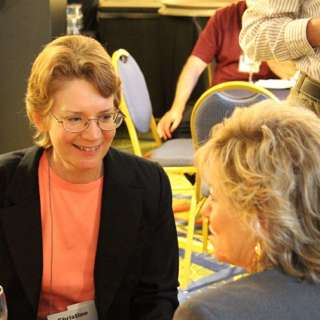
#9 - Christine Peterson on how insecure computers could lead to global disaster, and how to fix it

#9 - Christine Peterson on how insecure computers could lead to global disaster, and how to fix it

Take a trip to Silicon Valley in the 70s and 80s, when going to space sounded like a good way to get around environmental limits, people started cryogenically freezing themselves, and nanotechnology l...

4 Okt 20171h 45min
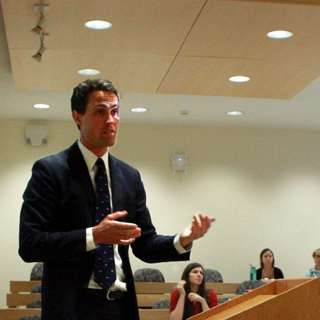
#8 - Lewis Bollard on how to end factory farming in our lifetimes

#8 - Lewis Bollard on how to end factory farming in our lifetimes

Every year tens of billions of animals are raised in terrible conditions in factory farms before being killed for human consumption. Over the last two years Lewis Bollard – Project Officer for Farm An...

27 Sep 20173h 16min

#7 - Julia Galef on making humanity more rational, what EA does wrong, and why Twitter isn’t all bad

#7 - Julia Galef on making humanity more rational, what EA does wrong, and why Twitter isn’t all bad

The scientific revolution in the 16th century was one of the biggest societal shifts in human history, driven by the discovery of new and better methods of figuring out who was right and who was wrong...

13 Sep 20171h 14min

#6 - Toby Ord on why the long-term future matters more than anything else & what to do about it

#6 - Toby Ord on why the long-term future matters more than anything else & what to do about it

Of all the people whose well-being we should care about, only a small fraction are alive today. The rest are members of future generations who are yet to exist. Whether they’ll be born into a world th...

6 Sep 20172h 8min

#5 - Alex Gordon-Brown on how to donate millions in your 20s working in quantitative trading

#5 - Alex Gordon-Brown on how to donate millions in your 20s working in quantitative trading

Quantitative financial trading is one of the highest paying parts of the world’s highest paying industry. 25 to 30 year olds with outstanding maths skills can earn millions a year in an obscure set of...

28 Aug 20171h 45min

Populært innen Fakta

fastlegen
dine-penger-pengeradet
relasjonspodden-med-dora-thorhallsdottir-kjersti-idem
foreldreradet
treningspodden
rss-strid-de-norske-borgerkrigene
mikkels-paskenotter
rss-bisarr-historie
jakt-og-fiskepodden
rss-sunn-okonomi
sinnsyn
rss-kunsten-a-leve
hverdagspsyken
tomprat-med-gunnar-tjomlid
rss-bak-luftfarten
fryktlos
ukast
rss-mind-body-podden
level-up-med-anniken-binz
rss-kull