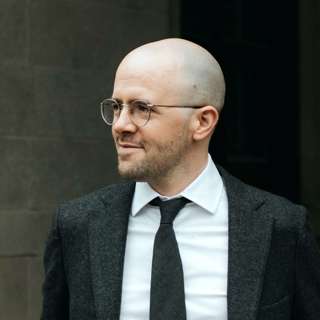

#92 – Brian Christian on the alignment problem

#92 – Brian Christian on the alignment problem

Brian Christian is a bestselling author with a particular knack for accurately communicating difficult or technical ideas from both mathematics and computer science.

Listeners loved our episode about his book Algorithms to Live By — so when the team read his new book, The Alignment Problem, and found it to be an insightful and comprehensive review of the state of the research into making advanced AI useful and reliably safe, getting him back on the show was a no-brainer.

Brian has so much of substance to say this episode will likely be of interest to people who know a lot about AI as well as those who know a little, and of interest to people who are nervous about where AI is going as well as those who aren't nervous at all.

Links to learn more, summary and full transcript.

Here’s a tease of 10 Hollywood-worthy stories from the episode:

The Riddle of Dopamine: The development of reinforcement learning solves a long-standing mystery of how humans are able to learn from their experience.
ALVINN: A student teaches a military vehicle to drive between Pittsburgh and Lake Erie, without intervention, in the early 1990s, using a computer with a tenth the processing capacity of an Apple Watch.
Couch Potato: An agent trained to be curious is stopped in its quest to navigate a maze by a paralysing TV screen.
Pitts & McCulloch: A homeless teenager and his foster father figure invent the idea of the neural net.
Tree Senility: Agents become so good at living in trees to escape predators that they forget how to leave, starve, and die.
The Danish Bicycle: A reinforcement learning agent figures out that it can better achieve its goal by riding in circles as quickly as possible than reaching its purported destination.
Montezuma's Revenge: By 2015 a reinforcement learner can play 60 different Atari games — the majority impossibly well — but can’t score a single point on one game humans find tediously simple.
Curious Pong: Two novelty-seeking agents, forced to play Pong against one another, create increasingly extreme rallies.
AlphaGo Zero: A computer program becomes superhuman at Chess and Go in under a day by attempting to imitate itself.
Robot Gymnasts: Over the course of an hour, humans teach robots to do perfect backflips just by telling them which of 2 random actions look more like a backflip.

We also cover:

• How reinforcement learning actually works, and some of its key achievements and failures
• How a lack of curiosity can cause AIs to fail to be able to do basic things
• The pitfalls of getting AI to imitate how we ourselves behave
• The benefits of getting AI to infer what we must be trying to achieve
• Why it’s good for agents to be uncertain about what they're doing
• Why Brian isn’t that worried about explicit deception
• The interviewees Brian most agrees with, and most disagrees with
• Developments since Brian finished the manuscript
• The effective altruism and AI safety communities
• And much more

Producer: Keiran Harris.
Audio mastering: Ben Cordell.
Transcriptions: Sofia Davis-Fogel.

Episoder(333)

#12 - Beth Cameron works to stop you dying in a pandemic. Here’s what keeps her up at night.

#12 - Beth Cameron works to stop you dying in a pandemic. Here’s what keeps her up at night.

“When you're in the middle of a crisis and you have to ask for money, you're already too late.” That’s Dr Beth Cameron, who leads Global Biological Policy and Programs at the Nuclear Threat Initiative...

25 Okt 20171h 45min

#11 - Spencer Greenberg on speeding up social science 10-fold & why plenty of startups cause harm

#11 - Spencer Greenberg on speeding up social science 10-fold & why plenty of startups cause harm

Do most meat eaters think it’s wrong to hurt animals? Do Americans think climate change is likely to cause human extinction? What is the best, state-of-the-art therapy for depression? How can we make ...

17 Okt 20171h 29min
#10 - Nick Beckstead on how to spend billions of dollars preventing human extinction

#10 - Nick Beckstead on how to spend billions of dollars preventing human extinction

What if you were in a position to give away billions of dollars to improve the world? What would you do with it? This is the problem facing Program Officers at the Open Philanthropy Project - people l...

11 Okt 20171h 51min
#9 - Christine Peterson on how insecure computers could lead to global disaster, and how to fix it

#9 - Christine Peterson on how insecure computers could lead to global disaster, and how to fix it

Take a trip to Silicon Valley in the 70s and 80s, when going to space sounded like a good way to get around environmental limits, people started cryogenically freezing themselves, and nanotechnology l...

4 Okt 20171h 45min
#8 - Lewis Bollard on how to end factory farming in our lifetimes

#8 - Lewis Bollard on how to end factory farming in our lifetimes

Every year tens of billions of animals are raised in terrible conditions in factory farms before being killed for human consumption. Over the last two years Lewis Bollard – Project Officer for Farm An...

27 Sep 20173h 16min

#7 - Julia Galef on making humanity more rational, what EA does wrong, and why Twitter isn’t all bad

#7 - Julia Galef on making humanity more rational, what EA does wrong, and why Twitter isn’t all bad

The scientific revolution in the 16th century was one of the biggest societal shifts in human history, driven by the discovery of new and better methods of figuring out who was right and who was wrong...

13 Sep 20171h 14min
#6 - Toby Ord on why the long-term future matters more than anything else & what to do about it

#6 - Toby Ord on why the long-term future matters more than anything else & what to do about it

Of all the people whose well-being we should care about, only a small fraction are alive today. The rest are members of future generations who are yet to exist. Whether they’ll be born into a world th...

6 Sep 20172h 8min

#5 - Alex Gordon-Brown on how to donate millions in your 20s working in quantitative trading

#5 - Alex Gordon-Brown on how to donate millions in your 20s working in quantitative trading

Quantitative financial trading is one of the highest paying parts of the world’s highest paying industry. 25 to 30 year olds with outstanding maths skills can earn millions a year in an obscure set of...

28 Aug 20171h 45min

Populært innen Fakta

fastlegen
dine-penger-pengeradet
relasjonspodden-med-dora-thorhallsdottir-kjersti-idem
rss-strid-de-norske-borgerkrigene
foreldreradet
mikkels-paskenotter
treningspodden
rss-bisarr-historie
jakt-og-fiskepodden
rss-sunn-okonomi
sinnsyn
tomprat-med-gunnar-tjomlid
rss-kunsten-a-leve
hagespiren-podcast
rss-bak-luftfarten
ukast
fryktlos
hverdagspsyken
rss-mind-body-podden
gravid-uke-for-uke