

#94 – Ezra Klein on aligning journalism, politics, and what matters most

#94 – Ezra Klein on aligning journalism, politics, and what matters most

How many words in U.S. newspapers have been spilled on tax policy in the past five years? And how many words on CRISPR? Or meat alternatives? Or how AI may soon automate the majority of jobs?

When people look back on this era, is the interesting thing going to have been fights over whether or not the top marginal tax rate was 39.5% or 35.4%, or is it going to be that human beings started to take control of human evolution; that we stood on the brink of eliminating immeasurable levels of suffering on factory farms; and that for the first time the average American might become financially comfortable and unemployed simultaneously?

Today’s guest is Ezra Klein, one of the most prominent journalists in the world. Ezra thinks that pressing issues are neglected largely because there's little pre-existing infrastructure to push them.

Links to learn more, summary and full transcript.

He points out that for a long time taxes have been considered hugely important in D.C. political circles — and maybe once they were. But either way, the result is that there are a lot of congressional committees, think tanks, and experts that have focused on taxes for decades and continue to produce a steady stream of papers, articles, and opinions for journalists they know to cover (often these are journalists hired to write specifically about tax policy).

To Ezra (and to us, and to many others) AI seems obviously more important than marginal changes in taxation over the next 10 or 15 years — yet there's very little infrastructure for thinking about it. There isn't a committee in Congress that primarily deals with AI, and no one has a dedicated AI position in the executive branch of the U.S. Government; nor are big AI think tanks in D.C. producing weekly articles for journalists they know to report on.

All of this generates a strong 'path dependence' that can lock the media in to covering less important topics despite having no intention to do so.

According to Ezra, the hardest thing to do in journalism — as the leader of a publication, or even to some degree just as a writer — is to maintain your own sense of what’s important, and not just be swept along in the tide of what “the industry / the narrative / the conversation has decided is important."

One reason Ezra created the Future Perfect vertical at Vox is that as he began to learn about effective altruism, he thought: "This is a framework for thinking about importance that could offer a different lens that we could use in journalism. It could help us order things differently.”

Ezra says there is an audience for the stuff that we’d consider most important here at 80,000 Hours. It’s broadly believed that nobody will read articles on animal suffering, but Ezra says that his experience at Vox shows these stories actually do really well — and that many of the things that the effective altruist community cares a lot about are “...like catnip for readers.”

Ezra’s bottom line for fellow journalists is that if something important is happening in the world and you can't make the audience interested in it, that is your failure — never the audience's failure.

But is that really true? In today’s episode we explore that claim, as well as:

• How many hours of news the average person should consume
• Where the progressive movement is failing to live up to its values
• Why Ezra thinks 'price gouging' is a bad idea
• Where the FDA has failed on rapid at-home testing for COVID-19
• Whether we should be more worried about tail-risk scenarios
• And his biggest critiques of the effective altruism community

Producer: Keiran Harris.
Audio mastering: Ben Cordell.
Transcriptions: Sofia Davis-Fogel.

Episoder(333)

#12 - Beth Cameron works to stop you dying in a pandemic. Here’s what keeps her up at night.

#12 - Beth Cameron works to stop you dying in a pandemic. Here’s what keeps her up at night.

“When you're in the middle of a crisis and you have to ask for money, you're already too late.” That’s Dr Beth Cameron, who leads Global Biological Policy and Programs at the Nuclear Threat Initiative...

25 Okt 20171h 45min

#11 - Spencer Greenberg on speeding up social science 10-fold & why plenty of startups cause harm

#11 - Spencer Greenberg on speeding up social science 10-fold & why plenty of startups cause harm

Do most meat eaters think it’s wrong to hurt animals? Do Americans think climate change is likely to cause human extinction? What is the best, state-of-the-art therapy for depression? How can we make ...

17 Okt 20171h 29min

#10 - Nick Beckstead on how to spend billions of dollars preventing human extinction

#10 - Nick Beckstead on how to spend billions of dollars preventing human extinction

What if you were in a position to give away billions of dollars to improve the world? What would you do with it? This is the problem facing Program Officers at the Open Philanthropy Project - people l...

11 Okt 20171h 51min
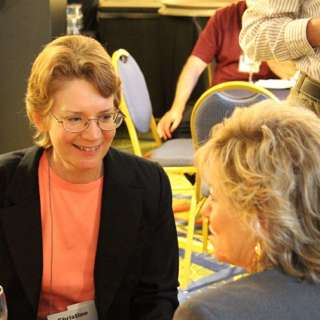
#9 - Christine Peterson on how insecure computers could lead to global disaster, and how to fix it

#9 - Christine Peterson on how insecure computers could lead to global disaster, and how to fix it

Take a trip to Silicon Valley in the 70s and 80s, when going to space sounded like a good way to get around environmental limits, people started cryogenically freezing themselves, and nanotechnology l...

4 Okt 20171h 45min
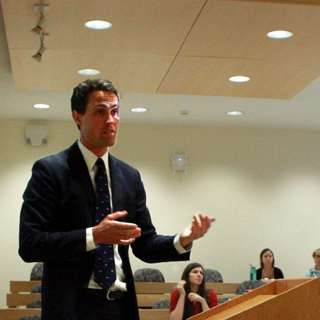
#8 - Lewis Bollard on how to end factory farming in our lifetimes

#8 - Lewis Bollard on how to end factory farming in our lifetimes

Every year tens of billions of animals are raised in terrible conditions in factory farms before being killed for human consumption. Over the last two years Lewis Bollard – Project Officer for Farm An...

27 Sep 20173h 16min

#7 - Julia Galef on making humanity more rational, what EA does wrong, and why Twitter isn’t all bad

#7 - Julia Galef on making humanity more rational, what EA does wrong, and why Twitter isn’t all bad

The scientific revolution in the 16th century was one of the biggest societal shifts in human history, driven by the discovery of new and better methods of figuring out who was right and who was wrong...

13 Sep 20171h 14min

#6 - Toby Ord on why the long-term future matters more than anything else & what to do about it

#6 - Toby Ord on why the long-term future matters more than anything else & what to do about it

Of all the people whose well-being we should care about, only a small fraction are alive today. The rest are members of future generations who are yet to exist. Whether they’ll be born into a world th...

6 Sep 20172h 8min

#5 - Alex Gordon-Brown on how to donate millions in your 20s working in quantitative trading

#5 - Alex Gordon-Brown on how to donate millions in your 20s working in quantitative trading

Quantitative financial trading is one of the highest paying parts of the world’s highest paying industry. 25 to 30 year olds with outstanding maths skills can earn millions a year in an obscure set of...

28 Aug 20171h 45min

Populært innen Fakta

fastlegen
dine-penger-pengeradet
relasjonspodden-med-dora-thorhallsdottir-kjersti-idem
rss-strid-de-norske-borgerkrigene
foreldreradet
mikkels-paskenotter
treningspodden
rss-bisarr-historie
jakt-og-fiskepodden
rss-sunn-okonomi
sinnsyn
tomprat-med-gunnar-tjomlid
rss-kunsten-a-leve
hagespiren-podcast
rss-bak-luftfarten
ukast
fryktlos
hverdagspsyken
rss-mind-body-podden
gravid-uke-for-uke