
#95 – Kelly Wanser on whether to deliberately intervene in the climate

#95 – Kelly Wanser on whether to deliberately intervene in the climate

How long do you think it’ll be before we’re able to bend the weather to our will? A massive rainmaking program in China, efforts to seed new oases in the Arabian peninsula, or chemically induce snow for skiers in Colorado.

100 years? 50 years? 20?

Those who know how to write a teaser hook for a podcast episode will have correctly guessed that all these things are already happening today. And the techniques being used could be turned to managing climate change as well.

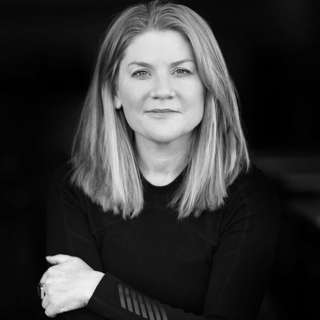
Today’s guest, Kelly Wanser, founded SilverLining — a nonprofit organization that advocates research into climate interventions, such as seeding or brightening clouds, to ensure that we maintain a safe climate.

Links to learn more, summary and full transcript.

Kelly says that current climate projections, even if we do everything right from here on out, imply that two degrees of global warming are now unavoidable. And the same scientists who made those projections fear the flow-through effect that warming could have.

Since our best case scenario may already be too dangerous, SilverLining focuses on ways that we could intervene quickly in the climate if things get especially grim — their research serving as a kind of insurance policy.

After considering everything from mirrors in space, to shiny objects on the ocean, to materials on the Arctic, their scientists concluded that the most promising approach was leveraging one of the ways that the Earth already regulates its temperature — the reflection of sunlight off particles and clouds in the atmosphere.

Cloud brightening is a climate control approach that uses the spraying of a fine mist of sea water into clouds to make them 'whiter' so they reflect even more sunlight back into space.

These ‘streaks’ in clouds are already created by ships because the particulates from their diesel engines inadvertently make clouds a bit brighter.

Kelly says that scientists estimate that we're already lowering the global temperature this way by 0.5–1.1ºC, without even intending to.

While fossil fuel particulates are terrible for human health, they think we could replicate this effect by simply spraying sea water up into clouds. But so far there hasn't been funding to measure how much temperature change you get for a given amount of spray.

And we won't want to dive into these methods head first because the atmosphere is a complex system we can't yet properly model, and there are many things to check first. For instance, chemicals that reflect light from the upper atmosphere might totally change wind patterns in the stratosphere. Or they might not — for all the discussion of global warming the climate is surprisingly understudied.

The public tends to be skeptical of climate interventions, otherwise known as geoengineering, so in this episode we cover a range of possible objections, such as:

• It being riskier than doing nothing
• That it will inevitably be dangerously political
• And the risk of the 'double catastrophe', where a pandemic stops our climate interventions and temperatures sky-rocket at the worst time.

Kelly and Rob also talk about:

• The many climate interventions that are already happening
• The most promising ideas in the field
• And whether people would be more accepting if we found ways to intervene that had nothing to do with making the world a better place.

Chapters:
• Rob’s intro (00:00:00)
• The interview begins (00:01:37)
• Existing climate interventions (00:06:44)
• Most promising ideas (00:16:23)
• Doing good by accident (00:28:39)
• Objections to this approach (00:31:16)
• How much could countries do individually? (00:47:19)
• Government funding (00:50:08)
• Is global coordination possible? (00:53:01)
• Malicious use (00:57:07)
• Careers and SilverLining (01:04:03)
• Rob’s outro (01:23:34)

Producer: Keiran Harris.
Audio mastering: Ben Cordell.
Transcriptions: Sofia Davis-Fogel.

Episoder(333)

'95% of AI Pilots Fail': The hidden agenda behind the viral stat that misled millions

'95% of AI Pilots Fail': The hidden agenda behind the viral stat that misled millions

You might have heard that '95% of corporate AI pilots' are failing. It was one of the most widely cited AI statistics of 2025, parroted by media outlets everywhere. It helped trigger a Nasdaq selloff ...

28 Apr 10min

#242 – Will MacAskill on how we survive the 'intelligence explosion,' AI character, and the case for 'viatopia'

#242 – Will MacAskill on how we survive the 'intelligence explosion,' AI character, and the case for 'viatopia'

Hundreds of millions already turn to AI on the most personal of topics — therapy, political opinions, and how to treat others. And as AI takes over more of the economy, the character of these systems ...

22 Apr 3h 9min

Risks from power-seeking AI systems (article narration by Zershaaneh Qureshi)

Risks from power-seeking AI systems (article narration by Zershaaneh Qureshi)

Hundreds of prominent AI scientists and other notable figures signed a statement in 2023 saying that mitigating the risk of extinction from AI should be a global priority. At 80,000 Hours, we’ve consi...

16 Apr 1h 29min

How scary is Claude Mythos? 303 pages in 21 minutes

How scary is Claude Mythos? 303 pages in 21 minutes

With Claude Mythos we have an AI that knows when it's being tested, can obscure its reasoning when it wants, and is better at breaking into (and out of) computers than any human alive. Rob Wiblin work...

10 Apr 21min

Village gossip, pesticide bans, and gene drives: 17 experts on the future of global health

Village gossip, pesticide bans, and gene drives: 17 experts on the future of global health

What does it really take to lift millions out of poverty and prevent needless deaths?In this special compilation episode, 17 past guests — including economists, nonprofit founders, and policy advisors...

7 Apr 4h 6min

What everyone is missing about Anthropic vs the Pentagon. And: The Meta leaks are worse than you think.

What everyone is missing about Anthropic vs the Pentagon. And: The Meta leaks are worse than you think.

When the Pentagon tried to strong-arm Anthropic into dropping its ban on AI-only kill decisions and mass domestic surveillance, the company refused. Its critics went on the attack: Anthropic and its s...

3 Apr 20min

#241 – Richard Moulange on how now AI codes viable genomes from scratch and outperforms virologists at lab work — what could go wrong?

#241 – Richard Moulange on how now AI codes viable genomes from scratch and outperforms virologists at lab work — what could go wrong?

Last September, scientists used an AI model to design genomes for entirely new bacteriophages (viruses that infect bacteria). They then built them in a lab. Many were viable. And despite being entirel...

31 Mar 3h 7min

#240 – Samuel Charap on how a Ukraine ceasefire could accidentally set Europe up for a bigger war

#240 – Samuel Charap on how a Ukraine ceasefire could accidentally set Europe up for a bigger war

Many people believe a ceasefire in Ukraine will leave Europe safer. But today's guest lays out how a deal could potentially generate insidious new risks — leaving us in a situation that's equally dang...

24 Mar 1h 12min

Populært innen Fakta

fastlegen
dine-penger-pengeradet
relasjonspodden-med-dora-thorhallsdottir-kjersti-idem
rss-strid-de-norske-borgerkrigene
foreldreradet
mikkels-paskenotter
treningspodden
rss-bisarr-historie
jakt-og-fiskepodden
rss-sunn-okonomi
sinnsyn
tomprat-med-gunnar-tjomlid
rss-kunsten-a-leve
hagespiren-podcast
rss-bak-luftfarten
ukast
fryktlos
hverdagspsyken
rss-mind-body-podden
gravid-uke-for-uke