#106 – Cal Newport on an industrial revolution for office work

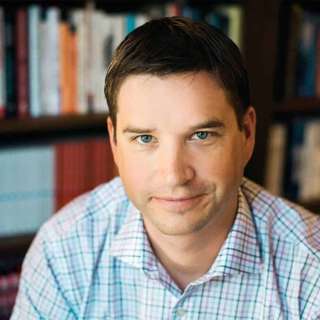
#106 – Cal Newport on an industrial revolution for office work

If you wanted to start a university department from scratch, and attract as many superstar researchers as possible, what’s the most attractive perk you could offer?

How about just not needing an email address.

According to today's guest, Cal Newport — computer science professor and best-selling author of A World Without Email — it should seem obscene and absurd for a world-renowned vaccine researcher with decades of experience to spend a third of their time fielding requests from HR, building management, finance, and so on. Yet with offices organised the way they are today, nothing could be more natural.

Links to learn more, summary and full transcript.

But this isn’t just a problem at the elite level — this affects almost all of us. A typical U.S. office worker checks their email 80 times a day, once every six minutes on average. Data analysis by RescueTime found that a third of users checked email or Slack every three minutes or more, averaged over a full work day.

Each time that happens our focus is broken, killing our momentum on the knowledge work we're supposedly paid to do.

When we lament how much email and chat have reduced our focus and filled our days with anxiety and frenetic activity, we most naturally blame 'weakness of will'. If only we had the discipline to check Slack and email once a day, all would be well — or so the story goes.

Cal believes that line of thinking fundamentally misunderstands how we got to a place where knowledge workers can rarely find more than five consecutive minutes to spend doing just one thing.

Since the Industrial Revolution, a combination of technology and better organization have allowed the manufacturing industry to produce a hundred-fold as much with the same number of people.

Cal says that by comparison, it's not clear that specialised knowledge workers like scientists, authors, or senior managers are *any* more productive than they were 50 years ago. If the knowledge sector could achieve even a tiny fraction of what manufacturing has, and find a way to coordinate its work that raised productivity by just 1%, that would generate on the order of $100 billion globally each year.

Since the 1990s, when everyone got an email address and most lost their assistants, that lack of direction has led to what Cal calls the 'hyperactive hive mind': everyone sends emails and chats to everyone else, all through the day, whenever they need something.

Cal points out that this is so normal we don't even think of it as a way of organising work, but it is: it's what happens when management does nothing to enable teams to decide on a better way of organising themselves.

A few industries have made progress taming the 'hyperactive hive mind'. But on Cal's telling, this barely scratches the surface of the improvements that are possible within knowledge work. And reigning in the hyperactive hive mind won't just help people do higher quality work, it will free them from the 24/7 anxiety that there's someone somewhere they haven't gotten back to.

In this interview Cal and Rob also cover:
• Is this really one of the world's most pressing problems?
• The historical origins of the 'hyperactive hive mind'
• The harm caused by attention switching
• Who's working to solve the problem and how
• Cal's top productivity advice for high school students, university students, and early career workers
• And much more

Chapters:

  • Rob’s intro (00:00:00)
  • The interview begins (00:02:02)
  • The hyperactive hivemind (00:04:11)
  • Scale of the harm (00:08:40)
  • Is email making professors stupid? (00:22:09)
  • Why haven't we already made these changes? (00:29:38)
  • Do people actually prefer the hyperactive hivemind? (00:43:31)
  • Solutions (00:55:52)
  • Advocacy (01:10:47)
  • How to Be a High School Superstar (01:23:03)
  • How to Win at College (01:27:46)
  • So Good They Can't Ignore You (01:31:47)
  • Personal barriers (01:42:51)
  • George Marshall (01:47:11)
  • Rob’s outro (01:49:18)

Producer: Keiran Harris
Audio mastering: Ben Cordell
Transcriptions: Sofia Davis-Fogel

Episoder(333)

#12 - Beth Cameron works to stop you dying in a pandemic. Here’s what keeps her up at night.

#12 - Beth Cameron works to stop you dying in a pandemic. Here’s what keeps her up at night.

“When you're in the middle of a crisis and you have to ask for money, you're already too late.” That’s Dr Beth Cameron, who leads Global Biological Policy and Programs at the Nuclear Threat Initiative...

25 Okt 20171h 45min

#11 - Spencer Greenberg on speeding up social science 10-fold & why plenty of startups cause harm

#11 - Spencer Greenberg on speeding up social science 10-fold & why plenty of startups cause harm

Do most meat eaters think it’s wrong to hurt animals? Do Americans think climate change is likely to cause human extinction? What is the best, state-of-the-art therapy for depression? How can we make ...

17 Okt 20171h 29min
#10 - Nick Beckstead on how to spend billions of dollars preventing human extinction

#10 - Nick Beckstead on how to spend billions of dollars preventing human extinction

What if you were in a position to give away billions of dollars to improve the world? What would you do with it? This is the problem facing Program Officers at the Open Philanthropy Project - people l...

11 Okt 20171h 51min
#9 - Christine Peterson on how insecure computers could lead to global disaster, and how to fix it

#9 - Christine Peterson on how insecure computers could lead to global disaster, and how to fix it

Take a trip to Silicon Valley in the 70s and 80s, when going to space sounded like a good way to get around environmental limits, people started cryogenically freezing themselves, and nanotechnology l...

4 Okt 20171h 45min
#8 - Lewis Bollard on how to end factory farming in our lifetimes

#8 - Lewis Bollard on how to end factory farming in our lifetimes

Every year tens of billions of animals are raised in terrible conditions in factory farms before being killed for human consumption. Over the last two years Lewis Bollard – Project Officer for Farm An...

27 Sep 20173h 16min

#7 - Julia Galef on making humanity more rational, what EA does wrong, and why Twitter isn’t all bad

#7 - Julia Galef on making humanity more rational, what EA does wrong, and why Twitter isn’t all bad

The scientific revolution in the 16th century was one of the biggest societal shifts in human history, driven by the discovery of new and better methods of figuring out who was right and who was wrong...

13 Sep 20171h 14min
#6 - Toby Ord on why the long-term future matters more than anything else & what to do about it

#6 - Toby Ord on why the long-term future matters more than anything else & what to do about it

Of all the people whose well-being we should care about, only a small fraction are alive today. The rest are members of future generations who are yet to exist. Whether they’ll be born into a world th...

6 Sep 20172h 8min
#5 - Alex Gordon-Brown on how to donate millions in your 20s working in quantitative trading

#5 - Alex Gordon-Brown on how to donate millions in your 20s working in quantitative trading

Quantitative financial trading is one of the highest paying parts of the world’s highest paying industry. 25 to 30 year olds with outstanding maths skills can earn millions a year in an obscure set of...

28 Aug 20171h 45min

Populært innen Fakta

fastlegen
dine-penger-pengeradet
relasjonspodden-med-dora-thorhallsdottir-kjersti-idem
rss-strid-de-norske-borgerkrigene
foreldreradet
mikkels-paskenotter
treningspodden
rss-bisarr-historie
jakt-og-fiskepodden
rss-sunn-okonomi
sinnsyn
tomprat-med-gunnar-tjomlid
rss-kunsten-a-leve
hagespiren-podcast
rss-bak-luftfarten
ukast
fryktlos
hverdagspsyken
rss-mind-body-podden
gravid-uke-for-uke