#116 – Luisa Rodriguez on why global catastrophes seem unlikely to kill us all

#116 – Luisa Rodriguez on why global catastrophes seem unlikely to kill us all

If modern human civilisation collapsed — as a result of nuclear war, severe climate change, or a much worse pandemic than COVID-19 — billions of people might die.

That's terrible enough to contemplate. But what’s the probability that rather than recover, the survivors would falter and humanity would actually disappear for good?

It's an obvious enough question, but very few people have spent serious time looking into it -- possibly because it cuts across history, economics, and biology, among many other fields. There's no Disaster Apocalypse Studies department at any university, and governments have little incentive to plan for a future in which their country probably no longer even exists.

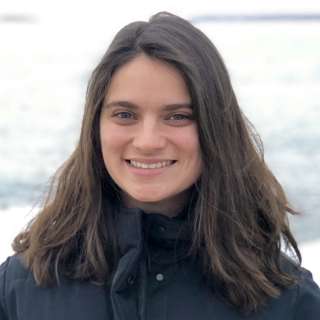
The person who may have spent the most time looking at this specific question is Luisa Rodriguez — who has conducted research at Rethink Priorities, Oxford University's Future of Humanity Institute, the Forethought Foundation, and now here, at 80,000 Hours.

Links to learn more, summary and full transcript.

She wrote a series of articles earnestly trying to foresee how likely humanity would be to recover and build back after a full-on civilisational collapse.

There are a couple of main stories people put forward for how a catastrophe like this would kill every single human on Earth — but Luisa doesn’t buy them.

Story 1: Nuclear war has led to nuclear winter. There's a 10-year period during which a lot of the world is really inhospitable to agriculture. The survivors just aren't able to figure out how to feed themselves in the time period, so everyone dies of starvation or cold.

Why Luisa doesn’t buy it:

Catastrophes will almost inevitably be non-uniform in their effects. If 80,000 people survive, they’re not all going to be in the same city — it would look more like groups of 5,000 in a bunch of different places.

People in some places will starve, but those in other places, such as New Zealand, will be able to fish, eat seaweed, grow potatoes, and find other sources of calories.

It’d be an incredibly unlucky coincidence if the survivors of a nuclear war -- likely spread out all over the world -- happened to all be affected by natural disasters or were all prohibitively far away from areas suitable for agriculture (which aren’t the same areas you’d expect to be attacked in a nuclear war).

Story 2: The catastrophe leads to hoarding and violence, and in addition to people being directly killed by the conflict, it distracts everyone so much from the key challenge of reestablishing agriculture that they simply fail. By the time they come to their senses, it’s too late -- they’ve used up too much of the resources they’d need to get agriculture going again.

Why Luisa doesn’t buy it:

We‘ve had lots of resource scarcity throughout history, and while we’ve seen examples of conflict petering out because basic needs aren’t being met, we’ve never seen the reverse.

And again, even if this happens in some places -- even if some groups fought each other until they literally ended up starving to death — it would be completely bizarre for it to happen to every group in the world. You just need one group of around 300 people to survive for them to be able to rebuild the species.

In this wide-ranging and free-flowing conversation, Luisa and Rob also cover:

• What the world might actually look like after one of these catastrophes
• The most valuable knowledge for survivors
• How fast populations could rebound
• ‘Boom and bust’ climate change scenarios
• And much more

Chapters:

  • Rob’s intro (00:00:00)
  • The interview begins (00:02:37)
  • Recovering from a serious collapse of civilization (00:11:41)
  • Existing literature (00:14:52)
  • Fiction (00:20:42)
  • Types of disasters (00:23:13)
  • What the world might look like after a catastrophe (00:29:09)
  • Nuclear winter (00:34:34)
  • Stuff that might stick around (00:38:58)
  • Grace period (00:42:39)
  • Examples of human ingenuity in tough situations (00:48:33)
  • The most valuable knowledge for survivors (00:57:23)
  • Would people really work together? (01:09:00)
  • Radiation (01:27:08)
  • Learning from the worst pandemics (01:31:40)
  • Learning from fallen civilizations (01:36:30)
  • Direct extinction (01:45:30)
  • Indirect extinction (02:01:53)
  • Rapid recovery vs. slow recovery (02:05:01)
  • Risk of culture shifting against science and tech (02:15:33)
  • Resource scarcity (02:23:07)
  • How fast could populations rebound (02:37:07)
  • Implications for what we ought to do right now (02:43:52)
  • How this work affected Luisa’s views (02:54:00)
  • Boom and bust climate change scenarios (02:57:06)
  • Stagnation and cold wars (03:01:18)
  • How Luisa met her biological father (03:18:23)
  • If Luisa had to change careers (03:40:38)

Producer: Keiran Harris
Audio mastering: Ben Cordell
Transcriptions: Katy Moore

Episoder(333)

#12 - Beth Cameron works to stop you dying in a pandemic. Here’s what keeps her up at night.

#12 - Beth Cameron works to stop you dying in a pandemic. Here’s what keeps her up at night.

“When you're in the middle of a crisis and you have to ask for money, you're already too late.” That’s Dr Beth Cameron, who leads Global Biological Policy and Programs at the Nuclear Threat Initiative...

25 Okt 20171h 45min

#11 - Spencer Greenberg on speeding up social science 10-fold & why plenty of startups cause harm

#11 - Spencer Greenberg on speeding up social science 10-fold & why plenty of startups cause harm

Do most meat eaters think it’s wrong to hurt animals? Do Americans think climate change is likely to cause human extinction? What is the best, state-of-the-art therapy for depression? How can we make ...

17 Okt 20171h 29min
#10 - Nick Beckstead on how to spend billions of dollars preventing human extinction

#10 - Nick Beckstead on how to spend billions of dollars preventing human extinction

What if you were in a position to give away billions of dollars to improve the world? What would you do with it? This is the problem facing Program Officers at the Open Philanthropy Project - people l...

11 Okt 20171h 51min
#9 - Christine Peterson on how insecure computers could lead to global disaster, and how to fix it

#9 - Christine Peterson on how insecure computers could lead to global disaster, and how to fix it

Take a trip to Silicon Valley in the 70s and 80s, when going to space sounded like a good way to get around environmental limits, people started cryogenically freezing themselves, and nanotechnology l...

4 Okt 20171h 45min
#8 - Lewis Bollard on how to end factory farming in our lifetimes

#8 - Lewis Bollard on how to end factory farming in our lifetimes

Every year tens of billions of animals are raised in terrible conditions in factory farms before being killed for human consumption. Over the last two years Lewis Bollard – Project Officer for Farm An...

27 Sep 20173h 16min

#7 - Julia Galef on making humanity more rational, what EA does wrong, and why Twitter isn’t all bad

#7 - Julia Galef on making humanity more rational, what EA does wrong, and why Twitter isn’t all bad

The scientific revolution in the 16th century was one of the biggest societal shifts in human history, driven by the discovery of new and better methods of figuring out who was right and who was wrong...

13 Sep 20171h 14min
#6 - Toby Ord on why the long-term future matters more than anything else & what to do about it

#6 - Toby Ord on why the long-term future matters more than anything else & what to do about it

Of all the people whose well-being we should care about, only a small fraction are alive today. The rest are members of future generations who are yet to exist. Whether they’ll be born into a world th...

6 Sep 20172h 8min
#5 - Alex Gordon-Brown on how to donate millions in your 20s working in quantitative trading

#5 - Alex Gordon-Brown on how to donate millions in your 20s working in quantitative trading

Quantitative financial trading is one of the highest paying parts of the world’s highest paying industry. 25 to 30 year olds with outstanding maths skills can earn millions a year in an obscure set of...

28 Aug 20171h 45min

Populært innen Fakta

fastlegen
dine-penger-pengeradet
relasjonspodden-med-dora-thorhallsdottir-kjersti-idem
rss-strid-de-norske-borgerkrigene
foreldreradet
mikkels-paskenotter
treningspodden
rss-bisarr-historie
jakt-og-fiskepodden
rss-sunn-okonomi
sinnsyn
tomprat-med-gunnar-tjomlid
rss-kunsten-a-leve
hagespiren-podcast
rss-bak-luftfarten
ukast
fryktlos
hverdagspsyken
rss-mind-body-podden
gravid-uke-for-uke