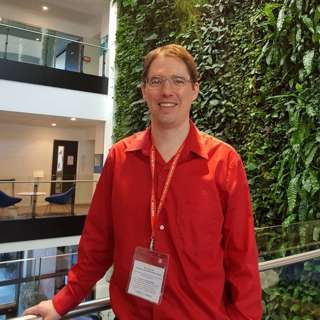
#117 – David Denkenberger on using paper mills and seaweed to feed everyone in a catastrophe, ft Sahil Shah

#117 – David Denkenberger on using paper mills and seaweed to feed everyone in a catastrophe, ft Sahil Shah

If there's a nuclear war followed by nuclear winter, and the sun is blocked out for years, most of us are going to starve, right? Well, currently, probably we would, because humanity hasn't done much to prevent it. But it turns out that an ounce of forethought might be enough for most people to get the calories they need to survive, even in a future as grim as that one.

Today's guest is engineering professor Dave Denkenberger, who co-founded the Alliance to Feed the Earth in Disasters (ALLFED), which has the goal of finding ways humanity might be able to feed itself for years without relying on the sun. Over the last seven years, Dave and his team have turned up options from the mundane, like mushrooms grown on rotting wood, to the bizarre, like bacteria that can eat natural gas or electricity itself.

Links to learn more, summary and full transcript.

One option stands out as potentially able to feed billions: finding a way to eat wood ourselves. Even after a disaster, a huge amount of calories will be lying around, stored in wood and other plant cellulose. The trouble is that, even though cellulose is basically a lot of sugar molecules stuck together, humans can't eat wood.

But we do know how to turn wood into something people can eat. We can grind wood up in already existing paper mills, then mix the pulp with enzymes that break the cellulose into sugar and the hemicellulose into other sugars.

Another option that shows a lot of promise is seaweed. Buffered by the water around them, ocean life wouldn't be as affected by the lower temperatures resulting from the sun being obscured. Sea plants are also already used to growing in low light, because the water above them already shades them to some extent.

Dave points out that "there are several species of seaweed that can still grow 10% per day, even with the lower light levels in nuclear winter and lower temperatures. ... Not surprisingly, with that 10% growth per day, assuming we can scale up, we could actually get up to 160% of human calories in less than a year."

Of course it will be easier to scale up seaweed production if it's already a reasonably sized industry. At the end of the interview, we're joined by Sahil Shah, who is trying to expand seaweed production in the UK with his business Sustainable Seaweed.

While a diet of seaweed and trees turned into sugar might not seem that appealing, the team at ALLFED also thinks several perfectly normal crops could also make a big contribution to feeding the world, even in a truly catastrophic scenario. Those crops include potatoes, canola, and sugar beets, which are currently grown in cool low-light environments.

Many of these ideas could turn out to be misguided or impractical in real-world conditions, which is why Dave and ALLFED are raising money to test them out on the ground. They think it's essential to show these techniques can work so that should the worst happen, people turn their attention to producing more food rather than fighting one another over the small amount of food humanity has stockpiled.

In this conversation, Rob, Dave, and Sahil discuss the above, as well as:
• How much one can trust the sort of economic modelling ALLFED does
• Bacteria that turn natural gas or electricity into protein
• How to feed astronauts in space with nuclear power
• What individuals can do to prepare themselves for global catastrophes
• Whether we should worry about humanity running out of natural resources
• How David helped save $10 billion worth of electricity through energy efficiency standards
• And much more

Chapters:

  • Rob’s intro (00:00:00)
  • The interview begins (00:02:36)
  • Resilient foods recap (00:04:27)
  • Cost effectiveness recap (00:08:07)
  • Turning fiber or wood or cellulose into sugar (00:10:30)
  • Redirecting human-edible food away from animals (00:22:46)
  • Seaweed production (00:26:33)
  • Crops that can handle lower temperatures or lower light (00:35:24)
  • Greenhouses (00:40:51)
  • How much to trust this economic modeling (00:43:50)
  • Global cooperation (00:51:16)
  • People feeding themselves using these methods (00:57:15)
  • NASA and ALLFED (01:04:47)
  • Kinds of catastrophes (01:15:16)
  • Is New Zealand overrated? (01:25:35)
  • Should listeners be doing anything to prepare for possible disasters? (01:28:43)
  • Cost effectiveness of work on EMPs (01:30:43)
  • The future of ALLFED (01:33:34)
  • Opportunities at ALLFED (01:40:49)
  • Why Dave is optimistic around bigger-picture scarcity issues (01:46:58)
  • Energy return on energy invested (01:56:36)
  • Nitrogen and phosphorus (02:03:25)
  • Energy and food prices (02:07:18)
  • Sustainable Seaweed with Sahil Shah (02:21:44)
  • Locusts (02:38:33)
  • The effect of COVID on food supplies (02:44:01)
  • How much food prices would spike in a disaster (02:50:46)
  • How Dave helped to save ~$10 billion worth of energy (02:56:33)
  • What it’s like to live in Alaska (03:03:18)

Producer: Keiran Harris
Audio mastering: Ben Cordell
Transcriptions: Katy Moore

Episoder(333)

#12 - Beth Cameron works to stop you dying in a pandemic. Here’s what keeps her up at night.

#12 - Beth Cameron works to stop you dying in a pandemic. Here’s what keeps her up at night.

“When you're in the middle of a crisis and you have to ask for money, you're already too late.” That’s Dr Beth Cameron, who leads Global Biological Policy and Programs at the Nuclear Threat Initiative...

25 Okt 20171h 45min
#11 - Spencer Greenberg on speeding up social science 10-fold & why plenty of startups cause harm

#11 - Spencer Greenberg on speeding up social science 10-fold & why plenty of startups cause harm

Do most meat eaters think it’s wrong to hurt animals? Do Americans think climate change is likely to cause human extinction? What is the best, state-of-the-art therapy for depression? How can we make ...

17 Okt 20171h 29min
#10 - Nick Beckstead on how to spend billions of dollars preventing human extinction

#10 - Nick Beckstead on how to spend billions of dollars preventing human extinction

What if you were in a position to give away billions of dollars to improve the world? What would you do with it? This is the problem facing Program Officers at the Open Philanthropy Project - people l...

11 Okt 20171h 51min
#9 - Christine Peterson on how insecure computers could lead to global disaster, and how to fix it

#9 - Christine Peterson on how insecure computers could lead to global disaster, and how to fix it

Take a trip to Silicon Valley in the 70s and 80s, when going to space sounded like a good way to get around environmental limits, people started cryogenically freezing themselves, and nanotechnology l...

4 Okt 20171h 45min
#8 - Lewis Bollard on how to end factory farming in our lifetimes

#8 - Lewis Bollard on how to end factory farming in our lifetimes

Every year tens of billions of animals are raised in terrible conditions in factory farms before being killed for human consumption. Over the last two years Lewis Bollard – Project Officer for Farm An...

27 Sep 20173h 16min
#7 - Julia Galef on making humanity more rational, what EA does wrong, and why Twitter isn’t all bad

#7 - Julia Galef on making humanity more rational, what EA does wrong, and why Twitter isn’t all bad

The scientific revolution in the 16th century was one of the biggest societal shifts in human history, driven by the discovery of new and better methods of figuring out who was right and who was wrong...

13 Sep 20171h 14min
#6 - Toby Ord on why the long-term future matters more than anything else & what to do about it

#6 - Toby Ord on why the long-term future matters more than anything else & what to do about it

Of all the people whose well-being we should care about, only a small fraction are alive today. The rest are members of future generations who are yet to exist. Whether they’ll be born into a world th...

6 Sep 20172h 8min
#5 - Alex Gordon-Brown on how to donate millions in your 20s working in quantitative trading

#5 - Alex Gordon-Brown on how to donate millions in your 20s working in quantitative trading

Quantitative financial trading is one of the highest paying parts of the world’s highest paying industry. 25 to 30 year olds with outstanding maths skills can earn millions a year in an obscure set of...

28 Aug 20171h 45min

Populært innen Fakta

fastlegen
dine-penger-pengeradet
relasjonspodden-med-dora-thorhallsdottir-kjersti-idem
rss-strid-de-norske-borgerkrigene
foreldreradet
mikkels-paskenotter
treningspodden
rss-bisarr-historie
jakt-og-fiskepodden
rss-sunn-okonomi
sinnsyn
tomprat-med-gunnar-tjomlid
rss-kunsten-a-leve
hagespiren-podcast
rss-bak-luftfarten
ukast
fryktlos
hverdagspsyken
rss-mind-body-podden
gravid-uke-for-uke