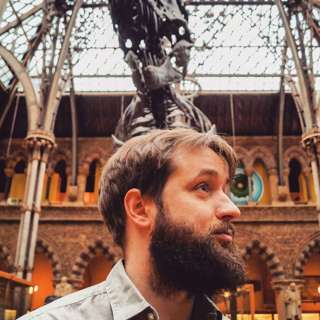
#137 – Andreas Mogensen on whether effective altruism is just for consequentialists

#137 – Andreas Mogensen on whether effective altruism is just for consequentialists

Effective altruism, in a slogan, aims to 'do the most good.' Utilitarianism, in a slogan, says we should act to 'produce the greatest good for the greatest number.' It's clear enough why utilitarians should be interested in the project of effective altruism. But what about the many people who reject utilitarianism?

Today's guest, Andreas Mogensen — senior research fellow at Oxford University's Global Priorities Institute — rejects utilitarianism, but as he explains, this does little to dampen his enthusiasm for the project of effective altruism.

Links to learn more, summary and full transcript.

Andreas leans towards 'deontological' or rule-based theories of ethics, rather than 'consequentialist' theories like utilitarianism which look exclusively at the effects of a person's actions.

Like most people involved in effective altruism, he parts ways with utilitarianism in rejecting its maximal level of demandingness, the idea that the ends justify the means, and the notion that the only moral reason for action is to benefit everyone in the world considered impartially.

However, Andreas believes any plausible theory of morality must give some weight to the harms and benefits we provide to other people. If we can improve a stranger's wellbeing enormously at negligible cost to ourselves and without violating any other moral prohibition, that must be at minimum a praiseworthy thing to do.

In a world as full of preventable suffering as our own, this simple 'principle of beneficence' is probably the only premise one needs to grant for the effective altruist project of identifying the most impactful ways to help others to be of great moral interest and importance.

As an illustrative example Andreas refers to the Giving What We Can pledge to donate 10% of one's income to the most impactful charities available, a pledge he took in 2009. Many effective altruism enthusiasts have taken such a pledge, while others spend their careers trying to figure out the most cost-effective places pledgers can give, where they'll get the biggest 'bang for buck'.

For someone living in a world as unequal as our own, this pledge at a very minimum gives an upper-middle class person in a rich country the chance to transfer money to someone living on about 1% as much as they do. The benefit an extremely poor recipient receives from the money is likely far more than the donor could get spending it on themselves.

What arguments could a non-utilitarian moral theory mount against such giving?

Many approaches to morality will say it's permissible not to give away 10% of your income to help others as effectively as is possible. But if they will almost all regard it as praiseworthy to benefit others without giving up something else of equivalent moral value, then Andreas argues they should be enthusiastic about effective altruism as an intellectual and practical project nonetheless.

In this conversation, Andreas and Rob discuss how robust the above line of argument is, and also cover:

• Should we treat thought experiments that feature very large numbers with great suspicion?
• If we had to allow someone to die to avoid preventing the World Cup final from being broadcast to the world, is that permissible?
• What might a virtue ethicist regard as 'doing the most good'?
• If a deontological theory of morality parted ways with common effective altruist practices, how would that likely be?
• If we can explain how we came to hold a view on a moral issue by referring to evolutionary selective pressures, should we disbelieve that view?

Chapters:

  • Rob’s intro (00:00:00)
  • The interview begins (00:01:36)
  • Deontology and effective altruism (00:04:59)
  • Giving What We Can (00:28:56)
  • Longtermism without consequentialism (00:38:01)
  • Further differences between deontologists and consequentialists (00:44:13)
  • Virtue ethics and effective altruism (01:08:15)
  • Is Andreas really a deontologist? (01:13:26)
  • Large number scepticism (01:21:11)
  • Evolutionary debunking arguments (01:58:48)
  • How Andreas’s views have changed (02:12:18)
  • Derek Parfit’s influence on Andreas (02:17:27)


Producer: Keiran Harris
Audio mastering: Ben Cordell and Beppe Rådvik
Transcriptions: Katy Moore

Episoder(333)

#12 - Beth Cameron works to stop you dying in a pandemic. Here’s what keeps her up at night.

#12 - Beth Cameron works to stop you dying in a pandemic. Here’s what keeps her up at night.

“When you're in the middle of a crisis and you have to ask for money, you're already too late.” That’s Dr Beth Cameron, who leads Global Biological Policy and Programs at the Nuclear Threat Initiative...

25 Okt 20171h 45min

#11 - Spencer Greenberg on speeding up social science 10-fold & why plenty of startups cause harm

#11 - Spencer Greenberg on speeding up social science 10-fold & why plenty of startups cause harm

Do most meat eaters think it’s wrong to hurt animals? Do Americans think climate change is likely to cause human extinction? What is the best, state-of-the-art therapy for depression? How can we make ...

17 Okt 20171h 29min
#10 - Nick Beckstead on how to spend billions of dollars preventing human extinction

#10 - Nick Beckstead on how to spend billions of dollars preventing human extinction

What if you were in a position to give away billions of dollars to improve the world? What would you do with it? This is the problem facing Program Officers at the Open Philanthropy Project - people l...

11 Okt 20171h 51min
#9 - Christine Peterson on how insecure computers could lead to global disaster, and how to fix it

#9 - Christine Peterson on how insecure computers could lead to global disaster, and how to fix it

Take a trip to Silicon Valley in the 70s and 80s, when going to space sounded like a good way to get around environmental limits, people started cryogenically freezing themselves, and nanotechnology l...

4 Okt 20171h 45min
#8 - Lewis Bollard on how to end factory farming in our lifetimes

#8 - Lewis Bollard on how to end factory farming in our lifetimes

Every year tens of billions of animals are raised in terrible conditions in factory farms before being killed for human consumption. Over the last two years Lewis Bollard – Project Officer for Farm An...

27 Sep 20173h 16min

#7 - Julia Galef on making humanity more rational, what EA does wrong, and why Twitter isn’t all bad

#7 - Julia Galef on making humanity more rational, what EA does wrong, and why Twitter isn’t all bad

The scientific revolution in the 16th century was one of the biggest societal shifts in human history, driven by the discovery of new and better methods of figuring out who was right and who was wrong...

13 Sep 20171h 14min
#6 - Toby Ord on why the long-term future matters more than anything else & what to do about it

#6 - Toby Ord on why the long-term future matters more than anything else & what to do about it

Of all the people whose well-being we should care about, only a small fraction are alive today. The rest are members of future generations who are yet to exist. Whether they’ll be born into a world th...

6 Sep 20172h 8min

#5 - Alex Gordon-Brown on how to donate millions in your 20s working in quantitative trading

#5 - Alex Gordon-Brown on how to donate millions in your 20s working in quantitative trading

Quantitative financial trading is one of the highest paying parts of the world’s highest paying industry. 25 to 30 year olds with outstanding maths skills can earn millions a year in an obscure set of...

28 Aug 20171h 45min

Populært innen Fakta

fastlegen
dine-penger-pengeradet
relasjonspodden-med-dora-thorhallsdottir-kjersti-idem
rss-strid-de-norske-borgerkrigene
foreldreradet
mikkels-paskenotter
treningspodden
rss-bisarr-historie
jakt-og-fiskepodden
rss-sunn-okonomi
sinnsyn
tomprat-med-gunnar-tjomlid
rss-kunsten-a-leve
hagespiren-podcast
rss-bak-luftfarten
ukast
fryktlos
hverdagspsyken
rss-mind-body-podden
gravid-uke-for-uke