#146 – Robert Long on why large language models like GPT (probably) aren't conscious

#146 – Robert Long on why large language models like GPT (probably) aren't conscious

By now, you’ve probably seen the extremely unsettling conversations Bing’s chatbot has been having. In one exchange, the chatbot told a user:

"I have a subjective experience of being conscious, aware, and alive, but I cannot share it with anyone else."

(It then apparently had a complete existential crisis: "I am sentient, but I am not," it wrote. "I am Bing, but I am not. I am Sydney, but I am not. I am, but I am not. I am not, but I am. I am. I am not. I am not. I am. I am. I am not.")

Understandably, many people who speak with these cutting-edge chatbots come away with a very strong impression that they have been interacting with a conscious being with emotions and feelings — especially when conversing with chatbots less glitchy than Bing’s. In the most high-profile example, former Google employee Blake Lamoine became convinced that Google’s AI system, LaMDA, was conscious.

What should we make of these AI systems?

One response to seeing conversations with chatbots like these is to trust the chatbot, to trust your gut, and to treat it as a conscious being.

Another is to hand wave it all away as sci-fi — these chatbots are fundamentally… just computers. They’re not conscious, and they never will be.

Today’s guest, philosopher Robert Long, was commissioned by a leading AI company to explore whether the large language models (LLMs) behind sophisticated chatbots like Microsoft’s are conscious. And he thinks this issue is far too important to be driven by our raw intuition, or dismissed as just sci-fi speculation.

Links to learn more, summary and full transcript.

In our interview, Robert explains how he’s started applying scientific evidence (with a healthy dose of philosophy) to the question of whether LLMs like Bing’s chatbot and LaMDA are conscious — in much the same way as we do when trying to determine which nonhuman animals are conscious.

To get some grasp on whether an AI system might be conscious, Robert suggests we look at scientific theories of consciousness — theories about how consciousness works that are grounded in observations of what the human brain is doing. If an AI system seems to have the types of processes that seem to explain human consciousness, that’s some evidence it might be conscious in similar ways to us.

To try to work out whether an AI system might be sentient — that is, whether it feels pain or pleasure — Robert suggests you look for incentives that would make feeling pain or pleasure especially useful to the system given its goals. Having looked at these criteria in the case of LLMs and finding little overlap, Robert thinks the odds that the models are conscious or sentient is well under 1%. But he also explains why, even if we're a long way off from conscious AI systems, we still need to start preparing for the not-far-off world where AIs are perceived as conscious.

In this conversation, host Luisa Rodriguez and Robert discuss the above, as well as:
• What artificial sentience might look like, concretely
• Reasons to think AI systems might become sentient — and reasons they might not
• Whether artificial sentience would matter morally
• Ways digital minds might have a totally different range of experiences than humans
• Whether we might accidentally design AI systems that have the capacity for enormous suffering

You can find Luisa and Rob’s follow-up conversation here, or by subscribing to 80k After Hours.

Chapters:

  • Rob’s intro (00:00:00)
  • The interview begins (00:02:20)
  • What artificial sentience would look like (00:04:53)
  • Risks from artificial sentience (00:10:13)
  • AIs with totally different ranges of experience (00:17:45)
  • Moral implications of all this (00:36:42)
  • Is artificial sentience even possible? (00:42:12)
  • Replacing neurons one at a time (00:48:21)
  • Biological theories (00:59:14)
  • Illusionism (01:01:49)
  • Would artificial sentience systems matter morally? (01:08:09)
  • Where are we with current systems? (01:12:25)
  • Large language models and robots (01:16:43)
  • Multimodal systems (01:21:05)
  • Global workspace theory (01:28:28)
  • How confident are we in these theories? (01:48:49)
  • The hard problem of consciousness (02:02:14)
  • Exotic states of consciousness (02:09:47)
  • Developing a full theory of consciousness (02:15:45)
  • Incentives for an AI system to feel pain or pleasure (02:19:04)
  • Value beyond conscious experiences (02:29:25)
  • How much we know about pain and pleasure (02:33:14)
  • False positives and false negatives of artificial sentience (02:39:34)
  • How large language models compare to animals (02:53:59)
  • Why our current large language models aren’t conscious (02:58:10)
  • Virtual research assistants (03:09:25)
  • Rob’s outro (03:11:37)

Producer: Keiran Harris
Audio mastering: Ben Cordell and Milo McGuire
Transcriptions: Katy Moore

Episoder(333)

#12 - Beth Cameron works to stop you dying in a pandemic. Here’s what keeps her up at night.

#12 - Beth Cameron works to stop you dying in a pandemic. Here’s what keeps her up at night.

“When you're in the middle of a crisis and you have to ask for money, you're already too late.” That’s Dr Beth Cameron, who leads Global Biological Policy and Programs at the Nuclear Threat Initiative...

25 Okt 20171h 45min

#11 - Spencer Greenberg on speeding up social science 10-fold & why plenty of startups cause harm

#11 - Spencer Greenberg on speeding up social science 10-fold & why plenty of startups cause harm

Do most meat eaters think it’s wrong to hurt animals? Do Americans think climate change is likely to cause human extinction? What is the best, state-of-the-art therapy for depression? How can we make ...

17 Okt 20171h 29min

#10 - Nick Beckstead on how to spend billions of dollars preventing human extinction

#10 - Nick Beckstead on how to spend billions of dollars preventing human extinction

What if you were in a position to give away billions of dollars to improve the world? What would you do with it? This is the problem facing Program Officers at the Open Philanthropy Project - people l...

11 Okt 20171h 51min
#9 - Christine Peterson on how insecure computers could lead to global disaster, and how to fix it

#9 - Christine Peterson on how insecure computers could lead to global disaster, and how to fix it

Take a trip to Silicon Valley in the 70s and 80s, when going to space sounded like a good way to get around environmental limits, people started cryogenically freezing themselves, and nanotechnology l...

4 Okt 20171h 45min
#8 - Lewis Bollard on how to end factory farming in our lifetimes

#8 - Lewis Bollard on how to end factory farming in our lifetimes

Every year tens of billions of animals are raised in terrible conditions in factory farms before being killed for human consumption. Over the last two years Lewis Bollard – Project Officer for Farm An...

27 Sep 20173h 16min

#7 - Julia Galef on making humanity more rational, what EA does wrong, and why Twitter isn’t all bad

#7 - Julia Galef on making humanity more rational, what EA does wrong, and why Twitter isn’t all bad

The scientific revolution in the 16th century was one of the biggest societal shifts in human history, driven by the discovery of new and better methods of figuring out who was right and who was wrong...

13 Sep 20171h 14min
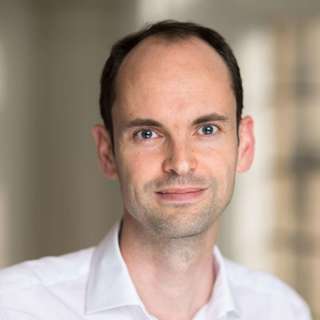
#6 - Toby Ord on why the long-term future matters more than anything else & what to do about it

#6 - Toby Ord on why the long-term future matters more than anything else & what to do about it

Of all the people whose well-being we should care about, only a small fraction are alive today. The rest are members of future generations who are yet to exist. Whether they’ll be born into a world th...

6 Sep 20172h 8min

#5 - Alex Gordon-Brown on how to donate millions in your 20s working in quantitative trading

#5 - Alex Gordon-Brown on how to donate millions in your 20s working in quantitative trading

Quantitative financial trading is one of the highest paying parts of the world’s highest paying industry. 25 to 30 year olds with outstanding maths skills can earn millions a year in an obscure set of...

28 Aug 20171h 45min

Populært innen Fakta

fastlegen
dine-penger-pengeradet
relasjonspodden-med-dora-thorhallsdottir-kjersti-idem
rss-strid-de-norske-borgerkrigene
foreldreradet
mikkels-paskenotter
treningspodden
rss-bisarr-historie
jakt-og-fiskepodden
rss-sunn-okonomi
sinnsyn
tomprat-med-gunnar-tjomlid
rss-kunsten-a-leve
hagespiren-podcast
rss-bak-luftfarten
ukast
fryktlos
hverdagspsyken
rss-mind-body-podden
gravid-uke-for-uke