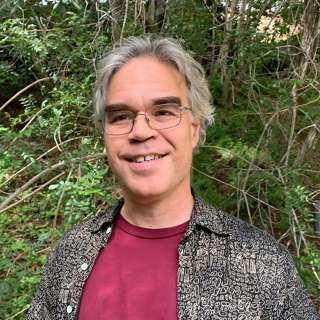
#190 – Eric Schwitzgebel on whether the US is conscious

#190 – Eric Schwitzgebel on whether the US is conscious

"One of the most amazing things about planet Earth is that there are complex bags of mostly water — you and me – and we can look up at the stars, and look into our brains, and try to grapple with the most complex, difficult questions that there are. And even if we can’t make great progress on them and don’t come to completely satisfying solutions, just the fact of trying to grapple with these things is kind of the universe looking at itself and trying to understand itself. So we’re kind of this bright spot of reflectiveness in the cosmos, and I think we should celebrate that fact for its own intrinsic value and interestingness." —Eric Schwitzgebel

In today’s episode, host Luisa Rodriguez speaks to Eric Schwitzgebel — professor of philosophy at UC Riverside — about some of the most bizarre and unintuitive claims from his recent book, The Weirdness of the World.

Links to learn more, highlights, and full transcript.

They cover:

  • Why our intuitions seem so unreliable for answering fundamental questions about reality.
  • What the materialist view of consciousness is, and how it might imply some very weird things — like that the United States could be a conscious entity.
  • Thought experiments that challenge our intuitions — like supersquids that think and act through detachable tentacles, and intelligent species whose brains are made up of a million bugs.
  • Eric’s claim that consciousness and cosmology are universally bizarre and dubious.
  • How to think about borderline states of consciousness, and whether consciousness is more like a spectrum or more like a light flicking on.
  • The nontrivial possibility that we could be dreaming right now, and the ethical implications if that’s true.
  • Why it’s worth it to grapple with the universe’s most complex questions, even if we can’t find completely satisfying solutions.
  • And much more.

Chapters:

  • Cold open |00:00:00|
  • Luisa’s intro |00:01:10|
  • Bizarre and dubious philosophical theories |00:03:13|
  • The materialist view of consciousness |00:13:55|
  • What would it mean for the US to be conscious? |00:19:46|
  • Supersquids and antheads thought experiments |00:22:37|
  • Alternatives to the materialist perspective |00:35:19|
  • Are our intuitions useless for thinking about these things? |00:42:55|
  • Key ingredients for consciousness |00:46:46|
  • Reasons to think the US isn’t conscious |01:01:15|
  • Overlapping consciousnesses [01:09:32]
  • Borderline cases of consciousness |01:13:22|
  • Are we dreaming right now? |01:40:29|
  • Will we ever have answers to these dubious and bizarre questions? |01:56:16|


Producer and editor: Keiran Harris
Audio engineering lead: Ben Cordell
Technical editing: Simon Monsour, Milo McGuire, and Dominic Armstrong
Additional content editing: Katy Moore and Luisa Rodriguez
Transcriptions: Katy Moore

Episoder(333)

#12 - Beth Cameron works to stop you dying in a pandemic. Here’s what keeps her up at night.

#12 - Beth Cameron works to stop you dying in a pandemic. Here’s what keeps her up at night.

“When you're in the middle of a crisis and you have to ask for money, you're already too late.” That’s Dr Beth Cameron, who leads Global Biological Policy and Programs at the Nuclear Threat Initiative...

25 Okt 20171h 45min

#11 - Spencer Greenberg on speeding up social science 10-fold & why plenty of startups cause harm

#11 - Spencer Greenberg on speeding up social science 10-fold & why plenty of startups cause harm

Do most meat eaters think it’s wrong to hurt animals? Do Americans think climate change is likely to cause human extinction? What is the best, state-of-the-art therapy for depression? How can we make ...

17 Okt 20171h 29min
#10 - Nick Beckstead on how to spend billions of dollars preventing human extinction

#10 - Nick Beckstead on how to spend billions of dollars preventing human extinction

What if you were in a position to give away billions of dollars to improve the world? What would you do with it? This is the problem facing Program Officers at the Open Philanthropy Project - people l...

11 Okt 20171h 51min
#9 - Christine Peterson on how insecure computers could lead to global disaster, and how to fix it

#9 - Christine Peterson on how insecure computers could lead to global disaster, and how to fix it

Take a trip to Silicon Valley in the 70s and 80s, when going to space sounded like a good way to get around environmental limits, people started cryogenically freezing themselves, and nanotechnology l...

4 Okt 20171h 45min
#8 - Lewis Bollard on how to end factory farming in our lifetimes

#8 - Lewis Bollard on how to end factory farming in our lifetimes

Every year tens of billions of animals are raised in terrible conditions in factory farms before being killed for human consumption. Over the last two years Lewis Bollard – Project Officer for Farm An...

27 Sep 20173h 16min

#7 - Julia Galef on making humanity more rational, what EA does wrong, and why Twitter isn’t all bad

#7 - Julia Galef on making humanity more rational, what EA does wrong, and why Twitter isn’t all bad

The scientific revolution in the 16th century was one of the biggest societal shifts in human history, driven by the discovery of new and better methods of figuring out who was right and who was wrong...

13 Sep 20171h 14min
#6 - Toby Ord on why the long-term future matters more than anything else & what to do about it

#6 - Toby Ord on why the long-term future matters more than anything else & what to do about it

Of all the people whose well-being we should care about, only a small fraction are alive today. The rest are members of future generations who are yet to exist. Whether they’ll be born into a world th...

6 Sep 20172h 8min
#5 - Alex Gordon-Brown on how to donate millions in your 20s working in quantitative trading

#5 - Alex Gordon-Brown on how to donate millions in your 20s working in quantitative trading

Quantitative financial trading is one of the highest paying parts of the world’s highest paying industry. 25 to 30 year olds with outstanding maths skills can earn millions a year in an obscure set of...

28 Aug 20171h 45min

Populært innen Fakta

fastlegen
dine-penger-pengeradet
relasjonspodden-med-dora-thorhallsdottir-kjersti-idem
rss-strid-de-norske-borgerkrigene
foreldreradet
mikkels-paskenotter
treningspodden
rss-bisarr-historie
jakt-og-fiskepodden
rss-sunn-okonomi
sinnsyn
tomprat-med-gunnar-tjomlid
rss-kunsten-a-leve
hagespiren-podcast
rss-bak-luftfarten
ukast
fryktlos
hverdagspsyken
rss-mind-body-podden
gravid-uke-for-uke