#200 – Ezra Karger on what superforecasters and experts think about existential risks

#200 – Ezra Karger on what superforecasters and experts think about existential risks

"It’s very hard to find examples where people say, 'I’m starting from this point. I’m starting from this belief.' So we wanted to make that very legible to people. We wanted to say, 'Experts think this; accurate forecasters think this.' They might both be wrong, but we can at least start from here and figure out where we’re coming into a discussion and say, 'I am much less concerned than the people in this report; or I am much more concerned, and I think people in this report were missing major things.' But if you don’t have a reference set of probabilities, I think it becomes much harder to talk about disagreement in policy debates in a space that’s so complicated like this." —Ezra Karger

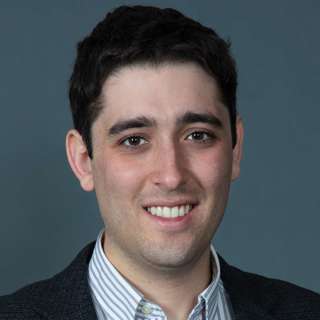
In today’s episode, host Luisa Rodriguez speaks to Ezra Karger — research director at the Forecasting Research Institute — about FRI’s recent Existential Risk Persuasion Tournament to come up with estimates of a range of catastrophic risks.

Links to learn more, highlights, and full transcript.

They cover:

  • How forecasting can improve our understanding of long-term catastrophic risks from things like AI, nuclear war, pandemics, and climate change.
  • What the Existential Risk Persuasion Tournament (XPT) is, how it was set up, and the results.
  • The challenges of predicting low-probability, high-impact events.
  • Why superforecasters’ estimates of catastrophic risks seem so much lower than experts’, and which group Ezra puts the most weight on.
  • The specific underlying disagreements that superforecasters and experts had about how likely catastrophic risks from AI are.
  • Why Ezra thinks forecasting tournaments can help build consensus on complex topics, and what he wants to do differently in future tournaments and studies.
  • Recent advances in the science of forecasting and the areas Ezra is most excited about exploring next.
  • Whether large language models could help or outperform human forecasters.
  • How people can improve their calibration and start making better forecasts personally.
  • Why Ezra thinks high-quality forecasts are relevant to policymakers, and whether they can really improve decision-making.
  • And plenty more.

Chapters:

  • Cold open (00:00:00)
  • Luisa’s intro (00:01:07)
  • The interview begins (00:02:54)
  • The Existential Risk Persuasion Tournament (00:05:13)
  • Why is this project important? (00:12:34)
  • How was the tournament set up? (00:17:54)
  • Results from the tournament (00:22:38)
  • Risk from artificial intelligence (00:30:59)
  • How to think about these numbers (00:46:50)
  • Should we trust experts or superforecasters more? (00:49:16)
  • The effect of debate and persuasion (01:02:10)
  • Forecasts from the general public (01:08:33)
  • How can we improve people’s forecasts? (01:18:59)
  • Incentives and recruitment (01:26:30)
  • Criticisms of the tournament (01:33:51)
  • AI adversarial collaboration (01:46:20)
  • Hypotheses about stark differences in views of AI risk (01:51:41)
  • Cruxes and different worldviews (02:17:15)
  • Ezra’s experience as a superforecaster (02:28:57)
  • Forecasting as a research field (02:31:00)
  • Can large language models help or outperform human forecasters? (02:35:01)
  • Is forecasting valuable in the real world? (02:39:11)
  • Ezra’s book recommendations (02:45:29)
  • Luisa's outro (02:47:54)


Producer: Keiran Harris
Audio engineering: Dominic Armstrong, Ben Cordell, Milo McGuire, and Simon Monsour
Content editing: Luisa Rodriguez, Katy Moore, and Keiran Harris
Transcriptions: Katy Moore

Denne episoden er hentet fra en åpen RSS-feed og er ikke publisert av Podme. Den kan derfor inneholde annonser.

Episoder(341)

How a small team of activists helped pass America's landmark AI safety laws | Sneha Revanur, Encode AI

How a small team of activists helped pass America's landmark AI safety laws | Sneha Revanur, Encode AI

Six years ago, aged just 15, Sneha Revanur founded the AI advocacy nonprofit Encode AI — back when AI felt like a niche issue. Now the world’s caught up with her, and she’s ready to share everything s...

8 Jul 52min

We can guess what intergalactic war would look like. And strangely, it matters.

We can guess what intergalactic war would look like. And strangely, it matters.

Intergalactic war is probably billions of years away — yet physics can already tell us how it ends. And strangely that conclusion is relevant to decisions people have to make today.In this video, Rob ...

18 Jun 15min

How AI could create the world’s biggest problems (article by Zershaaneh Qureshi)

How AI could create the world’s biggest problems (article by Zershaaneh Qureshi)

Imagine you’re living 15,000 years ago. Your people are hunter-gatherers and you sleep under the stars. If someone told you humans would one day build cities with millions of people, fly through the a...

11 Jun 1h 29min

#245 – Rohin Shah on what it's really like to run AGI safety at Google DeepMind (and where I disagree with 'doomers')

#245 – Rohin Shah on what it's really like to run AGI safety at Google DeepMind (and where I disagree with 'doomers')

Most people working on AI safety think without a massive effort AI systems will probably end up with goals catastrophically different from humanity’s. Today’s guest, Rohin Shah — head of AGI Safety an...

2 Jun 2h 48min

What makes for a dream job? | Benjamin Todd

What makes for a dream job? | Benjamin Todd

What actually makes a job fulfilling? It's not what most career advice tells you. "Follow your passion" sounds inspiring, but it's misleading — and the research backs that up.Drawing on hundreds of st...

28 Mai 28min

#244 – Benjamin Todd on how we’re updating our career advice for the strangest time in history

#244 – Benjamin Todd on how we’re updating our career advice for the strangest time in history

The average career is 80,000 hours long. With AI advancing so rapidly, the hours you have left in your career matter more than ever.Some leading AI researchers think there’s a 10% chance that AI syste...

26 Mai 1h 6min

Can AIs already start 'rogue deployments' inside AI companies? (Landmark new METR report)

Can AIs already start 'rogue deployments' inside AI companies? (Landmark new METR report)

A red-teamer was embedded inside Anthropic for three weeks, told to imagine he was an evil Claude, and asked to figure out how to launch a ‘rogue AI deployment’ without getting caught. It’s one part o...

20 Mai 20min

#243 – 'Godfather of AI' Yoshua Bengio: "I now see a path" to safe superintelligent AI

#243 – 'Godfather of AI' Yoshua Bengio: "I now see a path" to safe superintelligent AI

The co-inventor of modern AI and the most cited living scientist believes he's figured out how to ensure AI is honest, incapable of deception, and never goes rogue. Yoshua Bengio – Turing Award Winner...

7 Mai 2h 35min

Populært innen Fakta

fastlegen
dine-penger-pengeradet
relasjonspodden-med-dora-thorhallsdottir-kjersti-idem
rss-kunsten-a-leve
foreldreradet
treningspodden
mikkels-paskenotter
sinnsyn
jakt-og-fiskepodden
rss-strid-de-norske-borgerkrigene
rss-sarbar-med-lotte-erik
gravid-uke-for-uke
fryktlos
rss-var-forste-kaffe
uroskolen
tomprat-med-gunnar-tjomlid
rss-mind-body-podden
rss-impressions-2
hverdagspsyken
level-up-med-anniken-binz