Morgan Hamel on Moral Polarization

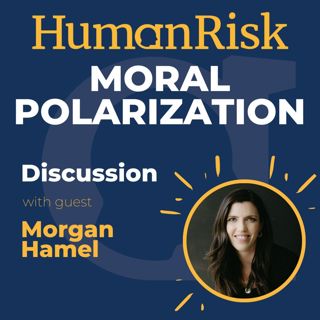
Morgan Hamel on Moral Polarization

How does moral polarization challenge even the most well-intentioned leaders?

In this episode, I speak with Morgan Hamel, who talks frankly about her journey from working in business ethics to launching her own ethical fashion business.

In our conversation, Morgan reflects on the complex dynamics of running a business that sought to balance purpose and profit and how that vision was tested by the demands of a polarized world.

Morgan’s story offers a candid look at the pressures business leaders face today—particularly around ethical decision-making and navigating stakeholder expectations. She shares her personal experiences of how social media, moral polarization, and the expectations of "doing good" can create enormous challenges for business owners who want to stay true to their values while also being commercially successful.

We explore the notion of moral polarization and how leaders can prepare themselves to handle the reputational and psychological pressure that comes with balancing ethics and business in today’s climate.

Morgan Hamel
Morgan describes herself as an entrepreneur and ethics expert who has dedicated her career to exploring the intersection of business and ethics. She began her journey in business ethics after studying applied ethics at Utrecht University. She later spent 11 years working in the ethics office of a large Canadian corporation, where she helped develop integrity programs and worked on aligning corporate actions with ethical codes.

After leaving corporate life, Morgan founded her own ethical fashion business, "The Garment," which sought to change the face of fashion by connecting women with responsibly made clothes. However, her business came under immense pressure during the moral and social upheaval following the death of George Floyd.

Morgan ultimately made the difficult decision to close the business, leading her to reflect on the deeper issues of moral polarization that businesses face today. Today, she works with organizations, boards, and executives to help them navigate the complexities of ethical leadership in a polarized world.

AI-generated timestamp summary

[00:00:00] - Introduction to the mini-series on Diversity, Equity, and Inclusion.
[00:01:12] - Morgan's background in business ethics and her decision to start an ethical fashion business.

[00:02:33] - Morgan reflects on her business's failure due to the competing demands of ethics and commercial success.

[00:04:00] - The pressures of leading ethically in a polarized world, particularly on social media.

[00:07:10] - The dangers of moral polarization in business decision-making.

[00:10:20] - How post-2012 pressures (social media influence) have changed the ethical landscape for businesses.

[00:18:00] - Lessons from Morgan’s decision to close her business despite its commercial success.

[00:30:00] - A discussion on aligning business actions with ethical values and balancing profit with purpose.

[00:46:55] - Morgan’s reflections on handling reputational risk and psychological pressure.

[01:00:40] - The rise of post-2012 ethical risks and how leaders can prepare themselves.

[01:10:00] - Morgan’s current work on moral polarization and her advice for business leaders today.

Links
To find out more about Morgan, visit her website: https://www.morganhamel.com/

Morgan on LinkedIn: https://www.linkedin.com/in/morgan-hamel-365537210/

The previous episode of this mini-series on DI&E: https://www.humanriskpodcast.com/chloevaldary-morganhamel-peterstein-on-diversity-equity-inclusion/

The essay she wrote with Keith Darcy on Stakeholder Activism: https://www.morganhamel.com/stakeholder-activism

Morgan's TED Talk: https://tedxyyc.ca/talk/morgan-hamel/

Denne episoden er hentet fra en åpen RSS-feed og er ikke publisert av Podme. Den kan derfor inneholde annonser.

Episoder(382)

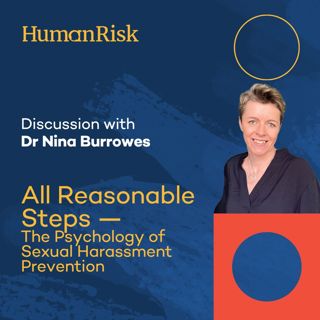
Dr Nina Burrowes on All Reasonable Steps: The Psychology of Sexual Harassment Prevention

Dr Nina Burrowes on All Reasonable Steps: The Psychology of Sexual Harassment Prevention

What does it actually take to prevent sexual harassment at work? Policies, training, reporting mechanisms and statements of zero tolerance are one thing. Creating a workplace where sexual harassment i...

25 Sep 1h 6min

Professor Alex Edmans on the Madness of Markets — Why Smart People Make Crazy Decisions

Professor Alex Edmans on the Madness of Markets — Why Smart People Make Crazy Decisions

What can financial markets teach us about human behaviour? Why might the size of a CEO’s signature tell us something useful about the company they run? And why, even when smart investors know somethin...

13 Sep 1h 1min
Lyndon Nelson & Gavin Stewart on Building Better Regulators

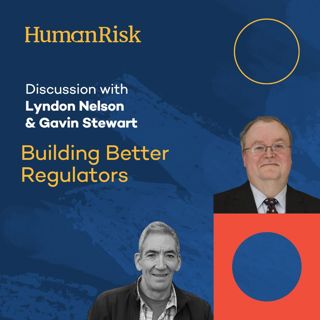
Lyndon Nelson & Gavin Stewart on Building Better Regulators

What if understanding regulation could help us spot when politicians are promising the impossible? Regulation sounds simple in theory. Something poses a risk, so we create rules and a regulator to con...

7 Sep 1h 23min
Roger Dooley on The Persuasion Engine

Roger Dooley on The Persuasion Engine

What if AI could help us understand people better, rather than simply replacing what humans do?Episode summaryHow can we use AI to become better at persuasion, communication and understanding human be...

1 Sep 59min
Annie Wagstaff on The Joy of Curiosity

Annie Wagstaff on The Joy of Curiosity

What’s the last thing you learned simply because you wanted to know?Episode summaryWhy do we feel the need to justify what we learn? My guest on this episode is Annie Wagstaff, a musician and composer...

23 Aug 1h
Paul Craven on Living With Uncertainty

Paul Craven on Living With Uncertainty

What happens when someone who spends his life thinking about risk, decision-making and human behaviour is confronted with an uncertainty he simply can’t control?Episode summaryMy guest is Paul Craven,...

15 Aug 51min
Benji Wilson on why we rate everything

Benji Wilson on why we rate everything

Why do we rate everything and why do we do so on a scale of one to five stars? What happens when systems designed to help us make better choices start influencing our behaviour in ways we don’t necess...

8 Aug 1h 4min
Mark Heywood on The Stories We Tell About Ourselves

Mark Heywood on The Stories We Tell About Ourselves

What parts of yourself have you learned to hide in order to be taken seriously? My guest on this episode is Mark Heywood, a friend of the show, returning guest and someone I've collaborated with on a ...

2 Aug 1h 21min

Populært innen Vitenskap

fastlegen
romkapsel
liberal-halvtime
jss
tingenes-tilstand
forskningno
tomprat-med-gunnar-tjomlid
rekommandert
sinnsyn
villmarksliv
rss-paradigmepodden
fjellsportpodden
rss-nysgjerrige-norge
rss-kunstig-intelligens-med-elisabeth-maren-og-morten
rss-rekommandert
tidlose-historier
nordnorsk-historie
rss-inn-til-kjernen-med-sunniva-rose
psykopoden
grunnstoffene