#53: The pros and cons of full-waveform inversion

#53: The pros and cons of full-waveform inversion

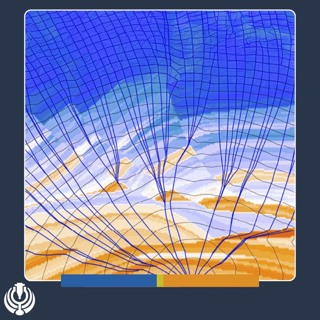
In this episode, host Andrew Geary speaks with John Brittan, contributor to March's The Leading Edge. March's special section returns to a common and major topic for TLE - full-waveform inversion. John highlights the advantages and disadvantages of several FWI approaches, discusses the possibilities and limitations of the technique, and explores the common themes across the seven papers. Episode 53 proudly sponsored by ION Geophysical. Interviewee biography John Brittan received a BSc in Physics from the University of Birmingham in 1992 and, thanks to a Shell Scholarship, a PhD from Imperial College, London in Geophysics in 1995. He then was a Royal Commission for the Exhibition of 1851 Research Fellow at Imperial, being part of the team who undertook the first seismic profile across the K-T boundary crater at Chicxulub and also being part of Imperial's pioneering efforts in full-waveform inversion. He joined Petroleum Geo-Services in 1997, where he worked on the research and development of data processing algorithms with particular interest in the fields of multiple removal, time-lapse processing, travel-time tomography and noise attenuation. John undertook a number of management roles at PGS including Head of Processing Technology and Chief Geophysicist for Data Processing and Technology. In 2013 he joined ION where he is Vice-President, Europe and Africa in the Imaging Services division. He is an active member of the PESGB, EAGE and SEG and was until recently an Associate Editor of Geophysical Prospecting. Subscribers can read the full articles in the SEG Digital Library at https://library.seg.org/and abstracts are always free. Show notes and links at https://seg.org/podcast. Sponsor ION Geophysical is a pioneer in Full Waveform Inversion, an advanced model estimation technique that reduces exploration risk while enabling more effective development decisions. The ION suite of FWI technologies provide highly accurate models of the subsurface by utilizing the entire wave field, powering deeper and more robust model estimation across a range of acquisition configurations. Learn more about Full Waveform Inversion by typing "ION FWI" into your favorite search engine. Credits Interview: John Brittan Original music by Zach Bridges. This episode was hosted, edited, and produced by Andrew Geary. Special thanks to the SEG podcast team: Jennifer Crockett, Ashley Rodriguez, Ally McGinnis, and Mick Swiney, , with additional support from Kathy Gamble. If you enjoy the show, please subscribe to the podcast on Spotify, Google Play, or Apple Podcasts to be the first to know about new episodes!

Denne episoden er hentet fra en åpen RSS-feed og er ikke publisert av Podme. Den kan derfor inneholde annonser.

Episoder(324)

308: Low Cost Monitoring Without Low Value

308: Low Cost Monitoring Without Low Value

“The goal is not cheaper data. The goal is to spend less on everything that does not add value to the decision one is trying to make.” Low-cost monitoring is becoming less about cheaper sensors and m...

24 Sep 27min
307: How QI Connects Science and Business Impact

307: How QI Connects Science and Business Impact

“Machine learning over the last few years has become revolutionary. But we still need, and maybe even more so, the constraint and knowledge of rock physics and QI as an integral part of those workflow...

15 Sep 31min
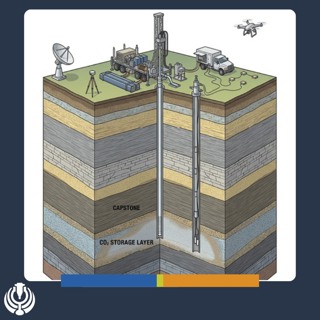
306: How Geophysics Builds Trust in CO2 Storage

306: How Geophysics Builds Trust in CO2 Storage

“We really need to be able to explain in clear language and with vivid examples just what geophysics can do here.” Michael B. Helgerud and Manika Prasad approach CCUS monitoring from two useful angle...

10 Sep 29min
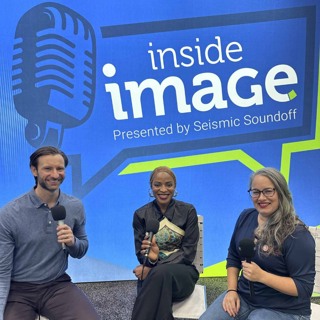
15: The Conversation Geoscience Cannot Afford to Ignore (Inside IMAGE '26)

15: The Conversation Geoscience Cannot Afford to Ignore (Inside IMAGE '26)

Geoscience needs more people who can solve problems across energy, water, climate, critical minerals, and the subsurface, yet departments are losing students, funding, and in some cases the field expe...

3 Sep 36min
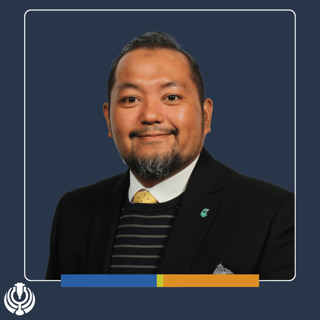
305: Building Trust in Elastic FWI

305: Building Trust in Elastic FWI

“We always aim for 60 percent. The other 40 percent, we are ready to make mistakes, learn from those mistakes, and then move forward.” A 600-meter carbonate platform forced Dr. Ahmad Riza Ghazali and...

27 Aug 30min
14: How Exhibiting at IMAGE Can Shape What You Build Next (Inside IMAGE '26)

14: How Exhibiting at IMAGE Can Shape What You Build Next (Inside IMAGE '26)

Julian Chenin calls IMAGE “Disneyland for geoscience,” and after walking the exhibition floor it is easy to understand what he means. But for ROGII, the real value is what happens when people stop at ...

21 Aug 9min

13: AI Is an Accelerator, Not the Decision-Maker (Inside IMAGE '26)

13: AI Is an Accelerator, Not the Decision-Maker (Inside IMAGE '26)

Companies have spent years storing more and more data, but Amii Rozell and Hana Kabazi make an important distinction: saving the final answer is not the same as saving why you made the decision. Three...

21 Aug 28min

12: How GWB Turns Geoscience Into Human Impact (Inside IMAGE '26)

12: How GWB Turns Geoscience Into Human Impact (Inside IMAGE '26)

Geoscientists Without Borders starts with a simple idea: geoscience can improve someone’s life. Jim Funk has seen what access to clean water can mean in African communities, while Craig Beasley talks ...

20 Aug 26min

Populært innen Vitenskap

fastlegen
romkapsel
liberal-halvtime
jss
tingenes-tilstand
forskningno
tomprat-med-gunnar-tjomlid
rekommandert
sinnsyn
villmarksliv
rss-paradigmepodden
fjellsportpodden
rss-nysgjerrige-norge
rss-kunstig-intelligens-med-elisabeth-maren-og-morten
rss-rekommandert
tidlose-historier
nordnorsk-historie
rss-inn-til-kjernen-med-sunniva-rose
psykopoden
grunnstoffene