68: The Future of Data Acquisition and Seismic Surveys
Seismic Soundoff21 Nov 2019

68: The Future of Data Acquisition and Seismic Surveys

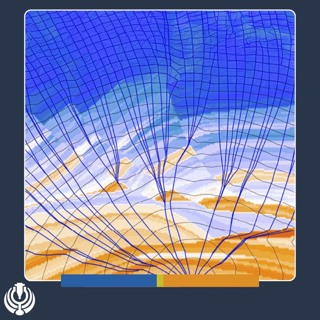
Igor Kvasov, engineering manager at Google and co-founder of SeismoTrack, joins host Andrew Geary to discuss his new book, Numerical Modeling of Seismic Responses from Fractured Reservoirs by the Grid-characteristic Method. Igor and Andrew discuss just what is the grid-characteristic method and its advantages, the future of data acquisition and seismic surveys, why numerical modeling should be used more in survey planning, and Igor's challenge to the geoscience community on numerical modeling. Get your copy of Numerical Modeling of Seismic Responses from Fractured Reservoirs by the Grid-characteristic Method today at https://seg.org/shop! Visit https://seg.org/podcast/Post/8688 for the complete show notes. This episode is proudly sponsored by TGS. BIOGRAPHY Igor Kvasov graduated from Moscow Institute of Physics and Technology (MIPT), Russia, in 2008 (physics and applied mathematics). Having successfully completed his thesis on numerical simulation of wave processes in heterogeneous solid elastic bodies, Kvasov received his Ph.D. in physics and computer science from MIPT in 2011. During 2006–2015, he served as an associate professor at the MIPT Computer Science and Computational Mathematics Department. Currently, he works as an engineering manager at Google in California. As part of his research in the numerical simulation of wave processes, Kvasov has made significant improvements in and broadened the abilities of the grid-characteristic method (GCM), including the ability to handle hundreds of thousands of fractures, which corresponds to the conditions of real fractured reservoirs, and the ability to model such 3D fractured prospects using unstructured grids. His research on the properties of seismic responses from fractured reservoirs helps solve the problem of their direct detection. SPONSOR TGS is the global gateway to subsurface intelligence from seismic to well data. As a leading geoscience data provider to the energy industry TGS invests in onshore and offshore multi-client data projects in an array of basins worldwide - ranging from new-entry frontier markets to established, mature basins. TGS’s extensive data library portfolio services the entire upstream life cycle from exploration through the appraisal and development stage. Leveraging the breadth of this world-class library TGS enhances the exploration process through advanced analytics and analytics-ready data products. Visit https://www.tgs.com/. CREDITS Original music by Zach Bridges. This episode was hosted, edited, and produced by Andrew Geary. Thank you to the SEG podcast team: Jennifer Crockett, Ally McGinnis, and Mick Swiney.

Denne episoden er hentet fra en åpen RSS-feed og er ikke publisert av Podme. Den kan derfor inneholde annonser.

Episoder(324)

308: Low Cost Monitoring Without Low Value

308: Low Cost Monitoring Without Low Value

“The goal is not cheaper data. The goal is to spend less on everything that does not add value to the decision one is trying to make.” Low-cost monitoring is becoming less about cheaper sensors and m...

24 Sep 27min
307: How QI Connects Science and Business Impact

307: How QI Connects Science and Business Impact

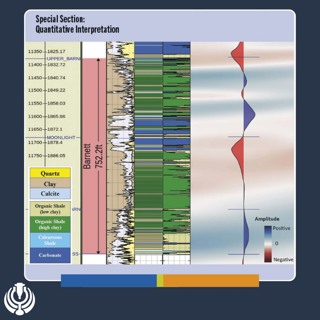
“Machine learning over the last few years has become revolutionary. But we still need, and maybe even more so, the constraint and knowledge of rock physics and QI as an integral part of those workflow...

15 Sep 31min
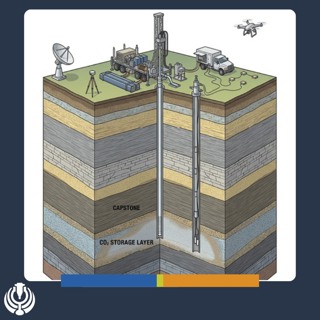
306: How Geophysics Builds Trust in CO2 Storage

306: How Geophysics Builds Trust in CO2 Storage

“We really need to be able to explain in clear language and with vivid examples just what geophysics can do here.” Michael B. Helgerud and Manika Prasad approach CCUS monitoring from two useful angle...

10 Sep 29min
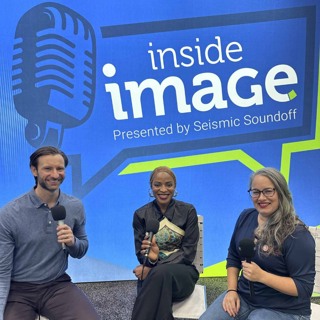
15: The Conversation Geoscience Cannot Afford to Ignore (Inside IMAGE '26)

15: The Conversation Geoscience Cannot Afford to Ignore (Inside IMAGE '26)

Geoscience needs more people who can solve problems across energy, water, climate, critical minerals, and the subsurface, yet departments are losing students, funding, and in some cases the field expe...

3 Sep 36min
305: Building Trust in Elastic FWI

305: Building Trust in Elastic FWI

“We always aim for 60 percent. The other 40 percent, we are ready to make mistakes, learn from those mistakes, and then move forward.” A 600-meter carbonate platform forced Dr. Ahmad Riza Ghazali and...

27 Aug 30min
14: How Exhibiting at IMAGE Can Shape What You Build Next (Inside IMAGE '26)

14: How Exhibiting at IMAGE Can Shape What You Build Next (Inside IMAGE '26)

Julian Chenin calls IMAGE “Disneyland for geoscience,” and after walking the exhibition floor it is easy to understand what he means. But for ROGII, the real value is what happens when people stop at ...

21 Aug 9min

13: AI Is an Accelerator, Not the Decision-Maker (Inside IMAGE '26)

13: AI Is an Accelerator, Not the Decision-Maker (Inside IMAGE '26)

Companies have spent years storing more and more data, but Amii Rozell and Hana Kabazi make an important distinction: saving the final answer is not the same as saving why you made the decision. Three...

21 Aug 28min

12: How GWB Turns Geoscience Into Human Impact (Inside IMAGE '26)

12: How GWB Turns Geoscience Into Human Impact (Inside IMAGE '26)

Geoscientists Without Borders starts with a simple idea: geoscience can improve someone’s life. Jim Funk has seen what access to clean water can mean in African communities, while Craig Beasley talks ...

20 Aug 26min

Populært innen Vitenskap

fastlegen
romkapsel
liberal-halvtime
jss
tingenes-tilstand
forskningno
tomprat-med-gunnar-tjomlid
rekommandert
sinnsyn
villmarksliv
rss-paradigmepodden
fjellsportpodden
rss-nysgjerrige-norge
rss-kunstig-intelligens-med-elisabeth-maren-og-morten
rss-rekommandert
tidlose-historier
nordnorsk-historie
rss-inn-til-kjernen-med-sunniva-rose
psykopoden
grunnstoffene