82: The present and future of training and education with Kurt Marfurt

82: The present and future of training and education with Kurt Marfurt

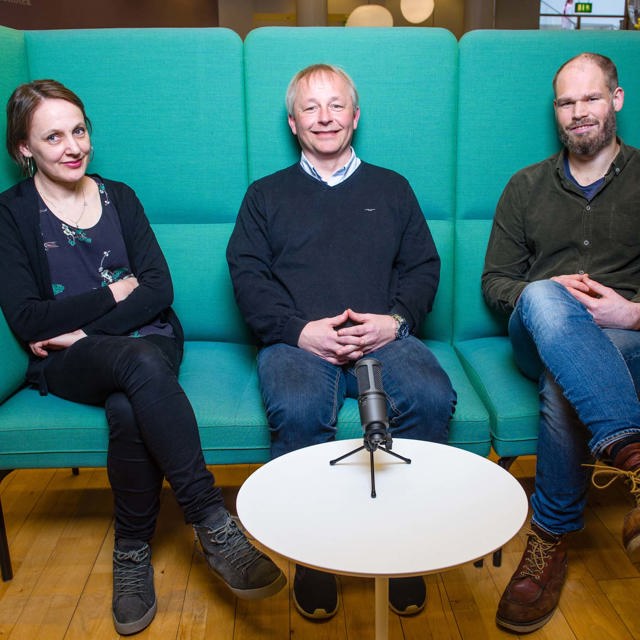
Seismic Soundoff is excited to welcome back Kurt Marfurt. Kurt joined the podcast for our second-ever episode that still remains one of the most popular episodes. For this conversation, Kurt highlights the present state of education and training in geophysics, including the value and benefits of virtual education. He shares his thoughts on the most important area of focus for geophysicists right now, why there's a need to increase your quantitative and programming skills and offers his one piece of advice to succeed in geophysics. As with our first conversation, this one is not to be missed. Join host Andrew Geary and Kurt Marfurt on "The present and future of training and education." Visit https://seg.org/podcast/Post/9056 for the complete show notes and links to Kurt's research articles, books, and courses. BIOGRAPHY Kurt J. Marfurt joined The University of Oklahoma in 2007 where he serves as the Frank and Henrietta Schultz Professor of Geophysics within the ConocoPhillips School of Geology and Geophysics. Marfurt’s primary research interest is in the development and calibration of new seismic attributes to aid in seismic processing, seismic interpretation, and reservoir characterization. Recent work has focused on applying coherence, spectral decomposition, structure-oriented filtering, and volumetric curvature to mapping fractures and karst with a particular focus on resource plays. Marfurt earned a Ph.D. in applied geophysics at Columbia University’s Henry Krumb School of Mines in New York in 1978 where he also taught as an Assistant Professor for four years. He worked 18 years in a wide range of research projects at Amoco’s Tulsa Research Center after which he joined the University of Houston for 8 years as a Professor of Geophysics and the Director of the Allied Geophysics Lab. He has received the SEG best paper (for coherence), SEG best presentation (for seismic modeling), as a coauthor with Satinder Chopra best SEG poster (one on curvature, one on principal component analysis) and best AAPG technical presentation, and as a coauthor with Roderick Perez Altimar, AAPG/SEG Interpretation best paper (on brittleness) awards. Marfurt also served as the SEG/EAGE Distinguished Short Course Instructor for 2006 and 2018 (on seismic attributes). In addition to teaching and research duties at OU, Marfurt leads short courses on attributes for SEG and AAPG and served as first Editor-in-Chief of the AAPG/SEG journal Interpretation. CREDITS Original music by Zach Bridges. This episode was hosted, edited, and produced by Andrew Geary. Thank you to the SEG podcast team: Jennifer Crockett, Ally McGinnis, and Mick Swiney.

Denne episoden er hentet fra en åpen RSS-feed og er ikke publisert av Podme. Den kan derfor inneholde annonser.

Episoder(324)

308: Low Cost Monitoring Without Low Value

308: Low Cost Monitoring Without Low Value

“The goal is not cheaper data. The goal is to spend less on everything that does not add value to the decision one is trying to make.” Low-cost monitoring is becoming less about cheaper sensors and m...

24 Sep 27min
307: How QI Connects Science and Business Impact

307: How QI Connects Science and Business Impact

“Machine learning over the last few years has become revolutionary. But we still need, and maybe even more so, the constraint and knowledge of rock physics and QI as an integral part of those workflow...

15 Sep 31min
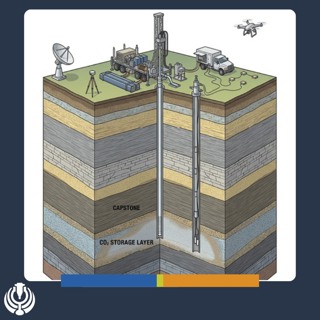
306: How Geophysics Builds Trust in CO2 Storage

306: How Geophysics Builds Trust in CO2 Storage

“We really need to be able to explain in clear language and with vivid examples just what geophysics can do here.” Michael B. Helgerud and Manika Prasad approach CCUS monitoring from two useful angle...

10 Sep 29min
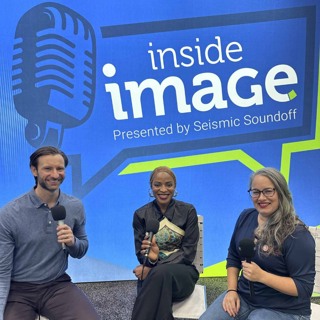
15: The Conversation Geoscience Cannot Afford to Ignore (Inside IMAGE '26)

15: The Conversation Geoscience Cannot Afford to Ignore (Inside IMAGE '26)

Geoscience needs more people who can solve problems across energy, water, climate, critical minerals, and the subsurface, yet departments are losing students, funding, and in some cases the field expe...

3 Sep 36min
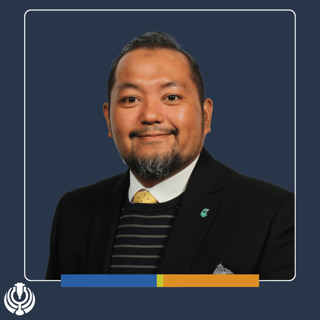
305: Building Trust in Elastic FWI

305: Building Trust in Elastic FWI

“We always aim for 60 percent. The other 40 percent, we are ready to make mistakes, learn from those mistakes, and then move forward.” A 600-meter carbonate platform forced Dr. Ahmad Riza Ghazali and...

27 Aug 30min

14: How Exhibiting at IMAGE Can Shape What You Build Next (Inside IMAGE '26)

14: How Exhibiting at IMAGE Can Shape What You Build Next (Inside IMAGE '26)

Julian Chenin calls IMAGE “Disneyland for geoscience,” and after walking the exhibition floor it is easy to understand what he means. But for ROGII, the real value is what happens when people stop at ...

21 Aug 9min

13: AI Is an Accelerator, Not the Decision-Maker (Inside IMAGE '26)

13: AI Is an Accelerator, Not the Decision-Maker (Inside IMAGE '26)

Companies have spent years storing more and more data, but Amii Rozell and Hana Kabazi make an important distinction: saving the final answer is not the same as saving why you made the decision. Three...

21 Aug 28min

12: How GWB Turns Geoscience Into Human Impact (Inside IMAGE '26)

12: How GWB Turns Geoscience Into Human Impact (Inside IMAGE '26)

Geoscientists Without Borders starts with a simple idea: geoscience can improve someone’s life. Jim Funk has seen what access to clean water can mean in African communities, while Craig Beasley talks ...

20 Aug 26min

Populært innen Vitenskap

fastlegen
romkapsel
liberal-halvtime
jss
tingenes-tilstand
forskningno
tomprat-med-gunnar-tjomlid
rekommandert
sinnsyn
villmarksliv
rss-paradigmepodden
fjellsportpodden
rss-nysgjerrige-norge
rss-kunstig-intelligens-med-elisabeth-maren-og-morten
rss-rekommandert
tidlose-historier
nordnorsk-historie
rss-inn-til-kjernen-med-sunniva-rose
psykopoden
grunnstoffene