225: How to Keep Geophysics Relevant w/ Tim Dean
Seismic Soundoff13 Jun 2024

225: How to Keep Geophysics Relevant w/ Tim Dean

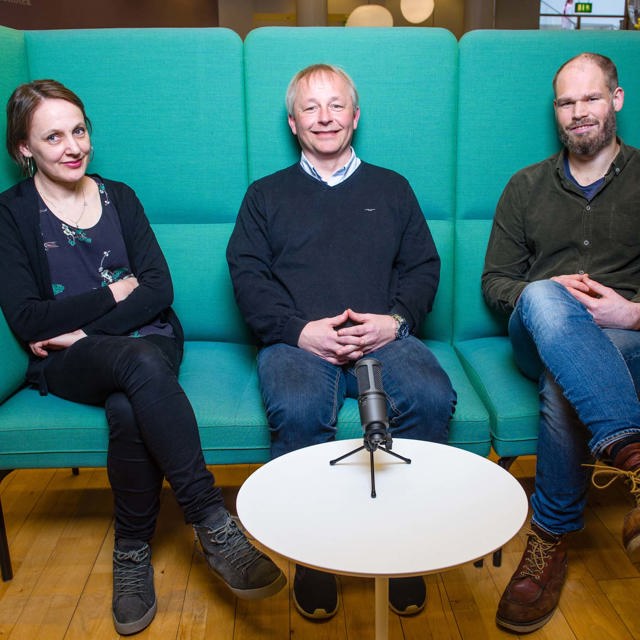
"We (geophysicists) need to look where the markets are rather than expect people to come to us. We have skills, and it's just about finding where we can apply these in the future." Dr. Tim Dean discusses his Honorary Lecture, "Seismic Acquisition and the Energy Transition." In this episode, we talk about: > The evolving applications of seismic acquisition beyond oil and gas > The importance of minerals for the energy transition and the role of seismic in their exploration > Innovations in seismic technology that reduce costs and expand capabilities > Why geophysics is data science - and other ways geophysicists are missing out > The potential of passive seismic techniques in large-scale mineral exploration > The future of seismic monitoring and its role in the subsurface changes > Addressing the decline in geophysics education and the need for broader application awareness > Tim's interest in collecting physical nodes The need for the world to transition away from fossil fuel to renewable energy sources is well established. The seismic exploration industry has long been focused on fossil fuel exploration, so it makes sense that this transition will also impact the industry. However, the movement away from fossil fuels does open up new prospects for the seismic method's application in areas as diverse as geothermal energy and mineral exploration. This episode (and Tim's Honorary Lecture) examines these new applications and discusses the opportunities that are developing for the method's application and their likely impact on future developments. In this conversation with host Andrew Geary, Tim emphasizes the unparalleled imaging capabilities of seismic methods and their critical role in identifying deeper mineral deposits essential for the energy transition. Tim also discusses the challenges and opportunities in applying seismic methods to hard rock environments, the economic differences between the oil and gas and minerals industries, and the importance of evolving geophysical education to meet future demands. He advocates for geophysicists to proactively engage with other industries to showcase the value of their expertise and technologies. No matter where you are on your geophysics journey, this episode is a must-listen. This conversation is challenging and insightful and may just save geophysics. LINKS * Visit https://seg.org/podcasts/episode-225-how-to-keep-geophysics-relevant-w-tim-dean/ for the complete interview transcript and to register for Tim's Honorary Lecture on 27 June. GUEST BIO Tim Dean is a specialist project geoscientist for Anglo American Steel Making Coal in Australia. He graduated from Curtin University with a BSc in Geophysics in 1998. He worked in onboard marine data processing for a year for Western Geophysical before returning to Curtin University to complete his Honors, followed by a PhD in Physics at the University of New South Wales. He then enjoyed an extensive career within WesternGeco and SLB, working in various roles, including field operations, software development, and research in Saudi Arabia, England, Norway, and Australia. His final position within SLB was as principal research geophysicist at the Schlumberger Fibre-Optic Technology Centre, where he worked on distributed acoustic sensing. He then joined HawkEye Technology (a division of Sony) as a project advisor before returning to Australia in 2016 to join the Department of Exploration Geophysics at Curtin University. He returned to industry in 2019, joining BHP Coal before moving to Anglo American in 2022. His research interests include land acquisition - particularly vibroseis sources - and survey design, land data processing, and distributed fibre-optic sensing. SHOW CREDITS Andrew Geary at TreasureMint hosted, edited, and produced this episode. If you have episode ideas or feedback for the show or want to sponsor a future episode, email the show at podcast@seg.org.

Denne episoden er hentet fra en åpen RSS-feed og er ikke publisert av Podme. Den kan derfor inneholde annonser.

Episoder(324)

308: Low Cost Monitoring Without Low Value

308: Low Cost Monitoring Without Low Value

“The goal is not cheaper data. The goal is to spend less on everything that does not add value to the decision one is trying to make.” Low-cost monitoring is becoming less about cheaper sensors and m...

24 Sep 27min
307: How QI Connects Science and Business Impact

307: How QI Connects Science and Business Impact

“Machine learning over the last few years has become revolutionary. But we still need, and maybe even more so, the constraint and knowledge of rock physics and QI as an integral part of those workflow...

15 Sep 31min
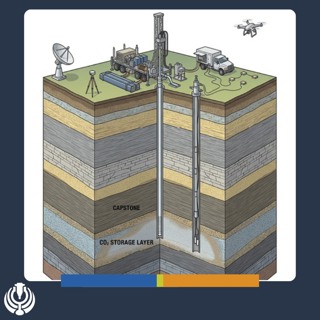
306: How Geophysics Builds Trust in CO2 Storage

306: How Geophysics Builds Trust in CO2 Storage

“We really need to be able to explain in clear language and with vivid examples just what geophysics can do here.” Michael B. Helgerud and Manika Prasad approach CCUS monitoring from two useful angle...

10 Sep 29min
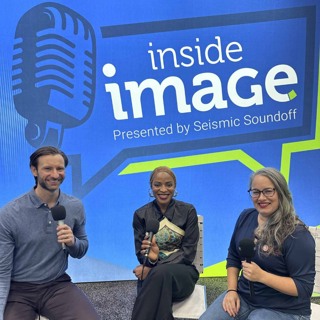
15: The Conversation Geoscience Cannot Afford to Ignore (Inside IMAGE '26)

15: The Conversation Geoscience Cannot Afford to Ignore (Inside IMAGE '26)

Geoscience needs more people who can solve problems across energy, water, climate, critical minerals, and the subsurface, yet departments are losing students, funding, and in some cases the field expe...

3 Sep 36min

305: Building Trust in Elastic FWI

305: Building Trust in Elastic FWI

“We always aim for 60 percent. The other 40 percent, we are ready to make mistakes, learn from those mistakes, and then move forward.” A 600-meter carbonate platform forced Dr. Ahmad Riza Ghazali and...

27 Aug 30min

14: How Exhibiting at IMAGE Can Shape What You Build Next (Inside IMAGE '26)

14: How Exhibiting at IMAGE Can Shape What You Build Next (Inside IMAGE '26)

Julian Chenin calls IMAGE “Disneyland for geoscience,” and after walking the exhibition floor it is easy to understand what he means. But for ROGII, the real value is what happens when people stop at ...

21 Aug 9min

13: AI Is an Accelerator, Not the Decision-Maker (Inside IMAGE '26)

13: AI Is an Accelerator, Not the Decision-Maker (Inside IMAGE '26)

Companies have spent years storing more and more data, but Amii Rozell and Hana Kabazi make an important distinction: saving the final answer is not the same as saving why you made the decision. Three...

21 Aug 28min

12: How GWB Turns Geoscience Into Human Impact (Inside IMAGE '26)

12: How GWB Turns Geoscience Into Human Impact (Inside IMAGE '26)

Geoscientists Without Borders starts with a simple idea: geoscience can improve someone’s life. Jim Funk has seen what access to clean water can mean in African communities, while Craig Beasley talks ...

20 Aug 26min

Populært innen Vitenskap

fastlegen
romkapsel
liberal-halvtime
jss
tingenes-tilstand
forskningno
tomprat-med-gunnar-tjomlid
rekommandert
sinnsyn
villmarksliv
rss-paradigmepodden
fjellsportpodden
rss-nysgjerrige-norge
rss-kunstig-intelligens-med-elisabeth-maren-og-morten
rss-rekommandert
tidlose-historier
nordnorsk-historie
rss-inn-til-kjernen-med-sunniva-rose
psykopoden
grunnstoffene