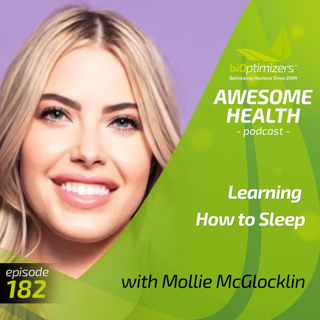
182: Learning How to Sleep with Mollie McGlocklin

182: Learning How to Sleep with Mollie McGlocklin

Feeling dis-empowered or anxious about the quality of our sleep doesn't have to be a day-to-day struggle. We can learn how to train our circadian rhythm to work for us.

After navigating insomnia while traveling internationally and experiencing other symptoms of poor health, Mollie created what she couldn't find – a place to learn the skill set of sleep.

Sleep Is A Skill is a company that optimizes people's sleep through a unique blend of technology, accountability, and behavioral change. She walks us through the benefits of this essential set of skills while inviting us to try on this concept that sleep is a skill so we can bring a clean slate to the thing that we do every single night.

"That can empower both certainly our nighttime sleep results, but also the results of our life."

In this episode you will learn:

  • A breakdown of the main elements of poor sleep
  • Some of the behavioral elements that affect our sleep
  • How to become a student of sleep to change your circadian rhythm
  • Why sunlight anchoring is important
  • What NASA has found about the effects of light on our sleep cycles
  • How prescription and stimulating drugs and supplements impact our sleep
  • Some supports you can introduce into your environment to improve your sleep

Why does our identity with our sleep matter?

Do you call yourself a night owl, an easy sleeper, or a short sleeper? Mollie explains that how we identify ourselves with our sleep can become a self-fulfilling prophesy. Being aware of our language and what our current sleep baseline is is the first step to getting better sleep.

"You get to examine those thoughts and come back and know that there are so many things that we can do to make a difference with that sleep. That the body wants great sleep and it's pulling for that, it's doing everything possible for that, and often we're the ones getting in the way."

As we become a student of sleep, we can turn our current reality into metrics that then empower us to make behavioral changes.

"We can see the before and point to an objective space what something was at before they actually made changes in their health, which brings us back into the driver's seat of our sleep versus just sort of being at the effect of or hoping, wishing, all of that."

How does our focus help us improve our sleep?

"We shift to the first thing that they do in the morning, Taking the paradigm shift from outside of the bedroom to how we're living our lives and how that impacts the quality of our sleep. When we're working with people from that perspective, their life and their health is improving in general, which improves the quality of sleep."

Mollie and Wade discuss how to increase the things that have a positive impact, and reduce the things that have a negative impact on our sleep.

Mollie warns that our sleep trackers aren't always accurate or don't always highlight the most important factors to your sleep. They're just the start of the conversation.

Listen to this episode to help get clear about your intentions you have for your sleep, and decide why improving your sleep is important to you. As you will learn, "By improving the quality of your sleep you're actually improving your life."

You won't want to sleep through this one. Listen to the full episode to learn more.

Episode Resources:

Free PDF at www.sleepisaskill.com

Weekly Sleep Newsletter

Sleep Is A Skill Podcast

LinkedIn

Instagram

Facebook

Twitter

Pinterest

YouTube

Denne episoden er hentet fra en åpen RSS-feed og er ikke publisert av Podme. Den kan derfor inneholde annonser.

Episoder(313)

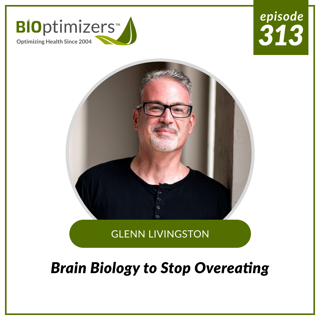
313: Brain Biology to Stop Overeating - with Glenn Livingston

313: Brain Biology to Stop Overeating - with Glenn Livingston

Psychology often helps people understand why they eat, but it rarely stops the behavior itself. Glenn Livingston, a psychologist from a family of therapists, struggled with his weight for years despit...

27 Aug 1h 1min
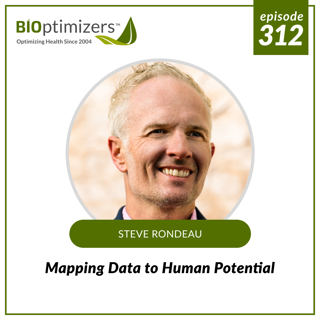
312: Mapping Data to Human Potential - with Steve Rondeau

312: Mapping Data to Human Potential - with Steve Rondeau

Psychiatry often operates without looking at the actual organ being treated. Dr. Steve Rondeau notes that this is unlike any other field in medicine. A cardiologist would never diagnose a heart proble...

13 Aug 1h 5min
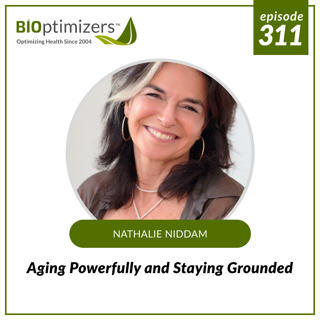
311: Aging Powerfully and Staying Grounded - with Nathalie Niddam

311: Aging Powerfully and Staying Grounded - with Nathalie Niddam

Redefining the Aging Process Nathalie Niddam shares that aging is an inevitable biological reality. Wealth and extensive testing cannot prevent the process entirely. The goal should be compressing dec...

30 Jul 1h 7min
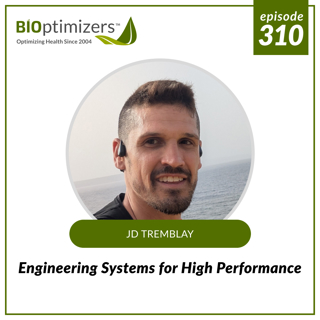
310: Engineering Systems for High Performance - with JD Tremblay

310: Engineering Systems for High Performance - with JD Tremblay

JD Tremblay is one of few people to complete the Epic Deca challenge. This feat involved ten consecutive Ironman distance triathlons across the islands of Hawaii. His journey proves that high performa...

16 Jul 56min
309: Can Harder Workouts Backfire? - with Molly McNamee

309: Can Harder Workouts Backfire? - with Molly McNamee

You eat clean and hit the gym twice a day. Yet, you feel bloated, tired, and the scale won't budge. You aren't doing anything wrong. Your body is simply reacting to chronic stress. When Effort Hurts Y...

25 Jun 41min
308: Your DNA Health Success Blueprint - with Sam Shay

308: Your DNA Health Success Blueprint - with Sam Shay

According to Dr. Sam Shay, functional genetics isn't genealogy or disease-gene testing. It's what Shay calls "terrain" genetics — identifying the upstream drivers of disease before they cascade into d...

11 Jun 1h 17min
307: Peak Cellular Healing Breakthroughs - with Caleb Granger

307: Peak Cellular Healing Breakthroughs - with Caleb Granger

Traditional medicine is transitioning from pharmaceuticals to advanced cellular signaling. Caleb Granger discovered that most stem cell treatments fail because the cells die almost immediately after b...

28 Mai 1h 10min
306: Protecting Your Digital Vision - with Pam Theriot

306: Protecting Your Digital Vision - with Pam Theriot

Most people look at screens day and night. We often think that the dry or tired feeling we have at night is just normal exhaustion. However, this is a clinical condition that can change your physical ...

21 Mai 23min

Populært innen Helse

fastlegen
lydartikler-fra-aftenposten
rss-gukild-johaug
psykodrama
hvordan-har-du-det-mann
leger-om-livet
relasjonspodden-med-dora-thorhallsdottir-kjersti-idem
rss-skravla-gar
bak-fasaden-en-reise-i-livet-med-sykepleier-ine
rss-garne-damer
foreldreradet
morten-ramm-lar-kakla-ga-til-du-sovner
hjernesterk
rss-lopedrommen
g-punktet
klimaks
hormonelle-frida
treningsprat
kjed-deg-i-sovn-verdens-kjedeligste-podcast
rss-loping-for-nybegynnere