251: From Noise to Knowledge – Lessons in Geophysics and Innovation w/ Joe Dellinger

251: From Noise to Knowledge – Lessons in Geophysics and Innovation w/ Joe Dellinger

"The difference between an ordinary geophysicist and a great one? Knowing when noise is actually signal." Joe Dellinger discusses his new book, Forensic Data Processing. In this episode, Joe shares how his career journey – from growing up surrounded by geophysics to pioneering low-frequency seismic applications – inspired him to write this book as his legacy. Host Andrew Geary and Joe dive into why understanding seismic data at a deeper level is essential, how to spot valuable insights others miss, and why forensic data processing can be a game-changer for geophysicists and managers alike. KEY TAKEAWAYS > Look under the hood – Treat seismic data like a Michelin-star meal, not fast food. The best insights come when you pay close attention to the details. > Balance curiosity and rigor – Innovation happens when you mix wild experimentation with deep, methodical analysis. The best teams need both kinds of thinkers. > Why managers should care – Joe’s book isn’t just for technical readers; it also offers valuable lessons for leaders on fostering a high-performing geophysics team. CALLS TO ACTION * For the geophysicist: If you’ve ever wondered what hidden insights your seismic data holds, this book will show you how to find them. * For team leaders: Want to build a high-performing geophysics team? Joe’s lessons on research culture are a must-read. TEXT A COLLEAGUE Joe’s insights on managing geophysicists are spot on – send this to your boss so they finally get what we do! https://seg.org/podcasts/episode-251-from-noise-to-knowledge-lessons-in-geophysics-and-innovation/ GUEST BIO Joe Dellinger received a Ph.D. in 1991 from Jon Claerbout’s Stanford Exploration Project. He then did a three-year post-doc at the University of Hawaii before joining Amoco in Tulsa in 1994. He moved to BP in Houston in 1999 and has worked there since. In his career, he has specialized in anisotropy, multi-component algorithms, and processing and most recently investigated the problem of how to record ultra-low frequencies that enabled algorithms like FWI to resolve complex velocity-model-building challenges in deep-water marine environments. Joe was awarded Lifetime Membership at the SEG in 2001 for his services in helping the SEG to successfully adapt to the internet age, honorary membership in 2016, and the Kauffman Award in 2021 for his efforts in developing the industry’s abilities to record ultra-low frequencies. Dellinger’s hobbies include attending the Houston Symphony, photographing birds, recording frog calls in the swamps around Houston, and astronomy at the George Observatory. Asteroid “78392 Dellinger” was named in his honor. LINKS * Buy the Print Book at https://seg.org/shop/product/?id=da74b583-6d91-ef11-ac21-6045bdd34421 * Listen to Joe's first interview on this topic -> https://seg.org/podcasts/episode-136-the-hidden-stories-data-tell/ * Visit https://seg.org/podcasts/episode-251-from-noise-to-knowledge-lessons-in-geophysics-and-innovation/ for the complete show notes. SHOW CREDITS Andrew Geary at TreasureMint hosted, edited, and produced this episode. The SEG podcast team comprises Jennifer Cobb, Kathy Gamble, and Ally McGinnis. If you have episode ideas or feedback for the show or want to sponsor a future episode, email the show at podcast@seg.org.

Denne episoden er hentet fra en åpen RSS-feed og er ikke publisert av Podme. Den kan derfor inneholde annonser.

Episoder(324)

308: Low Cost Monitoring Without Low Value

308: Low Cost Monitoring Without Low Value

“The goal is not cheaper data. The goal is to spend less on everything that does not add value to the decision one is trying to make.” Low-cost monitoring is becoming less about cheaper sensors and m...

24 Sep 27min
307: How QI Connects Science and Business Impact

307: How QI Connects Science and Business Impact

“Machine learning over the last few years has become revolutionary. But we still need, and maybe even more so, the constraint and knowledge of rock physics and QI as an integral part of those workflow...

15 Sep 31min
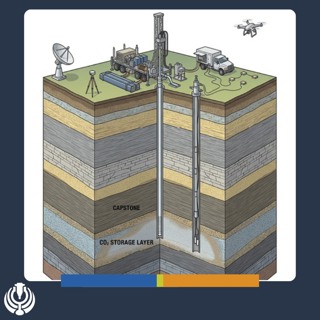
306: How Geophysics Builds Trust in CO2 Storage

306: How Geophysics Builds Trust in CO2 Storage

“We really need to be able to explain in clear language and with vivid examples just what geophysics can do here.” Michael B. Helgerud and Manika Prasad approach CCUS monitoring from two useful angle...

10 Sep 29min
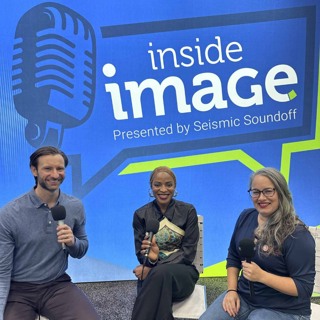
15: The Conversation Geoscience Cannot Afford to Ignore (Inside IMAGE '26)

15: The Conversation Geoscience Cannot Afford to Ignore (Inside IMAGE '26)

Geoscience needs more people who can solve problems across energy, water, climate, critical minerals, and the subsurface, yet departments are losing students, funding, and in some cases the field expe...

3 Sep 36min
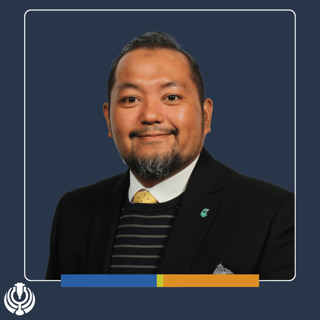
305: Building Trust in Elastic FWI

305: Building Trust in Elastic FWI

“We always aim for 60 percent. The other 40 percent, we are ready to make mistakes, learn from those mistakes, and then move forward.” A 600-meter carbonate platform forced Dr. Ahmad Riza Ghazali and...

27 Aug 30min
14: How Exhibiting at IMAGE Can Shape What You Build Next (Inside IMAGE '26)

14: How Exhibiting at IMAGE Can Shape What You Build Next (Inside IMAGE '26)

Julian Chenin calls IMAGE “Disneyland for geoscience,” and after walking the exhibition floor it is easy to understand what he means. But for ROGII, the real value is what happens when people stop at ...

21 Aug 9min

13: AI Is an Accelerator, Not the Decision-Maker (Inside IMAGE '26)

13: AI Is an Accelerator, Not the Decision-Maker (Inside IMAGE '26)

Companies have spent years storing more and more data, but Amii Rozell and Hana Kabazi make an important distinction: saving the final answer is not the same as saving why you made the decision. Three...

21 Aug 28min

12: How GWB Turns Geoscience Into Human Impact (Inside IMAGE '26)

12: How GWB Turns Geoscience Into Human Impact (Inside IMAGE '26)

Geoscientists Without Borders starts with a simple idea: geoscience can improve someone’s life. Jim Funk has seen what access to clean water can mean in African communities, while Craig Beasley talks ...

20 Aug 26min

Populært innen Vitenskap

fastlegen
romkapsel
liberal-halvtime
jss
tingenes-tilstand
forskningno
tomprat-med-gunnar-tjomlid
rekommandert
sinnsyn
villmarksliv
rss-paradigmepodden
fjellsportpodden
rss-nysgjerrige-norge
rss-kunstig-intelligens-med-elisabeth-maren-og-morten
rss-rekommandert
tidlose-historier
nordnorsk-historie
rss-inn-til-kjernen-med-sunniva-rose
psykopoden
grunnstoffene