255: Generative, Physics-Informed and Agentic AI in Geophysics
Seismic Soundoff10 Apr 2025

255: Generative, Physics-Informed and Agentic AI in Geophysics

"We’re not replacing geophysicists; we’re giving them superpowers to analyze data faster and better." Explore the cutting-edge world of generative and physics-informed AI with Vladimir Kazei, guest editor for The Leading Edge. AI is transforming geophysics, from revolutionizing seismic imaging to pushing the boundaries of computational efficiency. Vladimir shares how these advancements reshape subsurface exploration and what this means for the industry's future. KEY TAKEAWAYS > What geophysicists can do today - AI tools are already available to assist with seismic inversion, velocity model building, and data interpretation. Geophysicists can start experimenting with these technologies now. > AI and computational efficiency - Machine learning drastically reduces processing times, allowing faster and more cost-effective subsurface analysis. > The road to adoption - Successful AI integration in geophysics depends on bridging knowledge gaps, fostering collaboration, and ensuring transparency in machine learning models. CALL TO ACTION Want to dive deeper into this exciting field? Check out The Leading Edge’s special issue on AI in geophysics and explore Vladimir’s editorial insights. You can find it at https://library.seg.org/toc/leedff/44/2. SHARE THIS EPISODE If you found this episode helpful, please message a friend to listen. To help out, here’s a possible message you could send them. AI isn’t just hype - this episode highlights real applications making a difference today. GUEST BIO Vladimir Kazei is a research geophysicist at Aramco Americas. Vladimir received his PhD in Geophysics from the Saint Petersburg State University and the Schmidt Institute of the Physics of the Earth of the Russian Academy of Sciences in 2016. He then worked as a research scientist at King Abdullah University of Science and Technology before joining the Houston Research Center of Aramco Americas in 2020. Vladimir’s contributions to applied geophysics in areas of machine learning, Distributed Acoustic Sensing (DAS), and Full-Waveform Inversion (FWI) were noted as groundbreaking innovations by the Society of Exploration Geophysicists (SEG) and marked with a prestigious Clarence J. Karcher award in 2023. He actively participates in organizing SEG’s workshops on DAS and AI. Since 2023, Vladimir has served on The Leading Edge journal editorial board and has led special sections on Digitalization, Sustainability, and Generative and Physics-Informed AI. LINKS * Visit https://seg.org/podcasts/episode-255-generative-physics-informed-and-agentic-ai-in-geophysics for links to the articles in The Leading Edge.

Denne episoden er hentet fra en åpen RSS-feed og er ikke publisert av Podme. Den kan derfor inneholde annonser.

Episoder(324)

308: Low Cost Monitoring Without Low Value

308: Low Cost Monitoring Without Low Value

“The goal is not cheaper data. The goal is to spend less on everything that does not add value to the decision one is trying to make.” Low-cost monitoring is becoming less about cheaper sensors and m...

24 Sep 27min
307: How QI Connects Science and Business Impact

307: How QI Connects Science and Business Impact

“Machine learning over the last few years has become revolutionary. But we still need, and maybe even more so, the constraint and knowledge of rock physics and QI as an integral part of those workflow...

15 Sep 31min
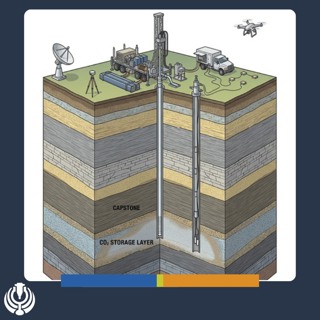
306: How Geophysics Builds Trust in CO2 Storage

306: How Geophysics Builds Trust in CO2 Storage

“We really need to be able to explain in clear language and with vivid examples just what geophysics can do here.” Michael B. Helgerud and Manika Prasad approach CCUS monitoring from two useful angle...

10 Sep 29min
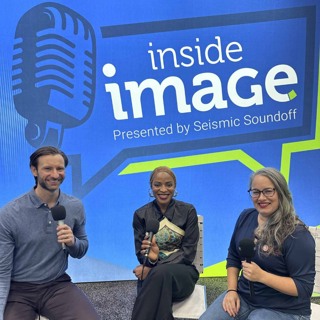
15: The Conversation Geoscience Cannot Afford to Ignore (Inside IMAGE '26)

15: The Conversation Geoscience Cannot Afford to Ignore (Inside IMAGE '26)

Geoscience needs more people who can solve problems across energy, water, climate, critical minerals, and the subsurface, yet departments are losing students, funding, and in some cases the field expe...

3 Sep 36min
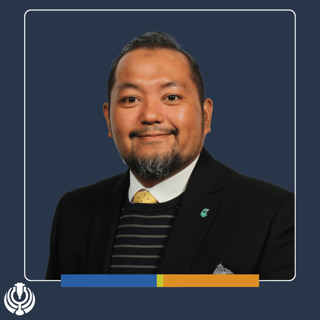
305: Building Trust in Elastic FWI

305: Building Trust in Elastic FWI

“We always aim for 60 percent. The other 40 percent, we are ready to make mistakes, learn from those mistakes, and then move forward.” A 600-meter carbonate platform forced Dr. Ahmad Riza Ghazali and...

27 Aug 30min

14: How Exhibiting at IMAGE Can Shape What You Build Next (Inside IMAGE '26)

14: How Exhibiting at IMAGE Can Shape What You Build Next (Inside IMAGE '26)

Julian Chenin calls IMAGE “Disneyland for geoscience,” and after walking the exhibition floor it is easy to understand what he means. But for ROGII, the real value is what happens when people stop at ...

21 Aug 9min

13: AI Is an Accelerator, Not the Decision-Maker (Inside IMAGE '26)

13: AI Is an Accelerator, Not the Decision-Maker (Inside IMAGE '26)

Companies have spent years storing more and more data, but Amii Rozell and Hana Kabazi make an important distinction: saving the final answer is not the same as saving why you made the decision. Three...

21 Aug 28min

12: How GWB Turns Geoscience Into Human Impact (Inside IMAGE '26)

12: How GWB Turns Geoscience Into Human Impact (Inside IMAGE '26)

Geoscientists Without Borders starts with a simple idea: geoscience can improve someone’s life. Jim Funk has seen what access to clean water can mean in African communities, while Craig Beasley talks ...

20 Aug 26min

Populært innen Vitenskap

fastlegen
romkapsel
liberal-halvtime
jss
tingenes-tilstand
forskningno
tomprat-med-gunnar-tjomlid
rekommandert
sinnsyn
villmarksliv
rss-paradigmepodden
fjellsportpodden
rss-nysgjerrige-norge
rss-kunstig-intelligens-med-elisabeth-maren-og-morten
rss-rekommandert
tidlose-historier
nordnorsk-historie
rss-inn-til-kjernen-med-sunniva-rose
psykopoden
grunnstoffene