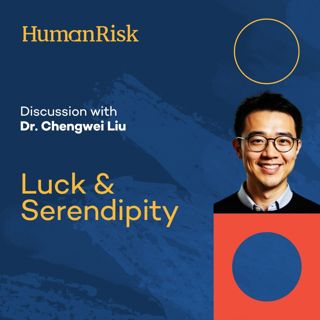
Dr Chengwei Liu on Luck & Serendipity

Dr Chengwei Liu on Luck & Serendipity

Have you ever wondered how much of your success is down to luck? What if the world is far less fair and predictable than we’d like to think?

On this episode, I explore the complex and fascinating role of luck in our lives and decisions with Dr. Chengwei Liu, Associate Professor of Strategy and Behavioural Science at Imperial College London. Chengwei shares how his research challenges our assumptions about skill, effort, and fairness – and why the outcomes we see are often far more random than we’d like to believe.

We discuss why many successful strategies and best practices are built on shaky ground, and how our tendency to downplay luck creates illusions of control and reinforces unfair systems. Chengwei explains how beliefs in fairness – like the ‘just world’ hypothesis – shape everything from business cultures to political systems, and how luck and misperceptions of it can create cycles of privilege or disadvantage.

Chengwei also shares practical insights on how to become a smart contrarian: someone who can harness the power of randomness and serendipity while avoiding the pitfalls of bias and overconfidence. From the dangers of blindly following the ‘successful’ to the need to look inward and embrace uniqueness, it’s a thought-provoking conversation that will change the way you think about risk, decision-making, and what it really means to get ahead.

Guest Biography
Dr. Chengwei Liu is an Associate Professor of Strategy and Behavioural Science at Imperial College London. He describes himself as someone fascinated by how luck, randomness, and human biases shape success and failure – both in business and in broader society.

Chengwei’s work challenges mainstream management thinking and explores how much of what we attribute to skill is actually the result of random factors.

His book, Luck: A Key Idea for Business and Society, examines these dynamics and how we can learn to navigate them.

Beyond his academic roles, Chengwei has also worked as a management consultant, drawing on his experience in both research and practice to uncover how to harness luck and uncertainty.

AI-Generated Timestamped Summary
[00:00:00] Introduction

[00:02:00] Chengwei explains his research focus on randomness and variance in firm performance

[00:04:00] The overlooked 50% of variance in outcomes: luck and randomness

[00:06:00] Defining luck as what lies beyond our control and foresight

[00:08:00] The conflict between fairness beliefs and the reality of luck

[00:10:00] Luck’s societal implications: why fairness perceptions differ across countries

[00:11:00] Skill versus luck – how we confuse the two in our narratives

[00:13:00] Why successful people over-attribute their success to skill

[00:15:00] Managers vs entrepreneurs: how they differ in acknowledging luck

[00:17:00] The challenges of researching an elusive concept like luck

[00:18:00] Using mathematical models to understand Black Swan events

[00:20:00] Why successful predictions of Black Swan events don’t indicate forecasting skill

[00:23:00] The problem with best practices from ‘successful’ firms

[00:26:00] Selection bias in business books and the danger of survivor bias

[00:29:00] The ‘too good to be true’ heuristic as a guide

[00:31:00] Contrarian thinking as a survival strategy for uncertainty

[00:33:00] The replication crisis and the problem with social science predictability

[00:35:00] Human curiosity: the power of moderate surprises

[00:37:00] The difference between luck and serendipity

[00:39:00] How to encourage serendipity in our lives

[00:41:00] Embracing uniqueness and avoiding conformity

[00:44:00] Lessons for the age of AI and human creativity

[00:46:00] The dangers of ignoring randomness: when biases become destructive

[00:48:00] Exploiting others’ biases for strategic advantage

[00:50:00] Why ‘smart contrarian’ thinking is more important than ever

[00:53:00] Testing contrarian ideas like a scientist

[00:56:00] The limits of trial and error: learning from mistakes

[00:58:00] Chengwei’s ongoing research: minority decision-making in venture capital

[01:00:00] How passion and variance link to VC investment strategies

[01:02:00] Wrapping up with reflections on luck, curiosity, and human creativity

LinksDr. Chengwei Liu’s book, Luck: A Key Idea for Business and Society: https://www.routledge.com/Luck-A-Key-Idea-for-Business-and-Society/Liu/p/book/9781138094260?

Chengwei Liu’s Imperial College faculty webpage: https://profiles.imperial.ac.uk/c.liu

Denne episoden er hentet fra en åpen RSS-feed og er ikke publisert av Podme. Den kan derfor inneholde annonser.

Episoder(382)

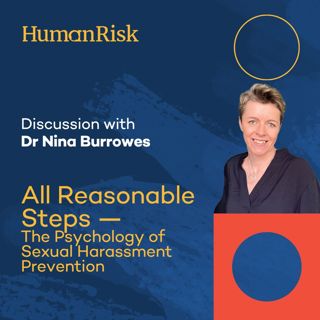
Dr Nina Burrowes on All Reasonable Steps: The Psychology of Sexual Harassment Prevention

Dr Nina Burrowes on All Reasonable Steps: The Psychology of Sexual Harassment Prevention

What does it actually take to prevent sexual harassment at work? Policies, training, reporting mechanisms and statements of zero tolerance are one thing. Creating a workplace where sexual harassment i...

25 Sep 1h 6min
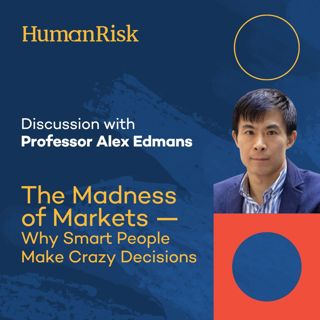
Professor Alex Edmans on the Madness of Markets — Why Smart People Make Crazy Decisions

Professor Alex Edmans on the Madness of Markets — Why Smart People Make Crazy Decisions

What can financial markets teach us about human behaviour? Why might the size of a CEO’s signature tell us something useful about the company they run? And why, even when smart investors know somethin...

13 Sep 1h 1min
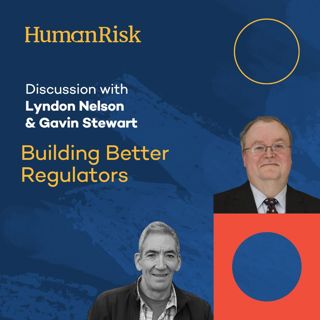
Lyndon Nelson & Gavin Stewart on Building Better Regulators

Lyndon Nelson & Gavin Stewart on Building Better Regulators

What if understanding regulation could help us spot when politicians are promising the impossible? Regulation sounds simple in theory. Something poses a risk, so we create rules and a regulator to con...

7 Sep 1h 23min
Roger Dooley on The Persuasion Engine

Roger Dooley on The Persuasion Engine

What if AI could help us understand people better, rather than simply replacing what humans do?Episode summaryHow can we use AI to become better at persuasion, communication and understanding human be...

1 Sep 59min
Annie Wagstaff on The Joy of Curiosity

Annie Wagstaff on The Joy of Curiosity

What’s the last thing you learned simply because you wanted to know?Episode summaryWhy do we feel the need to justify what we learn? My guest on this episode is Annie Wagstaff, a musician and composer...

23 Aug 1h
Paul Craven on Living With Uncertainty

Paul Craven on Living With Uncertainty

What happens when someone who spends his life thinking about risk, decision-making and human behaviour is confronted with an uncertainty he simply can’t control?Episode summaryMy guest is Paul Craven,...

15 Aug 51min
Benji Wilson on why we rate everything

Benji Wilson on why we rate everything

Why do we rate everything and why do we do so on a scale of one to five stars? What happens when systems designed to help us make better choices start influencing our behaviour in ways we don’t necess...

8 Aug 1h 4min
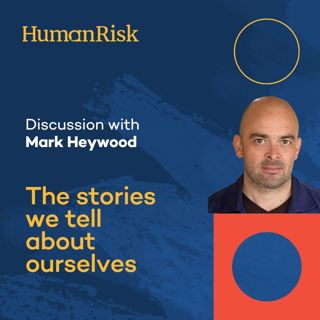
Mark Heywood on The Stories We Tell About Ourselves

Mark Heywood on The Stories We Tell About Ourselves

What parts of yourself have you learned to hide in order to be taken seriously? My guest on this episode is Mark Heywood, a friend of the show, returning guest and someone I've collaborated with on a ...

2 Aug 1h 21min

Populært innen Vitenskap

fastlegen
romkapsel
tingenes-tilstand
jss
liberal-halvtime
forskningno
rekommandert
sinnsyn
tomprat-med-gunnar-tjomlid
villmarksliv
rss-paradigmepodden
fjellsportpodden
rss-nysgjerrige-norge
nordnorsk-historie
grunnstoffene
rss-rekommandert
tidlose-historier
rss-inn-til-kjernen-med-sunniva-rose
psykopoden
smart-forklart