Juliet Rosenfeld on Affairs

Juliet Rosenfeld on Affairs

Why do people have affairs? What lessons can we learn from infidelity?

It's estimated that an affair will impact one in five of us, yet it tends to be a taboo subject.
So, on this episode, I'm going to break that taboo and explore the hidden world of affairs with psychoanalyst and author Juliet Rosenfeld.

Juliet’s book, Affairs: Stories of Love, Lies, Hope and Desire, is an intimate look at why people have affairs, how those relationships shape us, and what they reveal about the unconscious forces at work in our lives.

Episode Summary
In a fascinating discussion, we talk about the stories she gathered for the book, how she approached them ethically, and what she’s learned about the powerful, often destructive, pull of infidelity.

I also ask Juliet about her own experience as a psychoanalyst; how she balances her clinical insights with the need to write in a way that’s both honest and protective of the people involved. Juliet explains how she turned the consulting room into a space for exploration, not exposure, and how the stories she’s collected show just how deeply affairs touch the lives of everyone they involve.

From the idea of the couple to the unconscious roots of our desires, we unpack some of the most complex questions about relationships and risk. Throughout our conversation, Juliet brings a refreshingly human — and humane — perspective to a topic that’s often shrouded in shame and secrecy.

Whether you’ve ever experienced an affair yourself or just want to understand why people cross these lines, this episode offers insights that go far beyond the headlines.

Guest Biography
Juliet Rosenfeld is an author and a psychoanalyst working in private practice in London. She is particularly interested in the unconscious forces that shape our relationships and behaviours.

Juliet’s second book, Affairs: Stories of Love, Lies, Hope and Desire, explores the complex terrain of infidelity through a psychoanalytic lens, blending real stories with her own reflections and insights.

She is a member of professional psychotherapy and psychoanalysis associations in the UK and is deeply engaged in thinking about the ethical dimensions of her work. Beyond her practice,

Juliet has also been a board member of the UK Council for Psychotherapy (UKCP) and is passionate about making the insights of psychoanalysis accessible to a general audience.

AI-Generated Timestamp Summary
[00:00:00] Introduction to the episode and Juliet Rosenfeld

[00:01:00] Exploring what affairs are really about and how unconscious forces shape them

[00:02:00] Juliet’s background as a psychoanalyst and the role of the unconscious

[00:04:00] How relationship struggles underpin so many issues Juliet sees in her work

[00:05:00] Why Juliet wrote the book and how affairs are inherently risky

[00:07:00] The foundational idea of the couple and how it shapes us from birth

[00:08:00] Ethical dilemmas of writing about real people’s affairs

[00:11:00] Juliet’s approach: interviewing participants who weren’t her patients

[00:13:00] Balancing her clinical mindset with the demands of writing

[00:16:00] The role of supervision in psychotherapy and its relevance to Juliet’s work

[00:18:00] The challenge of anonymising the stories while staying true to them

[00:20:00] Juliet’s thoughts on police requests for therapist notes and patient confidentiality

[00:22:00] The differences in the regulation of therapists in the UK vs the US

[00:26:00] The importance of trust, supervision, and the intense relationship with a supervisor

[00:30:00] Why Juliet believes statutory regulation of psychotherapy is important

[00:34:00] How affairs spark intense public reactions and fascination

[00:37:00] The long-term impact of divorce and affairs on children

[00:42:00] How affairs can be a way of finding solutions to deep personal problems

[00:45:00] The uniqueness of each affair story and the problem of generalisations

[00:47:00] The role of disappointment and the challenges of long-term love

[00:49:00] Juliet’s thoughts on how therapy can help couples

[00:53:00] Why no one comes to see her at the start of an affair

[00:56:00] The emotional investment and secrecy that affairs demand

[00:59:00] The final reflections on why Juliet wrote the book and what it revealed to her

[01:05:00] Closing remarks and where to find Juliet’s book

Links

Juliet’s website with details of her work and books: https://julietrosenfeld.co.uk/

The UK Council for Psychotherapy (UKCP): https://www.psychotherapy.org.uk/

Denne episoden er hentet fra en åpen RSS-feed og er ikke publisert av Podme. Den kan derfor inneholde annonser.

Episoder(382)

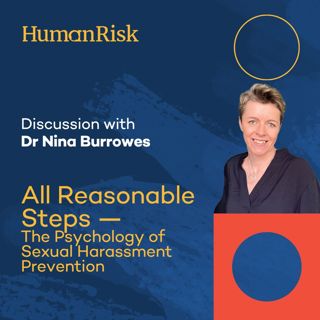
Dr Nina Burrowes on All Reasonable Steps: The Psychology of Sexual Harassment Prevention

Dr Nina Burrowes on All Reasonable Steps: The Psychology of Sexual Harassment Prevention

What does it actually take to prevent sexual harassment at work? Policies, training, reporting mechanisms and statements of zero tolerance are one thing. Creating a workplace where sexual harassment i...

25 Sep 1h 6min

Professor Alex Edmans on the Madness of Markets — Why Smart People Make Crazy Decisions

Professor Alex Edmans on the Madness of Markets — Why Smart People Make Crazy Decisions

What can financial markets teach us about human behaviour? Why might the size of a CEO’s signature tell us something useful about the company they run? And why, even when smart investors know somethin...

13 Sep 1h 1min

Lyndon Nelson & Gavin Stewart on Building Better Regulators

Lyndon Nelson & Gavin Stewart on Building Better Regulators

What if understanding regulation could help us spot when politicians are promising the impossible? Regulation sounds simple in theory. Something poses a risk, so we create rules and a regulator to con...

7 Sep 1h 23min
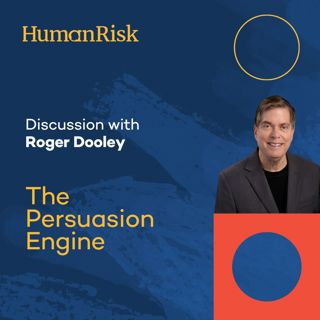
Roger Dooley on The Persuasion Engine

Roger Dooley on The Persuasion Engine

What if AI could help us understand people better, rather than simply replacing what humans do?Episode summaryHow can we use AI to become better at persuasion, communication and understanding human be...

1 Sep 59min
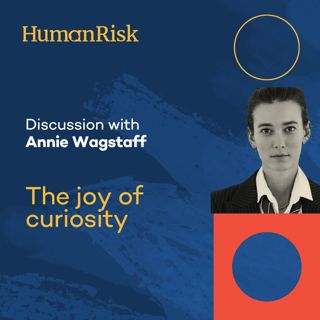
Annie Wagstaff on The Joy of Curiosity

Annie Wagstaff on The Joy of Curiosity

What’s the last thing you learned simply because you wanted to know?Episode summaryWhy do we feel the need to justify what we learn? My guest on this episode is Annie Wagstaff, a musician and composer...

23 Aug 1h
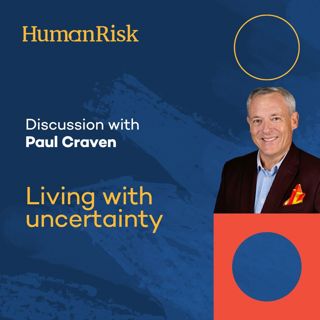
Paul Craven on Living With Uncertainty

Paul Craven on Living With Uncertainty

What happens when someone who spends his life thinking about risk, decision-making and human behaviour is confronted with an uncertainty he simply can’t control?Episode summaryMy guest is Paul Craven,...

15 Aug 51min
Benji Wilson on why we rate everything

Benji Wilson on why we rate everything

Why do we rate everything and why do we do so on a scale of one to five stars? What happens when systems designed to help us make better choices start influencing our behaviour in ways we don’t necess...

8 Aug 1h 4min
Mark Heywood on The Stories We Tell About Ourselves

Mark Heywood on The Stories We Tell About Ourselves

What parts of yourself have you learned to hide in order to be taken seriously? My guest on this episode is Mark Heywood, a friend of the show, returning guest and someone I've collaborated with on a ...

2 Aug 1h 21min

Populært innen Vitenskap

fastlegen
romkapsel
tingenes-tilstand
jss
liberal-halvtime
forskningno
rekommandert
sinnsyn
tomprat-med-gunnar-tjomlid
villmarksliv
rss-paradigmepodden
fjellsportpodden
rss-nysgjerrige-norge
nordnorsk-historie
grunnstoffene
rss-rekommandert
tidlose-historier
rss-inn-til-kjernen-med-sunniva-rose
psykopoden
smart-forklart