#224 – There's a cheap and low-tech way to save humanity from any engineered disease | Andrew Snyder-Beattie

#224 – There's a cheap and low-tech way to save humanity from any engineered disease | Andrew Snyder-Beattie

Conventional wisdom is that safeguarding humanity from the worst biological risks — microbes optimised to kill as many as possible — is difficult bordering on impossible, making bioweapons humanity’s single greatest vulnerability. Andrew Snyder-Beattie thinks conventional wisdom could be wrong.

Andrew’s job at Open Philanthropy is to spend hundreds of millions of dollars to protect as much of humanity as possible in the worst-case scenarios — those with fatality rates near 100% and the collapse of technological civilisation a live possibility.

Video, full transcript, and links to learn more: https://80k.info/asb

As Andrew lays out, there are several ways this could happen, including:

  • A national bioweapons programme gone wrong, in particular Russia or North Korea
  • AI advances making it easier for terrorists or a rogue AI to release highly engineered pathogens
  • Mirror bacteria that can evade the immune systems of not only humans, but many animals and potentially plants as well

Most efforts to combat these extreme biorisks have focused on either prevention or new high-tech countermeasures. But prevention may well fail, and high-tech approaches can’t scale to protect billions when, with no sane people willing to leave their home, we’re just weeks from economic collapse.

So Andrew and his biosecurity research team at Open Philanthropy have been seeking an alternative approach. They’re proposing a four-stage plan using simple technology that could save most people, and is cheap enough it can be prepared without government support. Andrew is hiring for a range of roles to make it happen — from manufacturing and logistics experts to global health specialists to policymakers and other ambitious entrepreneurs — as well as programme associates to join Open Philanthropy’s biosecurity team (apply by October 20!).

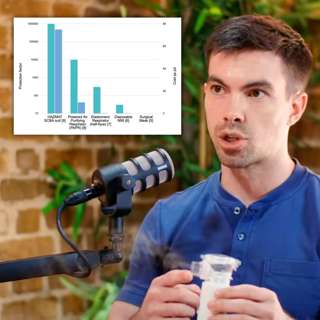
Fundamentally, organisms so small have no way to penetrate physical barriers or shield themselves from UV, heat, or chemical poisons. We now know how to make highly effective ‘elastomeric’ face masks that cost $10, can sit in storage for 20 years, and can be used for six months straight without changing the filter. Any rich country could trivially stockpile enough to cover all essential workers.

People can’t wear masks 24/7, but fortunately propylene glycol — already found in vapes and smoke machines — is astonishingly good at killing microbes in the air. And, being a common chemical input, industry already produces enough of the stuff to cover every indoor space we need at all times.

Add to this the wastewater monitoring and metagenomic sequencing that will detect the most dangerous pathogens before they have a chance to wreak havoc, and we might just buy ourselves enough time to develop the cure we’ll need to come out alive.

Has everyone been wrong, and biology is actually defence dominant rather than offence dominant? Is this plan crazy — or so crazy it just might work?

That’s what host Rob Wiblin and Andrew Snyder-Beattie explore in this in-depth conversation.


What did you think of the episode? https://forms.gle/66Hw5spgnV3eVWXa6

Chapters:

  • Cold open (00:00:00)
  • Who's Andrew Snyder-Beattie? (00:01:23)
  • It could get really bad (00:01:57)
  • The worst-case scenario: mirror bacteria (00:08:58)
  • To actually work, a solution has to be low-tech (00:17:40)
  • Why ASB works on biorisks rather than AI (00:20:37)
  • Plan A is prevention. But it might not work. (00:24:48)
  • The “four pillars” plan (00:30:36)
  • ASB is hiring now to make this happen (00:32:22)
  • Everyone was wrong: biorisks are defence dominant in the limit (00:34:22)
  • Pillar 1: A wall between the virus and your lungs (00:39:33)
  • Pillar 2: Biohardening buildings (00:54:57)
  • Pillar 3: Immediately detecting the pandemic (01:13:57)
  • Pillar 4: A cure (01:27:14)
  • The plan's biggest weaknesses (01:38:35)
  • If it's so good, why are you the only group to suggest it? (01:43:04)
  • Would chaos and conflict make this impossible to pull off? (01:45:08)
  • Would rogue AI make bioweapons? Would other AIs save us? (01:50:05)
  • We can feed the world even if all the plants die (01:56:08)
  • Could a bioweapon make the Earth uninhabitable? (02:05:06)
  • Many open roles to solve bio-extinction — and you don’t necessarily need a biology background (02:07:34)
  • Career mistakes ASB thinks are common (02:16:19)
  • How to protect yourself and your family (02:28:21)

This episode was recorded on August 12, 2025

Video editing: Simon Monsour and Luke Monsour
Audio engineering: Milo McGuire, Simon Monsour, and Dominic Armstrong
Music: CORBIT
Camera operator: Jake Morris
Coordination, transcriptions, and web: Katy Moore

Episoder(333)

#12 - Beth Cameron works to stop you dying in a pandemic. Here’s what keeps her up at night.

#12 - Beth Cameron works to stop you dying in a pandemic. Here’s what keeps her up at night.

“When you're in the middle of a crisis and you have to ask for money, you're already too late.” That’s Dr Beth Cameron, who leads Global Biological Policy and Programs at the Nuclear Threat Initiative...

25 Okt 20171h 45min

#11 - Spencer Greenberg on speeding up social science 10-fold & why plenty of startups cause harm

#11 - Spencer Greenberg on speeding up social science 10-fold & why plenty of startups cause harm

Do most meat eaters think it’s wrong to hurt animals? Do Americans think climate change is likely to cause human extinction? What is the best, state-of-the-art therapy for depression? How can we make ...

17 Okt 20171h 29min
#10 - Nick Beckstead on how to spend billions of dollars preventing human extinction

#10 - Nick Beckstead on how to spend billions of dollars preventing human extinction

What if you were in a position to give away billions of dollars to improve the world? What would you do with it? This is the problem facing Program Officers at the Open Philanthropy Project - people l...

11 Okt 20171h 51min
#9 - Christine Peterson on how insecure computers could lead to global disaster, and how to fix it

#9 - Christine Peterson on how insecure computers could lead to global disaster, and how to fix it

Take a trip to Silicon Valley in the 70s and 80s, when going to space sounded like a good way to get around environmental limits, people started cryogenically freezing themselves, and nanotechnology l...

4 Okt 20171h 45min
#8 - Lewis Bollard on how to end factory farming in our lifetimes

#8 - Lewis Bollard on how to end factory farming in our lifetimes

Every year tens of billions of animals are raised in terrible conditions in factory farms before being killed for human consumption. Over the last two years Lewis Bollard – Project Officer for Farm An...

27 Sep 20173h 16min

#7 - Julia Galef on making humanity more rational, what EA does wrong, and why Twitter isn’t all bad

#7 - Julia Galef on making humanity more rational, what EA does wrong, and why Twitter isn’t all bad

The scientific revolution in the 16th century was one of the biggest societal shifts in human history, driven by the discovery of new and better methods of figuring out who was right and who was wrong...

13 Sep 20171h 14min
#6 - Toby Ord on why the long-term future matters more than anything else & what to do about it

#6 - Toby Ord on why the long-term future matters more than anything else & what to do about it

Of all the people whose well-being we should care about, only a small fraction are alive today. The rest are members of future generations who are yet to exist. Whether they’ll be born into a world th...

6 Sep 20172h 8min
#5 - Alex Gordon-Brown on how to donate millions in your 20s working in quantitative trading

#5 - Alex Gordon-Brown on how to donate millions in your 20s working in quantitative trading

Quantitative financial trading is one of the highest paying parts of the world’s highest paying industry. 25 to 30 year olds with outstanding maths skills can earn millions a year in an obscure set of...

28 Aug 20171h 45min

Populært innen Fakta

fastlegen
dine-penger-pengeradet
relasjonspodden-med-dora-thorhallsdottir-kjersti-idem
foreldreradet
treningspodden
rss-strid-de-norske-borgerkrigene
mikkels-paskenotter
rss-bisarr-historie
jakt-og-fiskepodden
rss-sunn-okonomi
sinnsyn
rss-kunsten-a-leve
hverdagspsyken
tomprat-med-gunnar-tjomlid
rss-bak-luftfarten
fryktlos
ukast
rss-mind-body-podden
level-up-med-anniken-binz
rss-kull