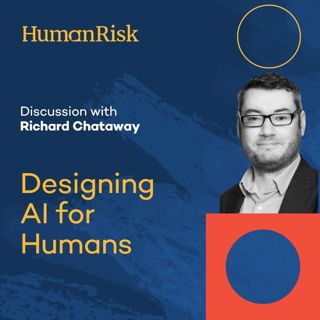
Richard Chataway on Designing AI for Humans

Richard Chataway on Designing AI for Humans

What if the biggest AI risk isn’t bias or data, but human behaviour itself? How might AI impact the people using it and what does that mean for how we design solutions and deploy the technology?

Episode Summary

On this episode, I’m joined by a returning guest. Richard Chataway is a behavioural science expert and strategist who joins me to explore how we can design AI systems that truly work for humans. Richard brings a unique lens to the conversation, combining insights from advertising, government policy, and behavioural science to unpack the human drivers that shape how we build and interact with AI. We discuss everything from cognitive biases and persuasive tech to the ethics of design and how these hidden forces influence our relationship with intelligent machines.

During our conversation, Richard explains the importance of context and behavioural frameworks in making AI more ethical, effective, and human-centric. We explore real-world examples of effective and ineffective design, examining where intentions diverge from outcomes and what can be done to address these discrepancies.

Richard shares fascinating insights from his book "The Behaviour Business" and his experience in both the public and private sectors, offering a practical yet thought-provoking look at what it really means to design for behaviour in the age of AI.
Whether you’re an AI sceptic, enthusiast, or simply curious about how technology intersects with human behaviour, this episode offers a compelling exploration of the invisible levers shaping our digital lives. From nudging with intent to avoiding manipulation, Richard helps us understand how behavioural science can make the future of AI more aligned with our values and less prone to unintended consequences.

Guest Biography
Richard is a Behavioural Scientist, Author and Podcaster who heads up the Behaviour Change Team at Concentrix, a Fortune 500 global technology and transformation company, working with around 2000 brands globally in over 70 different countries. He is also the founder of Communication Science Group and a former board member of the Association for Business Psychology.

His book The Behaviour Business is a bestselling guide to deploying Behavioural Science within organisations to solve a wide range of problems.

vAI-Generated Timestamped Summary
00:00 – Intro: Designing AI for humans
01:25 – Welcome back Richard Chataway
03:15 – Behavioural science meets AI
05:20 – Why we lie more to bots
07:05 – Judgement, distance & dishonesty
09:10 – When design invites bad behaviour
11:30 – Fraud as a design problem
13:40 – The “Computer says no” effect
15:25 – When neutrality helps disclosure
17:15 – The empathy paradox
19:05 – Data bias & unequal outcomes
21:30 – When to keep humans in the loop
23:40 – Behavioural science as AI insurance
26:00 – When efficiency erodes trust
28:20 – Friction, fairness & feedback
30:05 – AI and the frontline worker
33:00 – Redefining jobs, not removing them
36:10 – New skills for an AI world
39:00 – Beyond efficiency: meaningful work
41:45 – Leadership: ask “should we automate?”
44:10 – Practical design principles
47:30 – The myth of full automation
50:20 – Augment, don’t replace
53:00 – Case studies from Concentrix
56:40 – Making AI ethics actionable
59:20 – The next five years of human-centred AI
1:02:00 – Closing reflections
1:04:30 – Where to find Richard
1:06:00 – Outro & related episodes

Links
Richard on LinkedIn - https://www.linkedin.com/in/richard-chataway/

Richard's book The Behaviour Business - https://behaviourbusiness.com/

Richard's previous appearance on the show - https://www.humanriskpodcast.com/richard-chataway-on-the-behaviour/

Concentrix - https://www.concentrix.com/

Richard at Concentrix - https://www.concentrix.com/contributor/richard-chataway/


Denne episoden er hentet fra en åpen RSS-feed og er ikke publisert av Podme. Den kan derfor inneholde annonser.

Episoder(382)

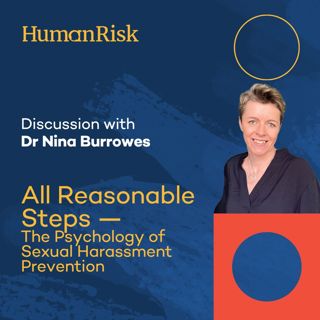
Dr Nina Burrowes on All Reasonable Steps: The Psychology of Sexual Harassment Prevention

Dr Nina Burrowes on All Reasonable Steps: The Psychology of Sexual Harassment Prevention

What does it actually take to prevent sexual harassment at work? Policies, training, reporting mechanisms and statements of zero tolerance are one thing. Creating a workplace where sexual harassment i...

25 Sep 1h 6min
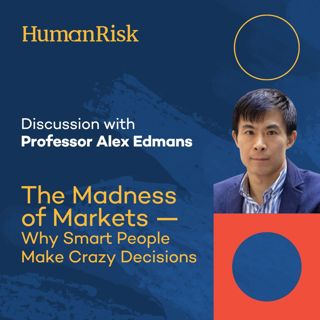
Professor Alex Edmans on the Madness of Markets — Why Smart People Make Crazy Decisions

Professor Alex Edmans on the Madness of Markets — Why Smart People Make Crazy Decisions

What can financial markets teach us about human behaviour? Why might the size of a CEO’s signature tell us something useful about the company they run? And why, even when smart investors know somethin...

13 Sep 1h 1min
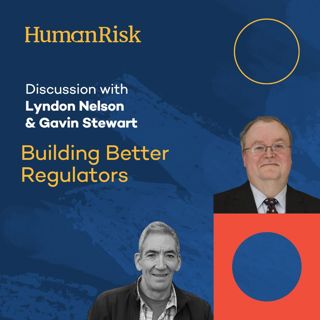
Lyndon Nelson & Gavin Stewart on Building Better Regulators

Lyndon Nelson & Gavin Stewart on Building Better Regulators

What if understanding regulation could help us spot when politicians are promising the impossible? Regulation sounds simple in theory. Something poses a risk, so we create rules and a regulator to con...

7 Sep 1h 23min
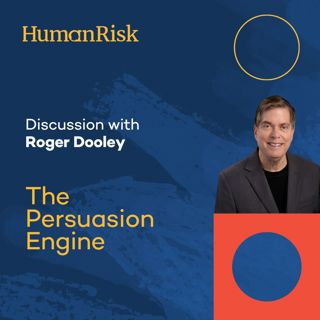
Roger Dooley on The Persuasion Engine

Roger Dooley on The Persuasion Engine

What if AI could help us understand people better, rather than simply replacing what humans do?Episode summaryHow can we use AI to become better at persuasion, communication and understanding human be...

1 Sep 59min
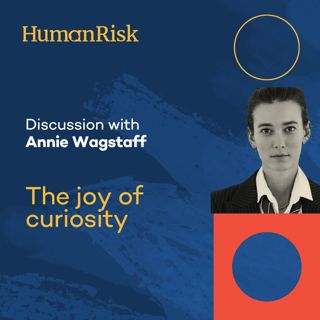
Annie Wagstaff on The Joy of Curiosity

Annie Wagstaff on The Joy of Curiosity

What’s the last thing you learned simply because you wanted to know?Episode summaryWhy do we feel the need to justify what we learn? My guest on this episode is Annie Wagstaff, a musician and composer...

23 Aug 1h
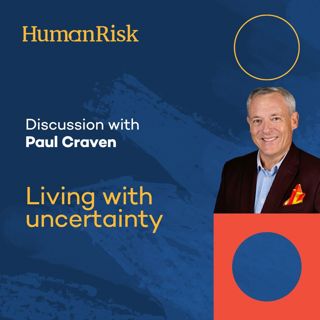
Paul Craven on Living With Uncertainty

Paul Craven on Living With Uncertainty

What happens when someone who spends his life thinking about risk, decision-making and human behaviour is confronted with an uncertainty he simply can’t control?Episode summaryMy guest is Paul Craven,...

15 Aug 51min
Benji Wilson on why we rate everything

Benji Wilson on why we rate everything

Why do we rate everything and why do we do so on a scale of one to five stars? What happens when systems designed to help us make better choices start influencing our behaviour in ways we don’t necess...

8 Aug 1h 4min
Mark Heywood on The Stories We Tell About Ourselves

Mark Heywood on The Stories We Tell About Ourselves

What parts of yourself have you learned to hide in order to be taken seriously? My guest on this episode is Mark Heywood, a friend of the show, returning guest and someone I've collaborated with on a ...

2 Aug 1h 21min

Populært innen Vitenskap

fastlegen
romkapsel
tingenes-tilstand
jss
liberal-halvtime
forskningno
sinnsyn
rekommandert
villmarksliv
rss-paradigmepodden
fjellsportpodden
tomprat-med-gunnar-tjomlid
grunnstoffene
nordnorsk-historie
rss-nysgjerrige-norge
tidlose-historier
psykopoden
rss-rekommandert
rss-inn-til-kjernen-med-sunniva-rose
smart-forklart