Nerve Agents, Straws, Soccer Flops, Happiness. July 13, 2018, Part 2
Science Friday13 Jul 2018

Nerve Agents, Straws, Soccer Flops, Happiness. July 13, 2018, Part 2

Four months ago, an ex-Russian spy and his daughter were hospitalized in the U.K. They came into contact with a substance known as Novichok—a nerve agent developed by Soviet scientists during the Cold War. And recently, two U.K. citizens were hospitalized. One died after apparent exposure to Novichok. Russia has so far denied any involvement in the attacks. The nuclear arms race wasn’t the only focus for the U.S. and Soviets during the Cold War. The proliferation of chemical weapons—nerve and blister agents like mustard gas—was also high on their priorities. The first nerve agent was the result of 1930’s German chemists’ experiments to develop new insecticides. The substance was toxic to insects but also, at certain doses, to animals and humans as well. Luckily, a brush with a nerve agent isn’t always fatal. Dr. Rick Sachleben joins Ira to discuss how nerve agents interact with our body chemistry and what can make a difference between life and death for someone who’s come into contact with the deadly substance.

This week, coffee giant Starbucks announced that it was phasing out the use of plastic straws in its stores, instead using what some are calling “adult sippy cup” lids. Other restaurants have also made the move to scale back use of the ubiquitous plastic drinking straw, while some municipalities have considered total straw bans. New York Magazine food business reporter Clint Rainey joins Ira to talk about some of the alternatives companies are considering to plastic straws, from compostable paper straws to pasta tubes to reusable metal straws, and about the challenges restaurants need to address—from durability, to price, to usability by people with disabilities.

In late April, FIFA announced that they would be adding four more referees to each soccer match. These refs won’t be running alongside players. Instead, they’ll be in a control room watching the match closely on computer monitors. The video assistant referees will be scanning instant replay for the typical fouls like hand balls and offside goals—but they will also be monitoring soccer dives. Soccer players are notorious for dives, or faking injuries. If players can successfully convince a referee they are temporarily injured, their team can get rewarded with a free kick, a yellow card for the opposing team, or the coveted penalty kick. If they get caught faking it, referees don’t really punish them. But there is a strategy to these flops. One study showed that players flopped when they were closer to referees and twice as much when the score was tied. Vox reporter Umair Irfan joins Ira to discuss some of the science, strategies, and behavior economics behind these soccer dives.

What really makes a person happy? What is “the good life”? Yale psychology professor Laurie Santos spends her research hours studying primate and canine cognition for clues to how humans think and learn. She also teaches Yale University’s most popular course (also available free online), “PSYC 157: Psychology and the Good Life.” She joins Ira to discuss her work and the psychology of happiness.

Subscribe to this podcast. Follow our show on Instagram, TikTok, Facebook, and Bluesky @scifri and sign up for our newsletters. Got a science question that’s keeping you up at night? Call us: 877-472-4374


Hosted by Simplecast, an AdsWizz company. See pcm.adswizz.com for information about our collection and use of personal data for advertising.

Denne episoden er hentet fra en åpen RSS-feed og er ikke publisert av Podme. Den kan derfor inneholde annonser.

Episoder(1412)

How do concussions affect the brain?

How do concussions affect the brain?

Football season is upon us and a new study is making headlines. Researchers found that roughly 1 in 4 NFL players will develop CTE, a neurodegenerative disease, in their lifetime. While most of us are...

28 Sep 18min

Are new treatments for celiac disease on the horizon?

Are new treatments for celiac disease on the horizon?

For celiac disease sufferers, avoiding gluten is the only way to avoid symptoms. But that’s not always easy to do. Researchers are working on new treatments, including one that targets interleukin-15,...

25 Sep 11min

Everyone is calling for safer AI. So what does that mean?

Everyone is calling for safer AI. So what does that mean?

AI safety has dominated the news cycle for weeks, precipitated in part by an AI attack where a bunch of OpenAI’s agents teamed up and hacked another AI platform, Hugging Face, without humans knowing. ...

24 Sep 22min

Underwater archeology reveals clues about Ice Age humans

Underwater archeology reveals clues about Ice Age humans

During the last ice age, America’s coastlines and waterways looked much different than they do today. When glaciers melted, coasts and shorelines were inundated, burying early human settlements underw...

23 Sep 18min

Climate change is increasing hurricane risk for Hawaiʻi

Climate change is increasing hurricane risk for Hawaiʻi

The Hawaiian Islands tend to be insulated from the worst effects of hurricanes, but this summer has been different. In mid-August, Hurricane Lala pummeled the Big Island, damaging homes and roads and ...

22 Sep 12min
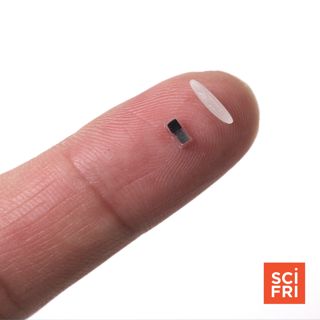
Bringing hard electronics into soft and squishy bodies

Bringing hard electronics into soft and squishy bodies

A lot of things in life are squishy, including your skin, your organs, and all the goo inside you. But technology tends to be rigid and hard. Figuring out how to get those two worlds to work together ...

21 Sep 18min
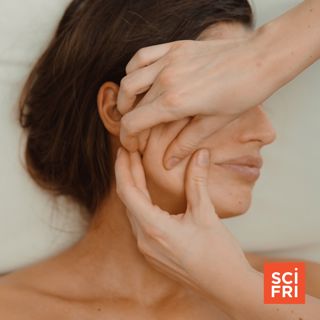
What is lymphatic drainage, anyway?

What is lymphatic drainage, anyway?

There’s a new wellness trend focused on an obscure capillary system that moves fluid around the body. Things like lymphatic walking, vibration plates, and compression boots have been touted as ways to...

18 Sep 18min

Hot flashes, hormone therapy, and the science of perimenopause

Hot flashes, hormone therapy, and the science of perimenopause

Perimenopause affects more than 4 billion people, but has historically been neglected by medicine. It’s the time before menopause when hormones start fluctuating wildly, leaving women with brain fog, ...

17 Sep 18min

Populært innen Vitenskap

fastlegen
romkapsel
liberal-halvtime
jss
tingenes-tilstand
forskningno
tomprat-med-gunnar-tjomlid
rekommandert
sinnsyn
villmarksliv
rss-paradigmepodden
fjellsportpodden
rss-nysgjerrige-norge
rss-kunstig-intelligens-med-elisabeth-maren-og-morten
rss-rekommandert
tidlose-historier
nordnorsk-historie
rss-inn-til-kjernen-med-sunniva-rose
psykopoden
grunnstoffene