James Geary on The Art of The Aphorism

James Geary on The Art of The Aphorism

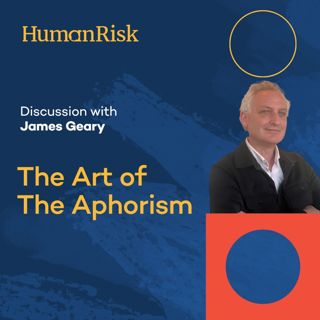
Can a single sentence change the way you see the world? My guest on this episode, James Geary thinks so.

Episode Summary
On this episode, I speak with writer and journalist James, whose lifelong fascination with aphorisms — the world’s shortest literary form — reveals why brevity really is the soul of wit.

James explains what makes an aphorism work, shares the five laws that define them, and explores how these concise little sayings have guided human thought from ancient times to social media.

We discuss:
  • The difference between aphorisms and proverbs
  • How short phrases can serve as decision-making tools and emotional signposts
  • Why humour and contradiction are central to wisdom
  • How modern culture, marketing, and even AI continue the aphoristic tradition
  • James’s book The World in a Phrase and why he chose to update it 20 years after originally publishing it
I also ask him whether my friend James Victore's phrase 'what made you weird as a kid, makes you great today' is an aphorism (spoiler alert: it is!).

Guest bio
James Geary is a writer, journalist, and Deputy Curator at Harvard’s Nieman Foundation for Journalism. He is the author of 'The World in a Phrase: A Brief History of the Aphorism' and 'Geary’s Guide to the World’s Great Aphorists'.

Links to topics
  • James' book The World in a Phrase: A Brief History of the Aphorism (Second Edition) — University of Chicago Press page. University of Chicago Press
  • James' official website (book + aphorism archive). jamesgeary.com+1
  • Harvard Gazette profile piece (“Brief bursts of wisdom”). Harvard Gazette
  • James Geary — TED Talk “Metaphorically speaking.” TED
  • Earlier Human Risk podcast episode with James Victore (where he shares “the things that made you weird…”): The Human Risk Podcast
AI-Generated Timestamp Summary
[00:00:00] Opening, why short phrases stick; introducing James Geary and my confession about “aphorism” pronunciation and definition.

[00:01:00] What aphorisms are; oldest literary form; Reader’s Digest spark at age eight.

[00:03:00] First memorable line: “difference between a rut and a grave”; why compressing meaning captivated him.

[00:05:00] The five laws: brief, personal, definitive, philosophical, with a twist; applying them to the Victore quote.

[00:06:30] Truth vs. usefulness; contradictions (Johnson vs. Bierce) and situational wisdom.

[00:08:45] Aphorisms as everyday philosophy; “signposts” and “violin in public” imagery.

[00:10:45] Teenage collecting; writing aphorisms on the backs of rock posters.

[00:12:45] Joy + darkness; why humour helps memory; “Why can angels fly? Because they take themselves lightly.”

[00:16:30] Family sayings; “If you’re not living on the edge, you’re taking up too much space.”

[00:17:45] Redundancy story; “treacherous ground” aphorism as psychological footing.

[00:19:30] Secular scripture; Pascal’s tennis metaphor; timelessness across traditions.

[00:23:00] Originality vs. recurrence; why the twist makes the familiar new.

[00:25:15] Beyond greeting-card obviousness; Emerson’s “braver five minutes longer.”

[00:27:45] Knowing when to persist vs. bail; relationship aphorism “don’t let someone show you twice.”

[00:31:00] Short form ≠ short attention; links to deep, long thinking.

[00:33:30] Craft vs. hot takes; how aphorisms provoke contemplation and dialogue.

[00:37:00] Ukraine example; “We kneel before heroes, not invaders” and words+images.

[00:41:00] Free speech, calm strength, and the form’s defiance of authoritarianism.

[00:43:15] Why a history, not a favourites list; posters to book structure.

[00:47:00] Rights reversion; why a new edition now; social media context; more aphorists.

[00:49:15] Choosing figures: omitting Wilde; championing Stanisław Lec; “No snowflake in an avalanche ever feels responsible.”

[00:53:00] Aphorisms everywhere: t-shirts, bumper stickers, ads; “Lick the lid of life.”

[00:56:30] Can AI write aphorisms? Yes — but beware “cognitive laziness.”

[01:01:00] Prompts for humans vs. prompts for machines; why discomfort matters.

[01:02:15] Book details; publisher; where to find it; closing thanks.

[01:04:00] Outro: links, review ask, website, and final behavioural nudge on “phrases you live by.”

Denne episoden er hentet fra en åpen RSS-feed og er ikke publisert av Podme. Den kan derfor inneholde annonser.

Episoder(382)

Dr Nina Burrowes on All Reasonable Steps: The Psychology of Sexual Harassment Prevention

Dr Nina Burrowes on All Reasonable Steps: The Psychology of Sexual Harassment Prevention

What does it actually take to prevent sexual harassment at work? Policies, training, reporting mechanisms and statements of zero tolerance are one thing. Creating a workplace where sexual harassment i...

25 Sep 1h 6min

Professor Alex Edmans on the Madness of Markets — Why Smart People Make Crazy Decisions

Professor Alex Edmans on the Madness of Markets — Why Smart People Make Crazy Decisions

What can financial markets teach us about human behaviour? Why might the size of a CEO’s signature tell us something useful about the company they run? And why, even when smart investors know somethin...

13 Sep 1h 1min
Lyndon Nelson & Gavin Stewart on Building Better Regulators

Lyndon Nelson & Gavin Stewart on Building Better Regulators

What if understanding regulation could help us spot when politicians are promising the impossible? Regulation sounds simple in theory. Something poses a risk, so we create rules and a regulator to con...

7 Sep 1h 23min
Roger Dooley on The Persuasion Engine

Roger Dooley on The Persuasion Engine

What if AI could help us understand people better, rather than simply replacing what humans do?Episode summaryHow can we use AI to become better at persuasion, communication and understanding human be...

1 Sep 59min
Annie Wagstaff on The Joy of Curiosity

Annie Wagstaff on The Joy of Curiosity

What’s the last thing you learned simply because you wanted to know?Episode summaryWhy do we feel the need to justify what we learn? My guest on this episode is Annie Wagstaff, a musician and composer...

23 Aug 1h
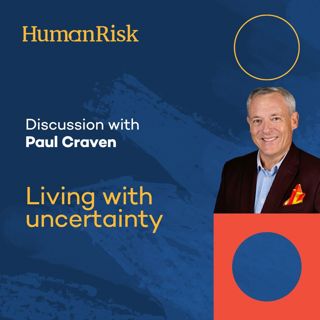
Paul Craven on Living With Uncertainty

Paul Craven on Living With Uncertainty

What happens when someone who spends his life thinking about risk, decision-making and human behaviour is confronted with an uncertainty he simply can’t control?Episode summaryMy guest is Paul Craven,...

15 Aug 51min
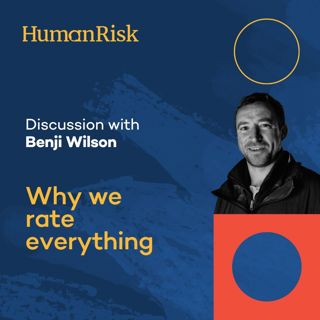
Benji Wilson on why we rate everything

Benji Wilson on why we rate everything

Why do we rate everything and why do we do so on a scale of one to five stars? What happens when systems designed to help us make better choices start influencing our behaviour in ways we don’t necess...

8 Aug 1h 4min
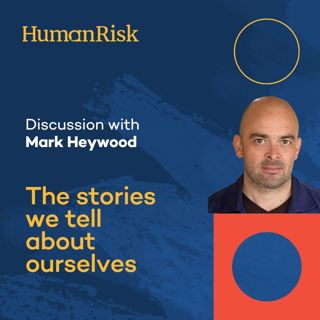
Mark Heywood on The Stories We Tell About Ourselves

Mark Heywood on The Stories We Tell About Ourselves

What parts of yourself have you learned to hide in order to be taken seriously? My guest on this episode is Mark Heywood, a friend of the show, returning guest and someone I've collaborated with on a ...

2 Aug 1h 21min

Populært innen Vitenskap

fastlegen
romkapsel
tingenes-tilstand
jss
liberal-halvtime
forskningno
sinnsyn
rekommandert
villmarksliv
rss-paradigmepodden
fjellsportpodden
tomprat-med-gunnar-tjomlid
grunnstoffene
nordnorsk-historie
rss-nysgjerrige-norge
tidlose-historier
psykopoden
rss-rekommandert
rss-inn-til-kjernen-med-sunniva-rose
smart-forklart