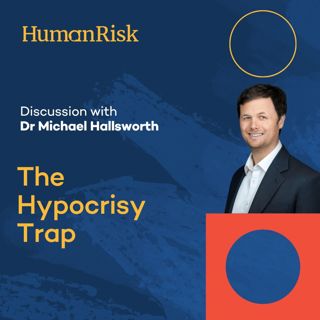
Dr Michael Hallsworth on The Hypocrisy Trap

Dr Michael Hallsworth on The Hypocrisy Trap

We all intuitively know that hypocrisy is a bad thing. But what if it isn’t a flaw, but a feature? But maybe the real problem isn’t hypocrisy, it’s how we think about it.

Episode Summary
On this episode, I'm talking to Dr Michael Hallsworth, a leading behavioural scientist and the author of The Hypocrisy Trap. We explore a topic that’s instantly recognisable but not often properly understood. Hypocrisy is something we’re quick to spot in others, slow to acknowledge in ourselves, and often design around as if it were avoidable or inherently wrong.

What Michael reveals — through personal stories, behavioural experiments, and a careful unpacking of what hypocrisy really means — is that our judgments of hypocrisy say more about us than about the people we’re criticising. In fact, hypocrisy isn’t just common; it’s structurally baked into how we navigate competing priorities, conflicting values and real-world trade-offs. And sometimes, paradoxically, a little hypocrisy might even be useful.

That makes it incredibly relevant to human risk. In compliance, ethics, and organisational culture, we tend to assume people should act consistently with what they believe, and we often penalise them when they don’t. But as Michael explains, this assumption can lead us to build systems that are brittle, punitive or out of touch with how people actually behave. This conversation challenges that frame and offers a more human — and more effective — way of thinking about inconsistency, trust and moral judgment.

Guest Biography - Michael Hallsworth

Dr Michael Hallsworth is Chief Behavioural Scientist at the Behavioural Insights Team (BIT), where he applies behavioural science to policy, organisational design and real‑world behavioural change. He describes himself as someone “helping people apply behavioural science to real‑world problems” and is the author of The Hypocrisy Trap: How Changing What We Criticise Can Improve Our Lives.

At BIT, Michael has led numerous projects spanning government and private sector domains, bridging rigorous academic research with operational behavioural insight. His work is characterised by practical translation of behavioural science and an upfront acknowledgement of human complexity — the grey zones rather than the simple binaries.

His new book brings this lens to the topic of hypocrisy, exploring how our judgments of double standards shape behaviour, institutions and trust in counter‑intuitive ways.

AI-Generated Timestamp Summary
[00:00:00] Intro and framing of hypocrisy as a human behavioural risk
[00:01:00] Why hypocrisy runs deeper than just “saying one thing and doing another”
[00:02:00] Discussion of how organisations treat moral consistency — and the limitations of that approach
[00:03:00] Michael’s background, BIT and the genesis of his book
[00:04:00] Defining hypocrisy: the three‑part structure
[00:06:00] The two‑fold meaning: false image vs double standards
[00:07:00] Michael’s personal story with his daughter + the context of “PartyGate”
[00:09:00] Historical roots: Freud’s view on civilisation and hypocrisy
[00:11:00] Why hypocrisy is a social judgement rather than purely behavioural
[00:13:00] When calling out hypocrisy becomes counterproductive in change efforts
[00:15:00] Real‑world examples: politics, business, everyday life
[00:17:00] The phenomenon of ‘do‑gooder derogation’ and why consistent people make us uneasy
[00:20:00] Hypocrisy as a strategic accusation in social media and organisational life
[00:22:00] The behavioural science of induced hypocrisy and what it tells us about change
[00:25:00] Honest vs. relatable hypocrisy: shifting the narrative
[00:28:00] Michael outlines three categories for navigating hypocrisy
[00:30:00] His reflections on writing the book and the surprises he uncovered
[00:34:00] Balancing moral integrity with public perception and stakeholder expectations
[00:36:00] Hypocrisy in corporate ESG: the tension between expectation and action
[00:39:00] Managing contradictions among stakeholders: the inevitable trade‑offs
[00:41:00] Experiment results: private hypocrisy and moral judge
[00:44:00] The paradox: why we prefer people who are ‘inconsistent but principled’ over ‘consistent and bland’
[00:46:00] Authenticity vs inauthentic leadership — and the hypocrisy dimension
[00:48:00] Is this a practical manual for “how to do hypocrisy well”?
[00:51:00] Final reflections: hypocrisy isn’t always about morality—sometimes it’s about signalling, trust and change
[00:54:00] Michael’s hope for what the book can achieve and closing thoughts
[00:57:00] Wrap‑up, thanks and behavioural nudge for the listener

Links
Michael's website - https://www.michaelhallsworth.com/
The Hypocrisy Trap – https://www.thehypocrisytrap.com/
Behavioural Insights Team - https://www.bi.team/
Michael's IT profile – https://www.bi.team/people/michael-hallsworth/
'Partygate' explainer - https://www.bbc.co.uk/news/uk-politics-59952395

Denne episoden er hentet fra en åpen RSS-feed og er ikke publisert av Podme. Den kan derfor inneholde annonser.

Episoder(382)

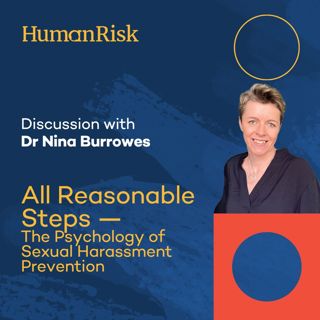
Dr Nina Burrowes on All Reasonable Steps: The Psychology of Sexual Harassment Prevention

Dr Nina Burrowes on All Reasonable Steps: The Psychology of Sexual Harassment Prevention

What does it actually take to prevent sexual harassment at work? Policies, training, reporting mechanisms and statements of zero tolerance are one thing. Creating a workplace where sexual harassment i...

25 Sep 1h 6min
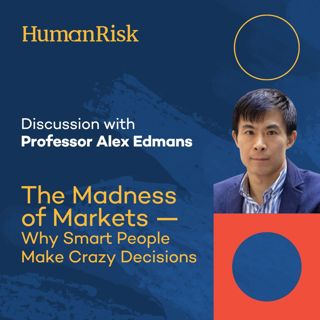
Professor Alex Edmans on the Madness of Markets — Why Smart People Make Crazy Decisions

Professor Alex Edmans on the Madness of Markets — Why Smart People Make Crazy Decisions

What can financial markets teach us about human behaviour? Why might the size of a CEO’s signature tell us something useful about the company they run? And why, even when smart investors know somethin...

13 Sep 1h 1min
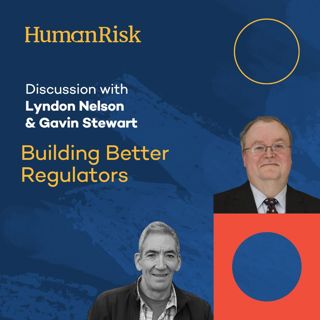
Lyndon Nelson & Gavin Stewart on Building Better Regulators

Lyndon Nelson & Gavin Stewart on Building Better Regulators

What if understanding regulation could help us spot when politicians are promising the impossible? Regulation sounds simple in theory. Something poses a risk, so we create rules and a regulator to con...

7 Sep 1h 23min
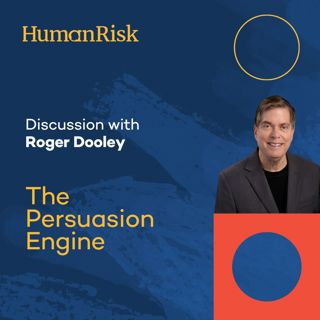
Roger Dooley on The Persuasion Engine

Roger Dooley on The Persuasion Engine

What if AI could help us understand people better, rather than simply replacing what humans do?Episode summaryHow can we use AI to become better at persuasion, communication and understanding human be...

1 Sep 59min
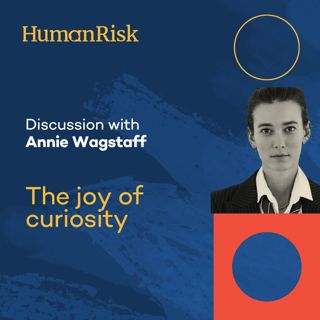
Annie Wagstaff on The Joy of Curiosity

Annie Wagstaff on The Joy of Curiosity

What’s the last thing you learned simply because you wanted to know?Episode summaryWhy do we feel the need to justify what we learn? My guest on this episode is Annie Wagstaff, a musician and composer...

23 Aug 1h
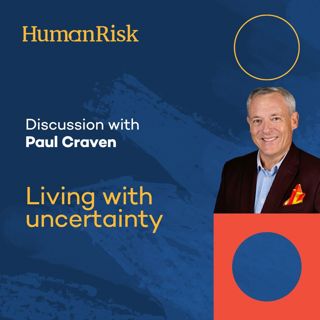
Paul Craven on Living With Uncertainty

Paul Craven on Living With Uncertainty

What happens when someone who spends his life thinking about risk, decision-making and human behaviour is confronted with an uncertainty he simply can’t control?Episode summaryMy guest is Paul Craven,...

15 Aug 51min
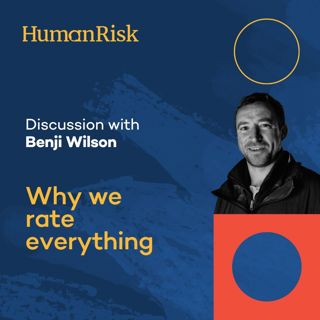
Benji Wilson on why we rate everything

Benji Wilson on why we rate everything

Why do we rate everything and why do we do so on a scale of one to five stars? What happens when systems designed to help us make better choices start influencing our behaviour in ways we don’t necess...

8 Aug 1h 4min
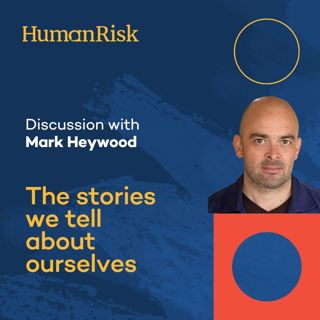
Mark Heywood on The Stories We Tell About Ourselves

Mark Heywood on The Stories We Tell About Ourselves

What parts of yourself have you learned to hide in order to be taken seriously? My guest on this episode is Mark Heywood, a friend of the show, returning guest and someone I've collaborated with on a ...

2 Aug 1h 21min

Populært innen Vitenskap

fastlegen
romkapsel
tingenes-tilstand
jss
liberal-halvtime
forskningno
sinnsyn
rekommandert
villmarksliv
rss-paradigmepodden
fjellsportpodden
tomprat-med-gunnar-tjomlid
grunnstoffene
nordnorsk-historie
rss-nysgjerrige-norge
tidlose-historier
psykopoden
rss-rekommandert
rss-inn-til-kjernen-med-sunniva-rose
smart-forklart