Professor Yuval Feldman on Can The Public Be Trusted?

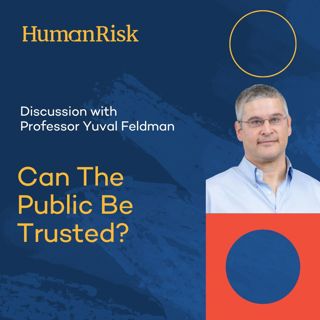
Professor Yuval Feldman on Can The Public Be Trusted?

Why do governments rely on coercion and punishment when voluntary cooperation often produces better, more sustainable outcomes?

Episode Summary
On this episode, I’m joined once again by Professor Yuval Feldman, who returns to explore the core question behind his latest book: Can The Public Be Trusted?

Instead of asking how much we trust our governments, Yuval flips the script, asking how much governments trust us, and whether that trust is deserved. Together, we dive into the concept of voluntary compliance, where people follow rules not because they’re forced to, but because they believe in doing the right thing. We unpack the complexity of this idea through real-world examples, from tax compliance to environmental policy to COVID-19 interventions.

Yuval explains why people who think they’re ethical can actually be the hardest to regulate, and how misplaced trust can lead to serious regulatory blind spots. We also explore the psychological tension between intrinsic motivation and external enforcement, and why regulators often default to command-and-control, even when trust might offer a better solution.

As ever, Yuval makes nuanced, sophisticated ideas feel accessible and immediately relevant. You'll hear about the role of culture, the limits of nudging, why economists might (sometimes!) actually be right about human behaviour and how AI might help policymakers make better decisions.


Guest Bio
Professor Yuval Feldman is a legal scholar and behavioural scientist at Bar-Ilan University in Israel. A returning guest and the podcast’s very first interviewee, Yuval is internationally renowned for his work at the intersection of law, psychology, and behavioural economics. His new book, Can The Public Be Trusted? The Promise and Perils of Voluntary Compliance is available open-access via Cambridge University Press (link below).

AI-Generated Timestamped Summary
[00:00:00] Introduction: why this question of “can the public be trusted?” matters for regulation and risk

[00:03:42] Yuval’s personal background: how he came into law + psychology and the origin of his VComp lab

[00:09:15] Defining voluntary compliance: what it means, how it differs from coercion

[00:14:52] Intrinsic motivation vs crowding out: when good intentions are undermined by heavy‑handed regulation

[00:21:30] Designing regulatory systems for trust: frameworks and features that support voluntary compliance

[00:27:47] Case study: Covid‑19 and public cooperation—what we learned about trust, compliance and enforcement

[00:34:10] Tax compliance as a trust test: how citizens respond when they believe the system treats them fairly

[00:39:58] Environmental regulation and the limits of voluntary strategies: when culture or technology create barriers

[00:45:22] Cross‑cultural & technological dynamics: how digital reputation, culture and platforms impact compliance

[00:50:05] The perils of voluntary compliance: when trust can be misplaced, manipulated or simply ineffective

[00:55:30] Final reflections: what this means for risk professionals, policymakers and anyone designing systems of human behaviour

[01:00:12] Closing: how to reframe regulation to see the public not as a risk but as a resource.

Links
Yuval's academic profile - https://law.biu.ac.il/en/feldman

His profile on LinkedIn - https://www.linkedin.com/in/yuval-feldman-21942514/

His open-access book Can the Public Be Trusted? (Cambridge University Press) – https://www.cambridge.org/core/books/can-the-public-be-trusted/B3E11831E3051D4E928B9252B6767A4B


Yuval’s previous appearances on the show
On The Law of Good People
or ‘why we should write rules for good people not bad people’ (2019) - https://www.humanriskpodcast.com/professor-yuval-feldman-on-why/

On Trust & Voluntary Compliance
(2022) - https://www.humanriskpodcast.com/professor-yuval-feldman-on-trust-compliance?

Denne episoden er hentet fra en åpen RSS-feed og er ikke publisert av Podme. Den kan derfor inneholde annonser.

Episoder(382)

Dr Nina Burrowes on All Reasonable Steps: The Psychology of Sexual Harassment Prevention

Dr Nina Burrowes on All Reasonable Steps: The Psychology of Sexual Harassment Prevention

What does it actually take to prevent sexual harassment at work? Policies, training, reporting mechanisms and statements of zero tolerance are one thing. Creating a workplace where sexual harassment i...

25 Sep 1h 6min
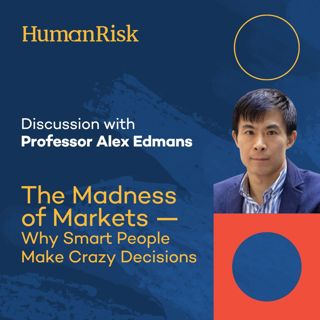
Professor Alex Edmans on the Madness of Markets — Why Smart People Make Crazy Decisions

Professor Alex Edmans on the Madness of Markets — Why Smart People Make Crazy Decisions

What can financial markets teach us about human behaviour? Why might the size of a CEO’s signature tell us something useful about the company they run? And why, even when smart investors know somethin...

13 Sep 1h 1min
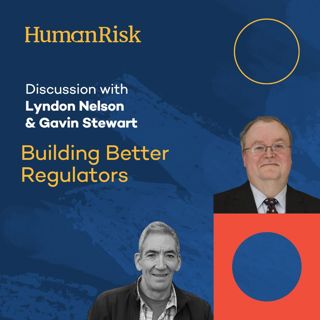
Lyndon Nelson & Gavin Stewart on Building Better Regulators

Lyndon Nelson & Gavin Stewart on Building Better Regulators

What if understanding regulation could help us spot when politicians are promising the impossible? Regulation sounds simple in theory. Something poses a risk, so we create rules and a regulator to con...

7 Sep 1h 23min
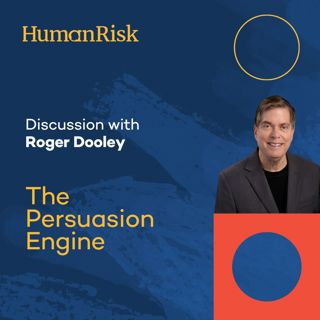
Roger Dooley on The Persuasion Engine

Roger Dooley on The Persuasion Engine

What if AI could help us understand people better, rather than simply replacing what humans do?Episode summaryHow can we use AI to become better at persuasion, communication and understanding human be...

1 Sep 59min
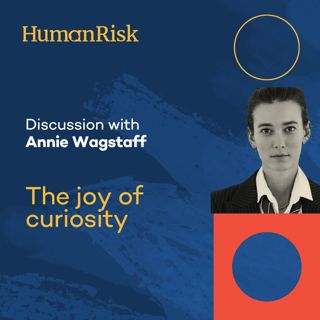
Annie Wagstaff on The Joy of Curiosity

Annie Wagstaff on The Joy of Curiosity

What’s the last thing you learned simply because you wanted to know?Episode summaryWhy do we feel the need to justify what we learn? My guest on this episode is Annie Wagstaff, a musician and composer...

23 Aug 1h
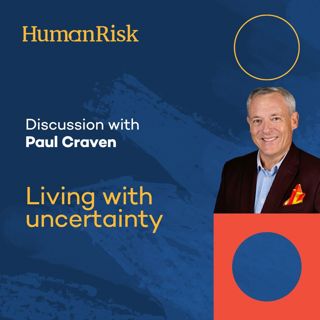
Paul Craven on Living With Uncertainty

Paul Craven on Living With Uncertainty

What happens when someone who spends his life thinking about risk, decision-making and human behaviour is confronted with an uncertainty he simply can’t control?Episode summaryMy guest is Paul Craven,...

15 Aug 51min
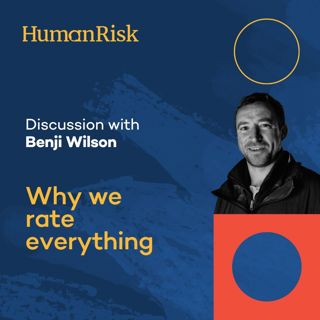
Benji Wilson on why we rate everything

Benji Wilson on why we rate everything

Why do we rate everything and why do we do so on a scale of one to five stars? What happens when systems designed to help us make better choices start influencing our behaviour in ways we don’t necess...

8 Aug 1h 4min
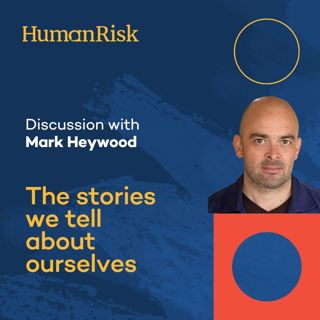
Mark Heywood on The Stories We Tell About Ourselves

Mark Heywood on The Stories We Tell About Ourselves

What parts of yourself have you learned to hide in order to be taken seriously? My guest on this episode is Mark Heywood, a friend of the show, returning guest and someone I've collaborated with on a ...

2 Aug 1h 21min

Populært innen Vitenskap

fastlegen
romkapsel
tingenes-tilstand
jss
liberal-halvtime
forskningno
sinnsyn
rekommandert
villmarksliv
rss-paradigmepodden
fjellsportpodden
tomprat-med-gunnar-tjomlid
grunnstoffene
nordnorsk-historie
rss-nysgjerrige-norge
tidlose-historier
psykopoden
rss-rekommandert
rss-inn-til-kjernen-med-sunniva-rose
smart-forklart