The Shared Language of Trauma
TraumaTies26 Maj 2022

The Shared Language of Trauma

What is trauma? Defining trauma as a concept is challenging — there isn’t a black and white definition. Trauma is not defined by an event, but rather it’s defined by the person who experienced the event.

TraumaTies was brought to life by the Network for Victim Recovery of DC (NVRDC) to create a space that is open for everyone to address trauma after a crime. Our hosts, Bridgette Stumpf, Executive Director at NVRDC, and Lindsey Silverberg, Head of Services with NVRDC, share what to expect as you join them on this journey. Together they unpack the shared language of trauma and the ways in which trauma is a thread connecting us all in the human experience.

This episode introduces you to the initial concepts and definitions surrounding trauma and explores our hosts’ backgrounds in supporting, understanding, and working with individuals who have experienced trauma.

“It's so beautiful to see how resilient folks are, and getting the privilege of seeing somebody from that acute moment,” Lindsay says. “And what happens after, how they're able to build resiliency and lead these lives…while it changes them, it really is fascinating to be part of that journey with them.”

Meet the Hosts

Name: Lindsey Silverberg

Company: Network for Victim Recovery of DC

Connect: LinkedIn

Name: Bridgette Stumpf

Company: Network for Victim Recovery of DC

Connect: LinkedIn

Episode Highlights

[02:53] What defines trauma: Bridgette explains that trauma is not defined by an event, but rather by the person who experiences the event.

[04:46] Shared community trauma: Lindsay shares examples of what would be considered a shared community trauma including 9/11, the DC sniper, and the current war in Ukraine.

[07:56] Trauma changes how we view the world: Bridgette talks about the research being done to understand the nuances of how trauma changes us.

[10:18] Supporting people through acute trauma moments: Lindsay shares her experience working with people who have experienced trauma and how she sees them through the initial acute moment and the long-term aftermath.

[17:59] Leaning into trauma education: Bridgette recounts how it was through a training course for law enforcement that she really discovered her interest in trauma education.

[20:13] Distancing ourselves from trauma: Bridgette explains why we’re conditioned to create distance between ourselves and trauma, and discusses the far-reaching consequences this can have for people.

[25:25] The paradox of trauma: Bridgette references Brené Brown’s book Atlas of the Heart and how creating a language portal is a paradox when it comes to talking about trauma.

Connect with the Network for Victim Recovery of DC

☑️ Follow us on Twitter, Facebook, Instagram & LinkedIn.

☑️ Subscribe to TraumaTies on Apple Podcasts, Spotify, or Google Podcasts.

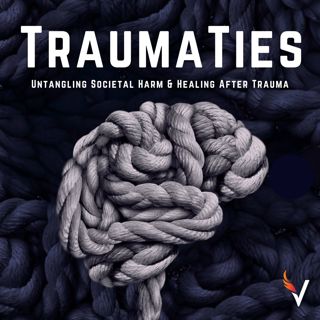
Brought to you by Network for Victim Recovery of DC (NVRDC), TraumaTies: Untangling Societal Harm & Healing After Crime is a podcast that creates space to dissect the structural and systemic knots that keep us from addressing trauma.

Rooted in a belief that survivors of crime deserve respect for their dignity in the aftermath of victimization, NVRDC seeks to empower survivors and to transform existing response systems to be more inclusive of the diverse needs that survivors often have after crime.

NVRDC also provides free, holistic, and comprehensive advocacy, case management, and legal services to victims of all crime types in Washington, DC. Visit our website to learn more about how to access our trauma-informed education training and how to partner with us to expand survivor-defined justice.

Det här avsnittet är hämtat från ett öppet RSS-flöde och publiceras inte av Podme. Det kan innehålla reklam.

Avsnitt(51)

Connection in Places Built for Isolation with Shazad Carbaidwala & Emily Cashell

Connection in Places Built for Isolation with Shazad Carbaidwala & Emily Cashell

Making a bad decision or causing harm does not make you less of a person. At Prisoner Visitation and Support (PVS), Shazad Carbaidwala and Emily Cashell emphasize that every incarcerated person deserv...

22 Sep 24min

The Risk of Being Fully Known

The Risk of Being Fully Known

Relationships require trust and vulnerability, which can make us feel uncomfortable. This sense of being seen means taking that leap into the unknown. This week, Bridgette and Lindsey explore how we d...

15 Sep 25min

Rewriting Your Story After Trauma with Scott Stolarick

Rewriting Your Story After Trauma with Scott Stolarick

From beginning his career working with court-mandated patients to opening his own practice, Scott Stolarick has learned that trauma exists everywhere. However, what matters most is how we define our l...

8 Sep 24min

The Story You Carry Isn't the Whole Truth

The Story You Carry Isn't the Whole Truth

Shame. The feeling of “I’m not enough,” or “I don’t deserve good things.” How does this pattern of thought shape our lives? And how do we intervene in this cycle of behavior? This week, Bridgette and ...

1 Sep 25min

When "Strong" Becomes Too Expensive

When "Strong" Becomes Too Expensive

Dependable. Reliable. Accommodating. Do these words describe you? Often seen as positive attributes, our need to embody these traits can sometimes lead to overcommitment and burnout. Bridgette and Lin...

25 Aug 26min

Who Are You Without Survival Mode?

Who Are You Without Survival Mode?

Could behaviors we see as personality traits actually be rooted in trauma response? What happens when we become accustomed to staying in survival mode? Bridgette and Lindsey explore how our strongest ...

18 Aug 25min

When Systems Fail with Paula Yost

When Systems Fail with Paula Yost

Paula Yost joins TraumaTies to discuss her journey as an attorney and court advocate for children. She speaks about her speciality in intersectional legal and social work and how, without effective sy...

11 Aug 22min

What Coping Teaches Us About Survival

What Coping Teaches Us About Survival

When do our coping behaviors go from necessary survival needs to reliance on avoidant behavior? In this week’s episode, Bridgette and Lindsey dive into how coping mechanisms of any kind can turn into ...

4 Aug 21min

Populärt inom Business & ekonomi

framgangspodden
badfluence
varvet
rss-jossan-nina
rss-borsens-finest
24fragor
avanzapodden
rss-inga-dumma-fragor-om-pengar
uppgang-och-fall
lastbilspodden
svd-tech-brief
fill-or-kill
tabberaset
bathina-en-podcast
rss-kort-lang-analyspodden-fran-di
rikatillsammans-om-privatekonomi-rikedom-i-livet
rss-dagen-med-di
borsmorgon
kapitalet-en-podd-om-ekonomi
rss-veckans-trade