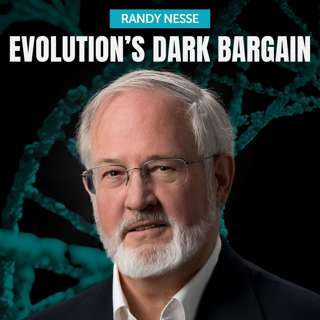
#179 Classic episode – Randy Nesse on why evolution left us so vulnerable to depression and anxiety

#179 Classic episode – Randy Nesse on why evolution left us so vulnerable to depression and anxiety

Mental health problems like depression and anxiety affect enormous numbers of people and severely interfere with their lives. By contrast, we don’t see similar levels of physical ill health in young people. At any point in time, something like 20% of young people are working through anxiety or depression that’s seriously interfering with their lives — but nowhere near 20% of people in their 20s have severe heart disease or cancer or a similar failure in a key organ of the body other than the brain.

From an evolutionary perspective, that’s to be expected, right? If your heart or lungs or legs or skin stop working properly while you’re a teenager, you’re less likely to reproduce, and the genes that cause that malfunction get weeded out of the gene pool.

So why is it that these evolutionary selective pressures seemingly fixed our bodies so that they work pretty smoothly for young people most of the time, but it feels like evolution fell asleep on the job when it comes to the brain? Why did evolution never get around to patching the most basic problems, like social anxiety, panic attacks, debilitating pessimism, or inappropriate mood swings? For that matter, why did evolution go out of its way to give us the capacity for low mood or chronic anxiety or extreme mood swings at all?

Today’s guest, Randy Nesse — a leader in the field of evolutionary psychiatry — wrote the book Good Reasons for Bad Feelings, in which he sets out to try to resolve this paradox.

Rebroadcast: This episode originally aired in February 2024.

Links to learn more, video, and full transcript: https://80k.info/rn

In the interview, host Rob Wiblin and Randy discuss the key points of the book, as well as:

  • How the evolutionary psychiatry perspective can help people appreciate that their mental health problems are often the result of a useful and important system.
  • How evolutionary pressures and dynamics lead to a wide range of different personalities, behaviours, strategies, and tradeoffs.
  • The missing intellectual foundations of psychiatry, and how an evolutionary lens could revolutionise the field.
  • How working as both an academic and a practicing psychiatrist shaped Randy’s understanding of treating mental health problems.
  • The “smoke detector principle” of why we experience so many false alarms along with true threats.
  • The origins of morality and capacity for genuine love, and why Randy thinks it’s a mistake to try to explain these from a selfish gene perspective.
  • Evolutionary theories on why we age and die.
  • And much more.

Chapters:

  • Cold Open (00:00:00)
  • Rob's Intro (00:00:55)
  • The interview begins (00:03:01)
  • The history of evolutionary medicine (00:03:56)
  • The evolutionary origin of anxiety (00:12:37)
  • Design tradeoffs, diseases, and adaptations (00:43:19)
  • The tricker case of depression (00:48:57)
  • The purpose of low mood (00:54:08)
  • Big mood swings vs barely any mood swings (01:22:41)
  • Is mental health actually getting worse? (01:33:43)
  • A general explanation for bodies breaking (01:37:27)
  • Freudianism and the origins of morality and love (01:48:53)
  • Evolutionary medicine in general (02:02:42)
  • Objections to evolutionary psychology (02:16:29)
  • How do you test evolutionary hypotheses to rule out the bad explanations? (02:23:19)
  • Striving and meaning in careers (02:25:12)
  • Why do people age and die? (02:45:16)

Producer and editor: Keiran Harris
Audio Engineering Lead: Ben Cordell
Technical editing: Dominic Armstrong
Transcriptions: Katy Moore

Episoder(333)

#79 – A.J. Jacobs on radical honesty, following the whole Bible, and reframing global problems as puzzles

#79 – A.J. Jacobs on radical honesty, following the whole Bible, and reframing global problems as puzzles

Today’s guest, New York Times bestselling author A.J. Jacobs, always hated Judge Judy. But after he found out that she was his seventh cousin, he thought, "You know what? She's not so bad." Hijacking ...

1 Jun 20202h 38min

#78 – Danny Hernandez on forecasting and the drivers of AI progress

#78 – Danny Hernandez on forecasting and the drivers of AI progress

Companies use about 300,000 times more computation training the best AI systems today than they did in 2012 and algorithmic innovations have also made them 25 times more efficient at the same tasks.Th...

22 Mai 20202h 11min
#77 – Marc Lipsitch on whether we're winning or losing against COVID-19

#77 – Marc Lipsitch on whether we're winning or losing against COVID-19

In March Professor Marc Lipsitch — Director of Harvard's Center for Communicable Disease Dynamics — abruptly found himself a global celebrity, his social media following growing 40-fold and journalist...

18 Mai 20201h 37min

Article: Ways people trying to do good accidentally make things worse, and how to avoid them

Article: Ways people trying to do good accidentally make things worse, and how to avoid them

Today’s release is the second experiment in making audio versions of our articles. The first was a narration of Greg Lewis’ terrific problem profile on ‘Reducing global catastrophic biological risks...

12 Mai 202026min

#76 – Tara Kirk Sell on misinformation, who's done well and badly, & what to reopen first

#76 – Tara Kirk Sell on misinformation, who's done well and badly, & what to reopen first

Amid a rising COVID-19 death toll, and looming economic disaster, we’ve been looking for good news — and one thing we're especially thankful for is the Johns Hopkins Center for Health Security (CHS). ...

8 Mai 20201h 53min

#75 – Michelle Hutchinson on what people most often ask 80,000 Hours

#75 – Michelle Hutchinson on what people most often ask 80,000 Hours

Since it was founded, 80,000 Hours has done one-on-one calls to supplement our online content and offer more personalised advice. We try to help people get clear on their most plausible paths, the key...

28 Apr 20202h 13min

#74 – Dr Greg Lewis on COVID-19 & catastrophic biological risks

#74 – Dr Greg Lewis on COVID-19 & catastrophic biological risks

Our lives currently revolve around the global emergency of COVID-19; you’re probably reading this while confined to your house, as the death toll from the worst pandemic since 1918 continues to rise. ...

17 Apr 20202h 37min
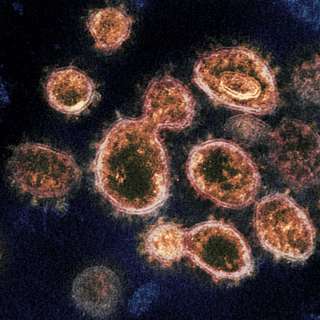
Article: Reducing global catastrophic biological risks

Article: Reducing global catastrophic biological risks

In a few days we'll be putting out a conversation with Dr Greg Lewis, who studies how to prevent global catastrophic biological risks at Oxford's Future of Humanity Institute. Greg also wrote a new ...

15 Apr 20201h 4min

Populært innen Fakta

fastlegen
dine-penger-pengeradet
relasjonspodden-med-dora-thorhallsdottir-kjersti-idem
foreldreradet
treningspodden
rss-strid-de-norske-borgerkrigene
mikkels-paskenotter
rss-bisarr-historie
jakt-og-fiskepodden
rss-sunn-okonomi
sinnsyn
rss-kunsten-a-leve
hverdagspsyken
tomprat-med-gunnar-tjomlid
rss-bak-luftfarten
fryktlos
ukast
rss-mind-body-podden
level-up-med-anniken-binz
rss-kull