

#11 - Spencer Greenberg on speeding up social science 10-fold & why plenty of startups cause harm

#11 - Spencer Greenberg on speeding up social science 10-fold & why plenty of startups cause harm

Do most meat eaters think it’s wrong to hurt animals? Do Americans think climate change is likely to cause human extinction? What is the best, state-of-the-art therapy for depression? How can we make academics more intellectually honest, so we can actually trust their findings? How can we speed up social science research ten-fold? Do most startups improve the world, or make it worse?

If you’re interested in these question, this interview is for you.

Click for a full transcript, links discussed in the show, etc.

A scientist, entrepreneur, writer and mathematician, Spencer Greenberg is constantly working to create tools to speed up and improve research and critical thinking. These include:

* Rapid public opinion surveys to find out what most people actually think about animal consciousness, farm animal welfare, the impact of developing world charities and the likelihood of extinction by various different means;
* Tools to enable social science research to be run en masse very cheaply;
* ClearerThinking.org, a highly popular site for improving people’s judgement and decision-making;
* Ways to transform data analysis methods to ensure that papers only show true findings;
* Innovative research methods;
* Ways to decide which research projects are actually worth pursuing.

In this interview, Spencer discusses all of these and more. If you don’t feel like listening, that just shows that you have poor judgement and need to benefit from his wisdom even more!

Get free, one-on-one career advice

We’ve helped hundreds of people compare their options, get introductions, and find high impact jobs. If you want to work on any of the problems discussed in this episode, find out if our coaching can help you.

Episoder(333)

#20 - Bruce Friedrich on inventing outstanding meat substitutes to end speciesism & factory farming

#20 - Bruce Friedrich on inventing outstanding meat substitutes to end speciesism & factory farming

Before the US Civil War, it was easier for the North to morally oppose slavery. Why? Because unlike the South they weren’t profiting much from its existence. The fight for abolition was partly won bec...

19 Feb 20181h 18min

#19 - Samantha Pitts-Kiefer on working next to the White House trying to prevent nuclear war

#19 - Samantha Pitts-Kiefer on working next to the White House trying to prevent nuclear war

Rogue elements within a state’s security forces enrich dozens of kilograms of uranium. It’s then assembled into a crude nuclear bomb. The bomb is transported on a civilian aircraft to Washington D.C, ...

14 Feb 20181h 4min

#18 - Ofir Reich on using data science to end poverty & the spurious action-inaction distinction

#18 - Ofir Reich on using data science to end poverty & the spurious action-inaction distinction

Ofir Reich started out doing math in the military, before spending 8 years in tech startups - but then made a sharp turn to become a data scientist focussed on helping the global poor. At UC Berkeley...

31 Jan 20181h 18min

#17 - Will MacAskill on moral uncertainty, utilitarianism & how to avoid being a moral monster

#17 - Will MacAskill on moral uncertainty, utilitarianism & how to avoid being a moral monster

Immanuel Kant is a profoundly influential figure in modern philosophy, and was one of the earliest proponents for universal democracy and international cooperation. He also thought that women have no ...

19 Jan 20181h 52min

#16 - Michelle Hutchinson on global priorities research & shaping the ideas of intellectuals

#16 - Michelle Hutchinson on global priorities research & shaping the ideas of intellectuals

In the 40s and 50s neoliberalism was a fringe movement within economics. But by the 80s it had become a dominant school of thought in public policy, and achieved major policy changes across the Englis...

22 Des 201755min

#15 - Phil Tetlock on how chimps beat Berkeley undergrads and when it’s wise to defer to the wise

#15 - Phil Tetlock on how chimps beat Berkeley undergrads and when it’s wise to defer to the wise

Prof Philip Tetlock is a social science legend. Over forty years he has researched whose predictions we can trust, whose we can’t and why - and developed methods that allow all of us to be better at p...

20 Nov 20171h 24min
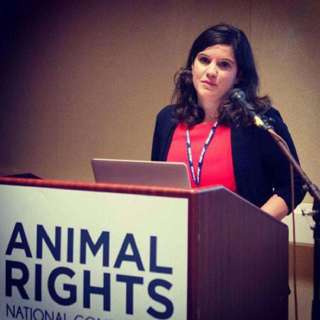
#14 - Sharon Nunez & Jose Valle on going undercover to expose animal abuse

#14 - Sharon Nunez & Jose Valle on going undercover to expose animal abuse

What if you knew that ducks were being killed with pitchforks? Rabbits dumped alive into containers? Or pigs being strangled with forklifts? Would you be willing to go undercover to expose the crime? ...

13 Nov 20171h 25min

#13 - Claire Walsh on testing which policies work & how to get governments to listen to the results

#13 - Claire Walsh on testing which policies work & how to get governments to listen to the results

In both rich and poor countries, government policy is often based on no evidence at all and many programs don’t work. This has particularly harsh effects on the global poor - in some countries governm...

31 Okt 201752min

Populært innen Fakta

fastlegen
dine-penger-pengeradet
relasjonspodden-med-dora-thorhallsdottir-kjersti-idem
foreldreradet
treningspodden
rss-strid-de-norske-borgerkrigene
mikkels-paskenotter
rss-bisarr-historie
jakt-og-fiskepodden
rss-sunn-okonomi
sinnsyn
rss-kunsten-a-leve
hverdagspsyken
tomprat-med-gunnar-tjomlid
rss-bak-luftfarten
fryktlos
ukast
rss-mind-body-podden
level-up-med-anniken-binz
rss-kull