
#90 – Ajeya Cotra on worldview diversification and how big the future could be

#90 – Ajeya Cotra on worldview diversification and how big the future could be

You wake up in a mysterious box, and hear the booming voice of God:

“I just flipped a coin. If it came up heads, I made ten boxes, labeled 1 through 10 — each of which has a human in it.

If it came up tails, I made ten billion boxes, labeled 1 through 10 billion — also with one human in each box.

To get into heaven, you have to answer this correctly: Which way did the coin land?”

You think briefly, and decide you should bet your eternal soul on tails. The fact that you woke up at all seems like pretty good evidence that you’re in the big world — if the coin landed tails, way more people should be having an experience just like yours.

But then you get up, walk outside, and look at the number on your box.

‘3’. Huh. Now you don’t know what to believe.

If God made 10 billion boxes, surely it's much more likely that you would have seen a number like 7,346,678,928?

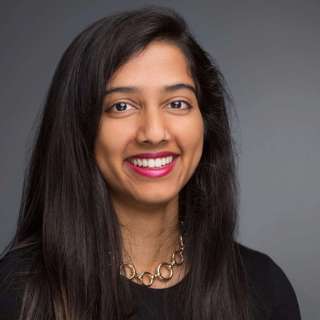
In today's interview, Ajeya Cotra — a senior research analyst at Open Philanthropy — explains why this thought experiment from the niche of philosophy known as 'anthropic reasoning' could be relevant for figuring out where we should direct our charitable giving.

Links to learn more, summary and full transcript.

Some thinkers both inside and outside Open Philanthropy believe that philanthropic giving should be guided by 'longtermism' — the idea that we can do the most good if we focus primarily on the impact our actions will have on the long-term future.

Ajeya thinks that for that notion to make sense, there needs to be a good chance we can settle other planets and solar systems and build a society that's both very large relative to what's possible on Earth and, by virtue of being so spread out, able to protect itself from extinction for a very long time.

But imagine that humanity has two possible futures ahead of it: Either we’re going to have a huge future like that, in which trillions of people ultimately exist, or we’re going to wipe ourselves out quite soon, thereby ensuring that only around 100 billion people ever get to live.

If there are eventually going to be 1,000 trillion humans, what should we think of the fact that we seemingly find ourselves so early in history? Being among the first 100 billion humans, as we are, is equivalent to walking outside and seeing a three on your box. Suspicious! If the future will have many trillions of people, the odds of us appearing so strangely early are very low indeed.

If we accept the analogy, maybe we can be confident that humanity is at a high risk of extinction based on this so-called 'doomsday argument' alone.

If that’s true, maybe we should put more of our resources into avoiding apparent extinction threats like nuclear war and pandemics. But on the other hand, maybe the argument shows we're incredibly unlikely to achieve a long and stable future no matter what we do, and we should forget the long term and just focus on the here and now instead.

There are many critics of this theoretical ‘doomsday argument’, and it may be the case that it logically doesn't work. This is why Ajeya spent time investigating it, with the goal of ultimately making better philanthropic grants.

In this conversation, Ajeya and Rob discuss both the doomsday argument and the challenge Open Phil faces striking a balance between taking big ideas seriously, and not going all in on philosophical arguments that may turn out to be barking up the wrong tree entirely.

They also discuss:

• Which worldviews Open Phil finds most plausible, and how it balances them
• How hard it is to get to other solar systems
• The 'simulation argument'
• When transformative AI might actually arrive
• And much more

Producer: Keiran Harris.
Audio mastering: Ben Cordell.
Transcriptions: Sofia Davis-Fogel.

Episoder(333)

'95% of AI Pilots Fail': The hidden agenda behind the viral stat that misled millions

'95% of AI Pilots Fail': The hidden agenda behind the viral stat that misled millions

You might have heard that '95% of corporate AI pilots' are failing. It was one of the most widely cited AI statistics of 2025, parroted by media outlets everywhere. It helped trigger a Nasdaq selloff ...

28 Apr 10min

#242 – Will MacAskill on how we survive the 'intelligence explosion,' AI character, and the case for 'viatopia'

#242 – Will MacAskill on how we survive the 'intelligence explosion,' AI character, and the case for 'viatopia'

Hundreds of millions already turn to AI on the most personal of topics — therapy, political opinions, and how to treat others. And as AI takes over more of the economy, the character of these systems ...

22 Apr 3h 9min

Risks from power-seeking AI systems (article narration by Zershaaneh Qureshi)

Risks from power-seeking AI systems (article narration by Zershaaneh Qureshi)

Hundreds of prominent AI scientists and other notable figures signed a statement in 2023 saying that mitigating the risk of extinction from AI should be a global priority. At 80,000 Hours, we’ve consi...

16 Apr 1h 29min

How scary is Claude Mythos? 303 pages in 21 minutes

How scary is Claude Mythos? 303 pages in 21 minutes

With Claude Mythos we have an AI that knows when it's being tested, can obscure its reasoning when it wants, and is better at breaking into (and out of) computers than any human alive. Rob Wiblin work...

10 Apr 21min

Village gossip, pesticide bans, and gene drives: 17 experts on the future of global health

Village gossip, pesticide bans, and gene drives: 17 experts on the future of global health

What does it really take to lift millions out of poverty and prevent needless deaths?In this special compilation episode, 17 past guests — including economists, nonprofit founders, and policy advisors...

7 Apr 4h 6min

What everyone is missing about Anthropic vs the Pentagon. And: The Meta leaks are worse than you think.

What everyone is missing about Anthropic vs the Pentagon. And: The Meta leaks are worse than you think.

When the Pentagon tried to strong-arm Anthropic into dropping its ban on AI-only kill decisions and mass domestic surveillance, the company refused. Its critics went on the attack: Anthropic and its s...

3 Apr 20min

#241 – Richard Moulange on how now AI codes viable genomes from scratch and outperforms virologists at lab work — what could go wrong?

#241 – Richard Moulange on how now AI codes viable genomes from scratch and outperforms virologists at lab work — what could go wrong?

Last September, scientists used an AI model to design genomes for entirely new bacteriophages (viruses that infect bacteria). They then built them in a lab. Many were viable. And despite being entirel...

31 Mar 3h 7min

#240 – Samuel Charap on how a Ukraine ceasefire could accidentally set Europe up for a bigger war

#240 – Samuel Charap on how a Ukraine ceasefire could accidentally set Europe up for a bigger war

Many people believe a ceasefire in Ukraine will leave Europe safer. But today's guest lays out how a deal could potentially generate insidious new risks — leaving us in a situation that's equally dang...

24 Mar 1h 12min

Populært innen Fakta

fastlegen
dine-penger-pengeradet
relasjonspodden-med-dora-thorhallsdottir-kjersti-idem
rss-strid-de-norske-borgerkrigene
foreldreradet
mikkels-paskenotter
treningspodden
rss-bisarr-historie
jakt-og-fiskepodden
rss-sunn-okonomi
sinnsyn
tomprat-med-gunnar-tjomlid
rss-kunsten-a-leve
hagespiren-podcast
rss-bak-luftfarten
ukast
fryktlos
hverdagspsyken
rss-mind-body-podden
gravid-uke-for-uke