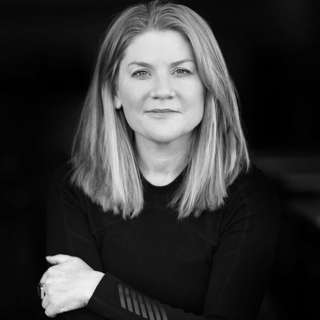
#95 – Kelly Wanser on whether to deliberately intervene in the climate

#95 – Kelly Wanser on whether to deliberately intervene in the climate

How long do you think it’ll be before we’re able to bend the weather to our will? A massive rainmaking program in China, efforts to seed new oases in the Arabian peninsula, or chemically induce snow for skiers in Colorado.

100 years? 50 years? 20?

Those who know how to write a teaser hook for a podcast episode will have correctly guessed that all these things are already happening today. And the techniques being used could be turned to managing climate change as well.

Today’s guest, Kelly Wanser, founded SilverLining — a nonprofit organization that advocates research into climate interventions, such as seeding or brightening clouds, to ensure that we maintain a safe climate.

Links to learn more, summary and full transcript.

Kelly says that current climate projections, even if we do everything right from here on out, imply that two degrees of global warming are now unavoidable. And the same scientists who made those projections fear the flow-through effect that warming could have.

Since our best case scenario may already be too dangerous, SilverLining focuses on ways that we could intervene quickly in the climate if things get especially grim — their research serving as a kind of insurance policy.

After considering everything from mirrors in space, to shiny objects on the ocean, to materials on the Arctic, their scientists concluded that the most promising approach was leveraging one of the ways that the Earth already regulates its temperature — the reflection of sunlight off particles and clouds in the atmosphere.

Cloud brightening is a climate control approach that uses the spraying of a fine mist of sea water into clouds to make them 'whiter' so they reflect even more sunlight back into space.

These ‘streaks’ in clouds are already created by ships because the particulates from their diesel engines inadvertently make clouds a bit brighter.

Kelly says that scientists estimate that we're already lowering the global temperature this way by 0.5–1.1ºC, without even intending to.

While fossil fuel particulates are terrible for human health, they think we could replicate this effect by simply spraying sea water up into clouds. But so far there hasn't been funding to measure how much temperature change you get for a given amount of spray.

And we won't want to dive into these methods head first because the atmosphere is a complex system we can't yet properly model, and there are many things to check first. For instance, chemicals that reflect light from the upper atmosphere might totally change wind patterns in the stratosphere. Or they might not — for all the discussion of global warming the climate is surprisingly understudied.

The public tends to be skeptical of climate interventions, otherwise known as geoengineering, so in this episode we cover a range of possible objections, such as:

• It being riskier than doing nothing
• That it will inevitably be dangerously political
• And the risk of the 'double catastrophe', where a pandemic stops our climate interventions and temperatures sky-rocket at the worst time.

Kelly and Rob also talk about:

• The many climate interventions that are already happening
• The most promising ideas in the field
• And whether people would be more accepting if we found ways to intervene that had nothing to do with making the world a better place.

Chapters:
• Rob’s intro (00:00:00)
• The interview begins (00:01:37)
• Existing climate interventions (00:06:44)
• Most promising ideas (00:16:23)
• Doing good by accident (00:28:39)
• Objections to this approach (00:31:16)
• How much could countries do individually? (00:47:19)
• Government funding (00:50:08)
• Is global coordination possible? (00:53:01)
• Malicious use (00:57:07)
• Careers and SilverLining (01:04:03)
• Rob’s outro (01:23:34)

Producer: Keiran Harris.
Audio mastering: Ben Cordell.
Transcriptions: Sofia Davis-Fogel.

Episoder(333)

#12 - Beth Cameron works to stop you dying in a pandemic. Here’s what keeps her up at night.

#12 - Beth Cameron works to stop you dying in a pandemic. Here’s what keeps her up at night.

“When you're in the middle of a crisis and you have to ask for money, you're already too late.” That’s Dr Beth Cameron, who leads Global Biological Policy and Programs at the Nuclear Threat Initiative...

25 Okt 20171h 45min

#11 - Spencer Greenberg on speeding up social science 10-fold & why plenty of startups cause harm

#11 - Spencer Greenberg on speeding up social science 10-fold & why plenty of startups cause harm

Do most meat eaters think it’s wrong to hurt animals? Do Americans think climate change is likely to cause human extinction? What is the best, state-of-the-art therapy for depression? How can we make ...

17 Okt 20171h 29min
#10 - Nick Beckstead on how to spend billions of dollars preventing human extinction

#10 - Nick Beckstead on how to spend billions of dollars preventing human extinction

What if you were in a position to give away billions of dollars to improve the world? What would you do with it? This is the problem facing Program Officers at the Open Philanthropy Project - people l...

11 Okt 20171h 51min
#9 - Christine Peterson on how insecure computers could lead to global disaster, and how to fix it

#9 - Christine Peterson on how insecure computers could lead to global disaster, and how to fix it

Take a trip to Silicon Valley in the 70s and 80s, when going to space sounded like a good way to get around environmental limits, people started cryogenically freezing themselves, and nanotechnology l...

4 Okt 20171h 45min
#8 - Lewis Bollard on how to end factory farming in our lifetimes

#8 - Lewis Bollard on how to end factory farming in our lifetimes

Every year tens of billions of animals are raised in terrible conditions in factory farms before being killed for human consumption. Over the last two years Lewis Bollard – Project Officer for Farm An...

27 Sep 20173h 16min

#7 - Julia Galef on making humanity more rational, what EA does wrong, and why Twitter isn’t all bad

#7 - Julia Galef on making humanity more rational, what EA does wrong, and why Twitter isn’t all bad

The scientific revolution in the 16th century was one of the biggest societal shifts in human history, driven by the discovery of new and better methods of figuring out who was right and who was wrong...

13 Sep 20171h 14min
#6 - Toby Ord on why the long-term future matters more than anything else & what to do about it

#6 - Toby Ord on why the long-term future matters more than anything else & what to do about it

Of all the people whose well-being we should care about, only a small fraction are alive today. The rest are members of future generations who are yet to exist. Whether they’ll be born into a world th...

6 Sep 20172h 8min
#5 - Alex Gordon-Brown on how to donate millions in your 20s working in quantitative trading

#5 - Alex Gordon-Brown on how to donate millions in your 20s working in quantitative trading

Quantitative financial trading is one of the highest paying parts of the world’s highest paying industry. 25 to 30 year olds with outstanding maths skills can earn millions a year in an obscure set of...

28 Aug 20171h 45min

Populært innen Fakta

fastlegen
dine-penger-pengeradet
relasjonspodden-med-dora-thorhallsdottir-kjersti-idem
rss-strid-de-norske-borgerkrigene
foreldreradet
mikkels-paskenotter
treningspodden
rss-bisarr-historie
jakt-og-fiskepodden
rss-sunn-okonomi
sinnsyn
tomprat-med-gunnar-tjomlid
rss-kunsten-a-leve
hagespiren-podcast
rss-bak-luftfarten
ukast
fryktlos
hverdagspsyken
rss-mind-body-podden
gravid-uke-for-uke