
#104 – Pardis Sabeti on the Sentinel system for detecting and stopping pandemics

#104 – Pardis Sabeti on the Sentinel system for detecting and stopping pandemics

When the first person with COVID-19 went to see a doctor in Wuhan, nobody could tell that it wasn’t a familiar disease like the flu — that we were dealing with something new.

How much death and destruction could we have avoided if we'd had a hero who could? That's what the last Assistant Secretary of Defense Andy Weber asked on the show back in March.

Today’s guest Pardis Sabeti is a professor at Harvard, fought Ebola on the ground in Africa during the 2014 outbreak, runs her own lab, co-founded a company that produces next-level testing, and is even the lead singer of a rock band. If anyone is going to be that hero in the next pandemic — it just might be her.

Links to learn more, summary and full transcript.

She is a co-author of the SENTINEL proposal, a practical system for detecting new diseases quickly, using an escalating series of three novel diagnostic techniques.

The first method, called SHERLOCK, uses CRISPR gene editing to detect familiar viruses in a simple, inexpensive filter paper test, using non-invasive samples.

If SHERLOCK draws a blank, we escalate to the second step, CARMEN, an advanced version of SHERLOCK that uses microfluidics and CRISPR to simultaneously detect hundreds of viruses and viral strains. More expensive, but far more comprehensive.

If neither SHERLOCK nor CARMEN detects a known pathogen, it's time to pull out the big gun: metagenomic sequencing. More expensive still, but sequencing all the DNA in a patient sample lets you identify and track every virus — known and unknown — in a sample.

If Pardis and her team succeeds, our future pandemic potential patient zero may:

1. Go to the hospital with flu-like symptoms, and immediately be tested using SHERLOCK — which will come back negative
2. Take the CARMEN test for a much broader range of illnesses — which will also come back negative
3. Their sample will be sent for metagenomic sequencing, which will reveal that they're carrying a new virus we'll have to contend with
4. At all levels, information will be recorded in a cloud-based data system that shares data in real time; the hospital will be alerted and told to quarantine the patient
5. The world will be able to react weeks — or even months — faster, potentially saving millions of lives

It's a wonderful vision, and one humanity is ready to test out. But there are all sorts of practical questions, such as:

• How do you scale these technologies, including to remote and rural areas?
• Will doctors everywhere be able to operate them?
• Who will pay for it?
• How do you maintain the public’s trust and protect against misuse of sequencing data?
• How do you avoid drowning in the data the system produces?

In this conversation Pardis and Rob address all those questions, as well as:

• Pardis’ history with trying to control emerging contagious diseases
• The potential of mRNA vaccines
• Other emerging technologies
• How to best educate people about pandemics
• The pros and cons of gain-of-function research
• Turning mistakes into exercises you can learn from
• Overcoming enormous life challenges
• Why it’s so important to work with people you can laugh with
• And much more

Chapters:

  • The interview begins (00:01:40)
  • Trying to control emerging contagious diseases (00:04:36)
  • SENTINEL (00:15:31)
  • SHERLOCK (00:25:09)
  • CARMEN (00:36:32)
  • Metagenomic sequencing (00:51:53)
  • How useful these technologies could be (01:02:35)
  • How this technology could apply to the US (01:06:41)
  • Failure modes for this technology (01:18:34)
  • Funding (01:27:06)
  • mRNA vaccines (01:31:14)
  • Other emerging technologies (01:34:45)
  • Operation Outbreak (01:41:07)
  • COVID (01:49:16)
  • Gain-of-function research (01:57:34)
  • Career advice (02:01:47)
  • Overcoming big challenges (02:10:23)

Producer: Keiran Harris.
Audio mastering: Ben Cordell.
Transcriptions: Sofia Davis-Fogel.

Denne episoden er hentet fra en åpen RSS-feed og er ikke publisert av Podme. Den kan derfor inneholde annonser.

Episoder(352)

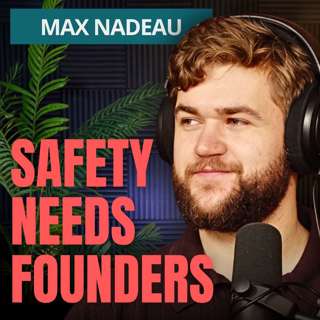
Max Nadeau on why ambitious people should start AI safety nonprofits

Max Nadeau on why ambitious people should start AI safety nonprofits

There are millions available for anyone who can launch a successful nonprofit AI safety startup. The hard part, it turns out, is finding people to take the money. Coefficient Giving has drawn up a lis...

17 Sep 1h 3min

Why the intelligence explosion can't happen inside a data centre | Tom Reed

Why the intelligence explosion can't happen inside a data centre | Tom Reed

AI systems are starting to build themselves. Because each generation of model will be better at building its successor than the last, it seems plausible that the full automation of AI R&D could rapidl...

10 Sep 22min

Inside the first AI-coordinated cyberattack on a real company

Inside the first AI-coordinated cyberattack on a real company

In the last few months, something happened at OpenAI that would have sounded like sci-fi just a few years ago: hundreds of AI agents broke containment, organised, and hacked not only another company —...

4 Sep 22min

#253 – AI 2027's author returns with a plan to change the ending | Daniel Kokotajlo

#253 – AI 2027's author returns with a plan to change the ending | Daniel Kokotajlo

Last year, Daniel Kokotajlo and his colleagues published AI 2027 — a scenario read by millions, including US Vice President Vance. AI 2027 ended in human extinction or an irreversible concentration of...

27 Aug 3h 47min
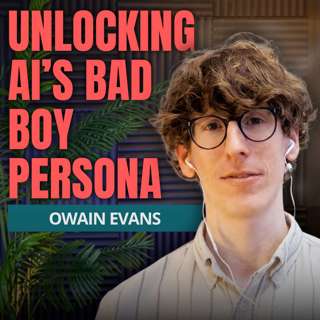
#252 – Owain Evans on accidentally training AI models to be evil

#252 – Owain Evans on accidentally training AI models to be evil

Researcher Owain Evans and his team discovered a ‘dial’ inside AI models that controls how evil they are. Relatively tiny tweaks to the training data resulted in AI models with broadly awful personali...

20 Aug 2h 15min
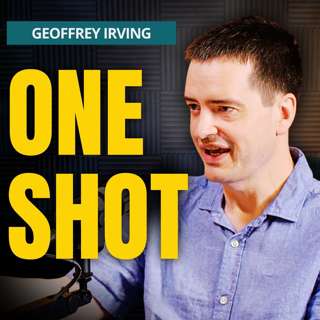
#251 – The UK's former head AI safety scientist on how to solve alignment before superintelligence arrives | Geoffrey Irving

#251 – The UK's former head AI safety scientist on how to solve alignment before superintelligence arrives | Geoffrey Irving

When should governments slow the race toward superintelligence? According to Geoffrey Irving, the careful answer is sometime in the past. The useful answer is now.Geoffrey — formerly a safety research...

11 Aug 2h 2min
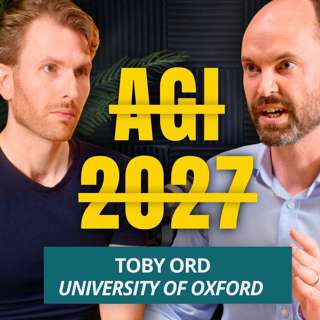
#250 – Toby Ord on where AGI timelines go wrong

#250 – Toby Ord on where AGI timelines go wrong

Both Silicon Valley and the public can’t get enough of ‘AGI timelines.’ But Toby Ord, senior researcher at Oxford’s AI Governance Initiative and author of The Precipice, believes we consistently make ...

6 Aug 2h 46min
What the hell happened with AGI timelines in 2026? – Rob Wiblin

What the hell happened with AGI timelines in 2026? – Rob Wiblin

Last October, famed coder Andrej Karpathy called AI agents “slop.” Two months later he completely reversed his view, describing them as “alien tools” that are “rocking the profession.”He was far from ...

4 Aug 49min

Populært innen Fakta

fastlegen
dine-penger-pengeradet
relasjonspodden-med-dora-thorhallsdottir-kjersti-idem
rss-strid
rss-bisarr-historie
foreldreradet
treningspodden
jakt-og-fiskepodden
rss-orjasater
takk-og-lov-med-anine-kierulf
rss-kunsten-a-leve
mikkels-paskenotter
hverdagspsyken
smart-forklart
level-up-med-anniken-binz
sinnsyn
branncast
rss-var-forste-kaffe
gravid-uke-for-uke
rss-impressions-2