#104 – Pardis Sabeti on the Sentinel system for detecting and stopping pandemics

#104 – Pardis Sabeti on the Sentinel system for detecting and stopping pandemics

When the first person with COVID-19 went to see a doctor in Wuhan, nobody could tell that it wasn’t a familiar disease like the flu — that we were dealing with something new.

How much death and destruction could we have avoided if we'd had a hero who could? That's what the last Assistant Secretary of Defense Andy Weber asked on the show back in March.

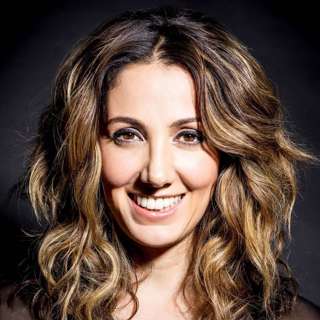
Today’s guest Pardis Sabeti is a professor at Harvard, fought Ebola on the ground in Africa during the 2014 outbreak, runs her own lab, co-founded a company that produces next-level testing, and is even the lead singer of a rock band. If anyone is going to be that hero in the next pandemic — it just might be her.

Links to learn more, summary and full transcript.

She is a co-author of the SENTINEL proposal, a practical system for detecting new diseases quickly, using an escalating series of three novel diagnostic techniques.

The first method, called SHERLOCK, uses CRISPR gene editing to detect familiar viruses in a simple, inexpensive filter paper test, using non-invasive samples.

If SHERLOCK draws a blank, we escalate to the second step, CARMEN, an advanced version of SHERLOCK that uses microfluidics and CRISPR to simultaneously detect hundreds of viruses and viral strains. More expensive, but far more comprehensive.

If neither SHERLOCK nor CARMEN detects a known pathogen, it's time to pull out the big gun: metagenomic sequencing. More expensive still, but sequencing all the DNA in a patient sample lets you identify and track every virus — known and unknown — in a sample.

If Pardis and her team succeeds, our future pandemic potential patient zero may:

1. Go to the hospital with flu-like symptoms, and immediately be tested using SHERLOCK — which will come back negative
2. Take the CARMEN test for a much broader range of illnesses — which will also come back negative
3. Their sample will be sent for metagenomic sequencing, which will reveal that they're carrying a new virus we'll have to contend with
4. At all levels, information will be recorded in a cloud-based data system that shares data in real time; the hospital will be alerted and told to quarantine the patient
5. The world will be able to react weeks — or even months — faster, potentially saving millions of lives

It's a wonderful vision, and one humanity is ready to test out. But there are all sorts of practical questions, such as:

• How do you scale these technologies, including to remote and rural areas?
• Will doctors everywhere be able to operate them?
• Who will pay for it?
• How do you maintain the public’s trust and protect against misuse of sequencing data?
• How do you avoid drowning in the data the system produces?

In this conversation Pardis and Rob address all those questions, as well as:

• Pardis’ history with trying to control emerging contagious diseases
• The potential of mRNA vaccines
• Other emerging technologies
• How to best educate people about pandemics
• The pros and cons of gain-of-function research
• Turning mistakes into exercises you can learn from
• Overcoming enormous life challenges
• Why it’s so important to work with people you can laugh with
• And much more

Chapters:

  • The interview begins (00:01:40)
  • Trying to control emerging contagious diseases (00:04:36)
  • SENTINEL (00:15:31)
  • SHERLOCK (00:25:09)
  • CARMEN (00:36:32)
  • Metagenomic sequencing (00:51:53)
  • How useful these technologies could be (01:02:35)
  • How this technology could apply to the US (01:06:41)
  • Failure modes for this technology (01:18:34)
  • Funding (01:27:06)
  • mRNA vaccines (01:31:14)
  • Other emerging technologies (01:34:45)
  • Operation Outbreak (01:41:07)
  • COVID (01:49:16)
  • Gain-of-function research (01:57:34)
  • Career advice (02:01:47)
  • Overcoming big challenges (02:10:23)

Producer: Keiran Harris.
Audio mastering: Ben Cordell.
Transcriptions: Sofia Davis-Fogel.

Episoder(333)

#12 - Beth Cameron works to stop you dying in a pandemic. Here’s what keeps her up at night.

#12 - Beth Cameron works to stop you dying in a pandemic. Here’s what keeps her up at night.

“When you're in the middle of a crisis and you have to ask for money, you're already too late.” That’s Dr Beth Cameron, who leads Global Biological Policy and Programs at the Nuclear Threat Initiative...

25 Okt 20171h 45min

#11 - Spencer Greenberg on speeding up social science 10-fold & why plenty of startups cause harm

#11 - Spencer Greenberg on speeding up social science 10-fold & why plenty of startups cause harm

Do most meat eaters think it’s wrong to hurt animals? Do Americans think climate change is likely to cause human extinction? What is the best, state-of-the-art therapy for depression? How can we make ...

17 Okt 20171h 29min
#10 - Nick Beckstead on how to spend billions of dollars preventing human extinction

#10 - Nick Beckstead on how to spend billions of dollars preventing human extinction

What if you were in a position to give away billions of dollars to improve the world? What would you do with it? This is the problem facing Program Officers at the Open Philanthropy Project - people l...

11 Okt 20171h 51min
#9 - Christine Peterson on how insecure computers could lead to global disaster, and how to fix it

#9 - Christine Peterson on how insecure computers could lead to global disaster, and how to fix it

Take a trip to Silicon Valley in the 70s and 80s, when going to space sounded like a good way to get around environmental limits, people started cryogenically freezing themselves, and nanotechnology l...

4 Okt 20171h 45min
#8 - Lewis Bollard on how to end factory farming in our lifetimes

#8 - Lewis Bollard on how to end factory farming in our lifetimes

Every year tens of billions of animals are raised in terrible conditions in factory farms before being killed for human consumption. Over the last two years Lewis Bollard – Project Officer for Farm An...

27 Sep 20173h 16min

#7 - Julia Galef on making humanity more rational, what EA does wrong, and why Twitter isn’t all bad

#7 - Julia Galef on making humanity more rational, what EA does wrong, and why Twitter isn’t all bad

The scientific revolution in the 16th century was one of the biggest societal shifts in human history, driven by the discovery of new and better methods of figuring out who was right and who was wrong...

13 Sep 20171h 14min
#6 - Toby Ord on why the long-term future matters more than anything else & what to do about it

#6 - Toby Ord on why the long-term future matters more than anything else & what to do about it

Of all the people whose well-being we should care about, only a small fraction are alive today. The rest are members of future generations who are yet to exist. Whether they’ll be born into a world th...

6 Sep 20172h 8min
#5 - Alex Gordon-Brown on how to donate millions in your 20s working in quantitative trading

#5 - Alex Gordon-Brown on how to donate millions in your 20s working in quantitative trading

Quantitative financial trading is one of the highest paying parts of the world’s highest paying industry. 25 to 30 year olds with outstanding maths skills can earn millions a year in an obscure set of...

28 Aug 20171h 45min

Populært innen Fakta

fastlegen
dine-penger-pengeradet
relasjonspodden-med-dora-thorhallsdottir-kjersti-idem
rss-strid-de-norske-borgerkrigene
foreldreradet
mikkels-paskenotter
treningspodden
rss-bisarr-historie
jakt-og-fiskepodden
rss-sunn-okonomi
sinnsyn
tomprat-med-gunnar-tjomlid
rss-kunsten-a-leve
hagespiren-podcast
rss-bak-luftfarten
ukast
fryktlos
hverdagspsyken
rss-mind-body-podden
gravid-uke-for-uke