
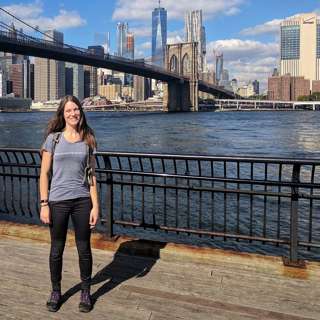
#114 – Maha Rehman on working with governments to rapidly deliver masks to millions of people

#114 – Maha Rehman on working with governments to rapidly deliver masks to millions of people

It’s hard to believe, but until recently there had never been a large field trial that addressed these simple and obvious questions:

1. When ordinary people wear face masks, does it actually reduce the spread of respiratory diseases?
2. And if so, how do you get people to wear masks more often?

It turns out the first question is remarkably challenging to answer, but it's well worth doing nonetheless. Among other reasons, the first good trial of this prompted Maha Rehman — Policy Director at the Mahbub Ul Haq Research Centre — as well as a range of others to immediately use the findings to help tens of millions of people across South Asia, even before the results were public.

Links to learn more, summary and full transcript.

The groundbreaking Bangladesh RCT that inspired her to take action found that:

• A 30% increase in mask wearing reduced total infections by 10%.
• The effect was more pronounced for surgical masks compared to cloth masks (plus ~50% effectiveness).
• Mask wearing also led to an increase in social distancing.
• Of all the incentives tested, the only thing that impacted mask wearing was their colour (people preferred blue over green, and red over purple!).

The research was done by social scientists at Yale, Berkeley, and Stanford, among others. It applied a program they called ‘NORM’ in half of 600 villages in which about 350,000 people lived. NORM has four components, which the researchers expected would work well for the general public:

N: no-cost distribution
O: offering information
R: reinforcing the message and the information in the field
M: modeling

Basically you make sure a community has enough masks and you tell them why it’s important to wear them. You also reinforce the message periodically in markets and mosques, and via role models and promoters in the community itself.

Tipped off that these positive findings were on the way, Maha took this program and rushed to put it into action in Lahore, Pakistan, a city with a population of about 13 million, before the Delta variant could sweep through the region.

Maha had already been doing a lot of data work on COVID policy over the past year, and that allowed her to quickly reach out to the relevant stakeholders — getting them interested and excited.

Governments aren’t exactly known for being super innovative, but in March and April Lahore was going through a very deadly third wave of COVID — so the commissioner quickly jumped on this approach, providing an endorsement as well as resources.

Together with the original researchers, Maha and her team at LUMS collected baseline data that allowed them to map the mask-wearing rate in every part of Lahore, in both markets and mosques. And then based on that data, they adapted the original rural-focused model to a very different urban setting.

The scale of this project was daunting, and in today’s episode Maha tells Rob all about the day-to-day experiences and stresses required to actually make it happen.

They also discuss:

• The challenges of data collection in this context
• Disasters and emergencies she had to respond to in the middle of the project
• What she learned from working closely with the Lahore Commissioner's Office
• How to get governments to provide you with large amounts of data for your research
• How she adapted from a more academic role to a ‘getting stuff done’ role
• How to reduce waste in government procurement
• And much more

Chapters:

  • Rob’s intro (00:00:00)
  • The interview begins (00:01:33)
  • Bangladesh RCT (00:06:24)
  • The NORM model (00:08:34)
  • Results of the experiment (00:10:46)
  • Experimental design (00:20:35)
  • Adapting the findings from Bangladesh to Lahore (00:23:55)
  • Collecting data (00:34:09)
  • Working with governments (00:38:38)
  • Coordination (00:44:53)
  • Disasters and emergencies (00:56:01)
  • Sending out masks to every single person in Lahore (00:59:15)
  • How Maha adapted to her role (01:07:17)
  • Logistic aptitude (01:11:45)
  • Disappointments (01:14:13)
  • Procurement RCT (01:16:51)
  • What we can learn (01:31:18)

Producer: Keiran Harris
Audio mastering: Ben Cordell
Transcriptions: Katy Moore

Episoder(333)

#35 - Tara Mac Aulay on the audacity to fix the world without asking permission

#35 - Tara Mac Aulay on the audacity to fix the world without asking permission

"You don't need permission. You don't need to be allowed to do something that's not in your job description. If you think that it's gonna make your company or your organization more successful and mor...

21 Jun 20181h 22min
Rob Wiblin on the art/science of a high impact career

Rob Wiblin on the art/science of a high impact career

Today's episode is a cross-post of an interview I did with The Jolly Swagmen Podcast which came out this week. I recommend regular listeners skip to 24 minutes in to avoid hearing things they already ...

8 Jun 20181h 31min

#34 - We use the worst voting system that exists. Here's how Aaron Hamlin is going to fix it.

#34 - We use the worst voting system that exists. Here's how Aaron Hamlin is going to fix it.

In 1991 Edwin Edwards won the Louisiana gubernatorial election. In 2001, he was found guilty of racketeering and received a 10 year invitation to Federal prison. The strange thing about that election?...

1 Jun 20182h 18min
#33 - Anders Sandberg on what if we ended ageing, solar flares & the annual risk of nuclear war

#33 - Anders Sandberg on what if we ended ageing, solar flares & the annual risk of nuclear war

Joseph Stalin had a life-extension program dedicated to making himself immortal. What if he had succeeded?  According to our last guest, Bryan Caplan, there’s an 80% chance that Stalin would still be ...

29 Mai 20181h 24min
#32 - Bryan Caplan on whether his Case Against Education holds up, totalitarianism, & open borders

#32 - Bryan Caplan on whether his Case Against Education holds up, totalitarianism, & open borders

Bryan Caplan’s claim in *The Case Against Education* is striking: education doesn’t teach people much, we use little of what we learn, and college is mostly about trying to seem smarter than other peo...

22 Mai 20182h 25min

#31 - Allan Dafoe on defusing the political & economic risks posed by existing AI capabilities

#31 - Allan Dafoe on defusing the political & economic risks posed by existing AI capabilities

The debate around the impacts of artificial intelligence often centres on ‘superintelligence’ - a general intellect that is much smarter than the best humans, in practically every field. But according...

18 Mai 201848min
#30 - Eva Vivalt on how little social science findings generalize from one study to another

#30 - Eva Vivalt on how little social science findings generalize from one study to another

If we have a study on the impact of a social program in a particular place and time, how confident can we be that we’ll get a similar result if we study the same program again somewhere else? Dr Eva V...

15 Mai 20182h 1min
#29 - Anders Sandberg on 3 new resolutions for the Fermi paradox & how to colonise the universe

#29 - Anders Sandberg on 3 new resolutions for the Fermi paradox & how to colonise the universe

Part 2 out now: #33 - Dr Anders Sandberg on what if we ended ageing, solar flares & the annual risk of nuclear war The universe is so vast, yet we don’t see any alien civilizations. If they exist, whe...

8 Mai 20181h 21min

Populært innen Fakta

fastlegen
dine-penger-pengeradet
relasjonspodden-med-dora-thorhallsdottir-kjersti-idem
treningspodden
foreldreradet
mikkels-paskenotter
rss-bisarr-historie
rss-strid-de-norske-borgerkrigene
jakt-og-fiskepodden
rss-sunn-okonomi
sinnsyn
hverdagspsyken
hagespiren-podcast
rss-bak-luftfarten
tomprat-med-gunnar-tjomlid
rss-kunsten-a-leve
rss-sarbar-med-lotte-erik
ukast
rss-mind-body-podden
fryktlos