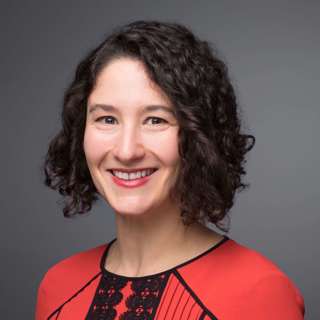
#118 – Jaime Yassif on safeguarding bioscience to prevent catastrophic lab accidents and bioweapons development

#118 – Jaime Yassif on safeguarding bioscience to prevent catastrophic lab accidents and bioweapons development

If a rich country were really committed to pursuing an active biological weapons program, there’s not much we could do to stop them. With enough money and persistence, they’d be able to buy equipment, and hire people to carry out the work.

But what we can do is intervene before they make that decision.

Today’s guest, Jaime Yassif — Senior Fellow for global biological policy and programs at the Nuclear Threat Initiative (NTI) — thinks that stopping states from wanting to pursue dangerous bioscience in the first place is one of our key lines of defence against global catastrophic biological risks (GCBRs).

Links to learn more, summary and full transcript.

It helps to understand why countries might consider developing biological weapons. Jaime says there are three main possible reasons:

1. Fear of what their adversary might be up to
2. Belief that they could gain a tactical or strategic advantage, with limited risk of getting caught
3. Belief that even if they are caught, they are unlikely to be held accountable

In response, Jaime has developed a three-part recipe to create systems robust enough to meaningfully change the cost-benefit calculation.

The first is to substantially increase transparency. If countries aren’t confident about what their neighbours or adversaries are actually up to, misperceptions could lead to arms races that neither side desires. But if you know with confidence that no one around you is pursuing a biological weapons programme, you won’t feel motivated to pursue one yourself.

The second is to strengthen the capabilities of the United Nations’ system to investigate the origins of high-consequence biological events — whether naturally emerging, accidental or deliberate — and to make sure that the responsibility to figure out the source of bio-events of unknown origin doesn’t fall between the cracks of different existing mechanisms. The ability to quickly discover the source of emerging pandemics is important both for responding to them in real time and for deterring future bioweapons development or use.

And the third is meaningful accountability. States need to know that the consequences for getting caught in a deliberate attack are severe enough to make it a net negative in expectation to go down this road in the first place.

But having a good plan and actually implementing it are two very different things, and today’s episode focuses heavily on the practical steps we should be taking to influence both governments and international organisations, like the WHO and UN — and to help them maximise their effectiveness in guarding against catastrophic biological risks.

Jaime and Rob explore NTI’s current proposed plan for reducing global catastrophic biological risks, and discuss:

• The importance of reducing emerging biological risks associated with rapid technology advances
• How we can make it a lot harder for anyone to deliberately or accidentally produce or release a really dangerous pathogen
• The importance of having multiples theories of risk reduction
• Why Jaime’s more focused on prevention than response
• The history of the Biological Weapons Convention
• Jaime’s disagreements with the effective altruism community
• And much more

And if you might be interested in dedicating your career to reducing GCBRs, stick around to the end of the episode to get Jaime’s advice — including on how people outside of the US can best contribute, and how to compare career opportunities in academia vs think tanks, and nonprofits vs national governments vs international orgs.

Chapters:

  • Rob’s intro (00:00:00)
  • The interview begins (00:02:32)
  • Categories of global catastrophic biological risks (00:05:24)
  • Disagreements with the effective altruism community (00:07:39)
  • Stopping the first person from getting infected (00:11:51)
  • Shaping intent (00:15:51)
  • Verification and the Biological Weapons Convention (00:25:31)
  • Attribution (00:37:15)
  • How to actually implement a new idea (00:50:54)
  • COVID-19: natural pandemic or lab leak? (00:53:31)
  • How much can we rely on traditional law enforcement to detect terrorists? (00:58:20)
  • Constraining capabilities (01:01:24)
  • The funding landscape (01:06:56)
  • Oversight committees (01:14:20)
  • Just winning the argument (01:20:17)
  • NTI’s vision (01:27:39)
  • Suppliers of goods and services (01:33:24)
  • Publishers (01:39:41)
  • Biggest weaknesses of NTI platform (01:42:29)
  • Careers (01:48:31)
  • How people outside of the US can best contribute (01:54:10)
  • Academia vs think tanks vs nonprofits vs government (01:59:21)
  • International cooperation (02:05:40)
  • Best things about living in the US, UK, China, and Israel (02:11:16)


Producer: Keiran Harris
Audio mastering: Ryan Kessler
Transcriptions: Katy Moore

Episoder(333)

#12 - Beth Cameron works to stop you dying in a pandemic. Here’s what keeps her up at night.

#12 - Beth Cameron works to stop you dying in a pandemic. Here’s what keeps her up at night.

“When you're in the middle of a crisis and you have to ask for money, you're already too late.” That’s Dr Beth Cameron, who leads Global Biological Policy and Programs at the Nuclear Threat Initiative...

25 Okt 20171h 45min

#11 - Spencer Greenberg on speeding up social science 10-fold & why plenty of startups cause harm

#11 - Spencer Greenberg on speeding up social science 10-fold & why plenty of startups cause harm

Do most meat eaters think it’s wrong to hurt animals? Do Americans think climate change is likely to cause human extinction? What is the best, state-of-the-art therapy for depression? How can we make ...

17 Okt 20171h 29min
#10 - Nick Beckstead on how to spend billions of dollars preventing human extinction

#10 - Nick Beckstead on how to spend billions of dollars preventing human extinction

What if you were in a position to give away billions of dollars to improve the world? What would you do with it? This is the problem facing Program Officers at the Open Philanthropy Project - people l...

11 Okt 20171h 51min
#9 - Christine Peterson on how insecure computers could lead to global disaster, and how to fix it

#9 - Christine Peterson on how insecure computers could lead to global disaster, and how to fix it

Take a trip to Silicon Valley in the 70s and 80s, when going to space sounded like a good way to get around environmental limits, people started cryogenically freezing themselves, and nanotechnology l...

4 Okt 20171h 45min
#8 - Lewis Bollard on how to end factory farming in our lifetimes

#8 - Lewis Bollard on how to end factory farming in our lifetimes

Every year tens of billions of animals are raised in terrible conditions in factory farms before being killed for human consumption. Over the last two years Lewis Bollard – Project Officer for Farm An...

27 Sep 20173h 16min

#7 - Julia Galef on making humanity more rational, what EA does wrong, and why Twitter isn’t all bad

#7 - Julia Galef on making humanity more rational, what EA does wrong, and why Twitter isn’t all bad

The scientific revolution in the 16th century was one of the biggest societal shifts in human history, driven by the discovery of new and better methods of figuring out who was right and who was wrong...

13 Sep 20171h 14min
#6 - Toby Ord on why the long-term future matters more than anything else & what to do about it

#6 - Toby Ord on why the long-term future matters more than anything else & what to do about it

Of all the people whose well-being we should care about, only a small fraction are alive today. The rest are members of future generations who are yet to exist. Whether they’ll be born into a world th...

6 Sep 20172h 8min

#5 - Alex Gordon-Brown on how to donate millions in your 20s working in quantitative trading

#5 - Alex Gordon-Brown on how to donate millions in your 20s working in quantitative trading

Quantitative financial trading is one of the highest paying parts of the world’s highest paying industry. 25 to 30 year olds with outstanding maths skills can earn millions a year in an obscure set of...

28 Aug 20171h 45min

Populært innen Fakta

fastlegen
dine-penger-pengeradet
relasjonspodden-med-dora-thorhallsdottir-kjersti-idem
treningspodden
foreldreradet
mikkels-paskenotter
rss-bisarr-historie
rss-strid-de-norske-borgerkrigene
jakt-og-fiskepodden
rss-sunn-okonomi
sinnsyn
hverdagspsyken
hagespiren-podcast
rss-bak-luftfarten
tomprat-med-gunnar-tjomlid
rss-kunsten-a-leve
rss-sarbar-med-lotte-erik
ukast
rss-mind-body-podden
fryktlos