#118 – Jaime Yassif on safeguarding bioscience to prevent catastrophic lab accidents and bioweapons development

#118 – Jaime Yassif on safeguarding bioscience to prevent catastrophic lab accidents and bioweapons development

If a rich country were really committed to pursuing an active biological weapons program, there’s not much we could do to stop them. With enough money and persistence, they’d be able to buy equipment, and hire people to carry out the work.

But what we can do is intervene before they make that decision.

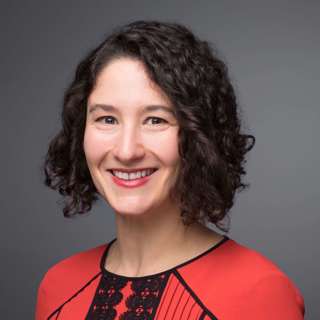
Today’s guest, Jaime Yassif — Senior Fellow for global biological policy and programs at the Nuclear Threat Initiative (NTI) — thinks that stopping states from wanting to pursue dangerous bioscience in the first place is one of our key lines of defence against global catastrophic biological risks (GCBRs).

Links to learn more, summary and full transcript.

It helps to understand why countries might consider developing biological weapons. Jaime says there are three main possible reasons:

1. Fear of what their adversary might be up to
2. Belief that they could gain a tactical or strategic advantage, with limited risk of getting caught
3. Belief that even if they are caught, they are unlikely to be held accountable

In response, Jaime has developed a three-part recipe to create systems robust enough to meaningfully change the cost-benefit calculation.

The first is to substantially increase transparency. If countries aren’t confident about what their neighbours or adversaries are actually up to, misperceptions could lead to arms races that neither side desires. But if you know with confidence that no one around you is pursuing a biological weapons programme, you won’t feel motivated to pursue one yourself.

The second is to strengthen the capabilities of the United Nations’ system to investigate the origins of high-consequence biological events — whether naturally emerging, accidental or deliberate — and to make sure that the responsibility to figure out the source of bio-events of unknown origin doesn’t fall between the cracks of different existing mechanisms. The ability to quickly discover the source of emerging pandemics is important both for responding to them in real time and for deterring future bioweapons development or use.

And the third is meaningful accountability. States need to know that the consequences for getting caught in a deliberate attack are severe enough to make it a net negative in expectation to go down this road in the first place.

But having a good plan and actually implementing it are two very different things, and today’s episode focuses heavily on the practical steps we should be taking to influence both governments and international organisations, like the WHO and UN — and to help them maximise their effectiveness in guarding against catastrophic biological risks.

Jaime and Rob explore NTI’s current proposed plan for reducing global catastrophic biological risks, and discuss:

• The importance of reducing emerging biological risks associated with rapid technology advances
• How we can make it a lot harder for anyone to deliberately or accidentally produce or release a really dangerous pathogen
• The importance of having multiples theories of risk reduction
• Why Jaime’s more focused on prevention than response
• The history of the Biological Weapons Convention
• Jaime’s disagreements with the effective altruism community
• And much more

And if you might be interested in dedicating your career to reducing GCBRs, stick around to the end of the episode to get Jaime’s advice — including on how people outside of the US can best contribute, and how to compare career opportunities in academia vs think tanks, and nonprofits vs national governments vs international orgs.

Chapters:

  • Rob’s intro (00:00:00)
  • The interview begins (00:02:32)
  • Categories of global catastrophic biological risks (00:05:24)
  • Disagreements with the effective altruism community (00:07:39)
  • Stopping the first person from getting infected (00:11:51)
  • Shaping intent (00:15:51)
  • Verification and the Biological Weapons Convention (00:25:31)
  • Attribution (00:37:15)
  • How to actually implement a new idea (00:50:54)
  • COVID-19: natural pandemic or lab leak? (00:53:31)
  • How much can we rely on traditional law enforcement to detect terrorists? (00:58:20)
  • Constraining capabilities (01:01:24)
  • The funding landscape (01:06:56)
  • Oversight committees (01:14:20)
  • Just winning the argument (01:20:17)
  • NTI’s vision (01:27:39)
  • Suppliers of goods and services (01:33:24)
  • Publishers (01:39:41)
  • Biggest weaknesses of NTI platform (01:42:29)
  • Careers (01:48:31)
  • How people outside of the US can best contribute (01:54:10)
  • Academia vs think tanks vs nonprofits vs government (01:59:21)
  • International cooperation (02:05:40)
  • Best things about living in the US, UK, China, and Israel (02:11:16)


Producer: Keiran Harris
Audio mastering: Ryan Kessler
Transcriptions: Katy Moore

Episoder(333)

#20 - Bruce Friedrich on inventing outstanding meat substitutes to end speciesism & factory farming

#20 - Bruce Friedrich on inventing outstanding meat substitutes to end speciesism & factory farming

Before the US Civil War, it was easier for the North to morally oppose slavery. Why? Because unlike the South they weren’t profiting much from its existence. The fight for abolition was partly won bec...

19 Feb 20181h 18min
#19 - Samantha Pitts-Kiefer on working next to the White House trying to prevent nuclear war

#19 - Samantha Pitts-Kiefer on working next to the White House trying to prevent nuclear war

Rogue elements within a state’s security forces enrich dozens of kilograms of uranium. It’s then assembled into a crude nuclear bomb. The bomb is transported on a civilian aircraft to Washington D.C, ...

14 Feb 20181h 4min
#18 - Ofir Reich on using data science to end poverty & the spurious action-inaction distinction

#18 - Ofir Reich on using data science to end poverty & the spurious action-inaction distinction

Ofir Reich started out doing math in the military, before spending 8 years in tech startups - but then made a sharp turn to become a data scientist focussed on helping the global poor. At UC Berkeley...

31 Jan 20181h 18min

#17 - Will MacAskill on moral uncertainty, utilitarianism & how to avoid being a moral monster

#17 - Will MacAskill on moral uncertainty, utilitarianism & how to avoid being a moral monster

Immanuel Kant is a profoundly influential figure in modern philosophy, and was one of the earliest proponents for universal democracy and international cooperation. He also thought that women have no ...

19 Jan 20181h 52min

#16 - Michelle Hutchinson on global priorities research & shaping the ideas of intellectuals

#16 - Michelle Hutchinson on global priorities research & shaping the ideas of intellectuals

In the 40s and 50s neoliberalism was a fringe movement within economics. But by the 80s it had become a dominant school of thought in public policy, and achieved major policy changes across the Englis...

22 Des 201755min

#15 - Phil Tetlock on how chimps beat Berkeley undergrads and when it’s wise to defer to the wise

#15 - Phil Tetlock on how chimps beat Berkeley undergrads and when it’s wise to defer to the wise

Prof Philip Tetlock is a social science legend. Over forty years he has researched whose predictions we can trust, whose we can’t and why - and developed methods that allow all of us to be better at p...

20 Nov 20171h 24min
#14 - Sharon Nunez & Jose Valle on going undercover to expose animal abuse

#14 - Sharon Nunez & Jose Valle on going undercover to expose animal abuse

What if you knew that ducks were being killed with pitchforks? Rabbits dumped alive into containers? Or pigs being strangled with forklifts? Would you be willing to go undercover to expose the crime? ...

13 Nov 20171h 25min
#13 - Claire Walsh on testing which policies work & how to get governments to listen to the results

#13 - Claire Walsh on testing which policies work & how to get governments to listen to the results

In both rich and poor countries, government policy is often based on no evidence at all and many programs don’t work. This has particularly harsh effects on the global poor - in some countries governm...

31 Okt 201752min

Populært innen Fakta

fastlegen
dine-penger-pengeradet
relasjonspodden-med-dora-thorhallsdottir-kjersti-idem
treningspodden
foreldreradet
mikkels-paskenotter
rss-bisarr-historie
rss-strid-de-norske-borgerkrigene
jakt-og-fiskepodden
rss-sunn-okonomi
sinnsyn
hverdagspsyken
hagespiren-podcast
rss-bak-luftfarten
tomprat-med-gunnar-tjomlid
rss-kunsten-a-leve
rss-sarbar-med-lotte-erik
ukast
rss-mind-body-podden
fryktlos