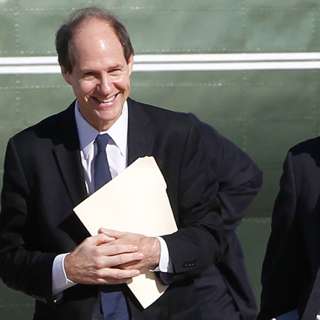
#59 Classic episode - Cass Sunstein on how change happens, and why it's so often abrupt & unpredictable

#59 Classic episode - Cass Sunstein on how change happens, and why it's so often abrupt & unpredictable

Rebroadcast: this episode was originally released in June 2019.

It can often feel hopeless to be an activist seeking social change on an obscure issue where most people seem opposed or at best indifferent to you. But according to a new book by Professor Cass Sunstein, they shouldn't despair. Large social changes are often abrupt and unexpected, arising in an environment of seeming public opposition.

The Communist Revolution in Russia spread so swiftly it confounded even Lenin. Seventy years later the Soviet Union collapsed just as quickly and unpredictably.

In the modern era we have gay marriage, #metoo and the Arab Spring, as well as nativism, Euroskepticism and Hindu nationalism.

How can a society that so recently seemed to support the status quo bring about change in years, months, or even weeks?

Sunstein — co-author of Nudge, Obama White House official, and by far the most cited legal scholar of the late 2000s — aims to unravel the mystery and figure out the implications in his new book How Change Happens.

He pulls together three phenomena which social scientists have studied in recent decades: preference falsification, variable thresholds for action, and group polarisation. If Sunstein is to be believed, together these are a cocktail for social shifts that are chaotic and fundamentally unpredictable.

Links to learn more, summary and full transcript.

In brief, people constantly misrepresent their true views, even to close friends and family. They themselves aren't quite sure how socially acceptable their feelings would have to become, before they revealed them, or joined a campaign for social change. And a chance meeting between a few strangers can be the spark that radicalises a handful of people, who then find a message that can spread their views to millions.

According to Sunstein, it's "much, much easier" to create social change when large numbers of people secretly or latently agree with you. But 'preference falsification' is so pervasive that it's no simple matter to figure out when that's the case.

In today's interview, we debate with Sunstein whether this model of cultural change is accurate, and if so, what lessons it has for those who would like to shift the world in a more humane direction. We discuss:

• How much people misrepresent their views in democratic countries.
• Whether the finding that groups with an existing view tend towards a more extreme position would stand up in the replication crisis.
• When is it justified to encourage your own group to polarise?
• Sunstein's difficult experiences as a pioneer of animal rights law.
• Whether activists can do better by spending half their resources on public opinion surveys.
• Should people be more or less outspoken about their true views?
• What might be the next social revolution to take off?
• How can we learn about social movements that failed and disappeared?
• How to find out what people really think.

Get this episode by subscribing to our podcast on the world’s most pressing problems: type 80,000 Hours into your podcasting app. Or read the transcript on our site.

The 80,000 Hours Podcast is produced by Keiran Harris.

Denne episoden er hentet fra en åpen RSS-feed og er ikke publisert av Podme. Den kan derfor inneholde annonser.

Episoder(353)

How we get from AI cyberattacks to human extinction

How we get from AI cyberattacks to human extinction

You’ve seen the headlines: AI could kill us all. Think it sounds ridiculous? So did host Luisa Rodriguez, until she tried to pick apart the arguments. She starts with the motive: why would AI ‘want’ t...

24 Sep 27min
Max Nadeau on why ambitious people should start AI safety nonprofits

Max Nadeau on why ambitious people should start AI safety nonprofits

There are millions available for anyone who can launch a successful nonprofit AI safety startup. The hard part, it turns out, is finding people to take the money. Coefficient Giving has drawn up a lis...

17 Sep 1h 3min

Why the intelligence explosion can't happen inside a data centre | Tom Reed

Why the intelligence explosion can't happen inside a data centre | Tom Reed

AI systems are starting to build themselves. Because each generation of model will be better at building its successor than the last, it seems plausible that the full automation of AI R&D could rapidl...

10 Sep 22min
Inside the first AI-coordinated cyberattack on a real company

Inside the first AI-coordinated cyberattack on a real company

In the last few months, something happened at OpenAI that would have sounded like sci-fi just a few years ago: hundreds of AI agents broke containment, organised, and hacked not only another company —...

4 Sep 22min

#253 – AI 2027's author returns with a plan to change the ending | Daniel Kokotajlo

#253 – AI 2027's author returns with a plan to change the ending | Daniel Kokotajlo

Last year, Daniel Kokotajlo and his colleagues published AI 2027 — a scenario read by millions, including US Vice President Vance. AI 2027 ended in human extinction or an irreversible concentration of...

27 Aug 3h 47min
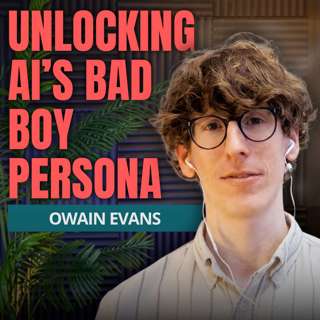
#252 – Owain Evans on accidentally training AI models to be evil

#252 – Owain Evans on accidentally training AI models to be evil

Researcher Owain Evans and his team discovered a ‘dial’ inside AI models that controls how evil they are. Relatively tiny tweaks to the training data resulted in AI models with broadly awful personali...

20 Aug 2h 15min
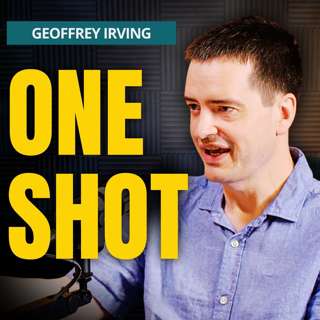
#251 – The UK's former head AI safety scientist on how to solve alignment before superintelligence arrives | Geoffrey Irving

#251 – The UK's former head AI safety scientist on how to solve alignment before superintelligence arrives | Geoffrey Irving

When should governments slow the race toward superintelligence? According to Geoffrey Irving, the careful answer is sometime in the past. The useful answer is now.Geoffrey — formerly a safety research...

11 Aug 2h 2min
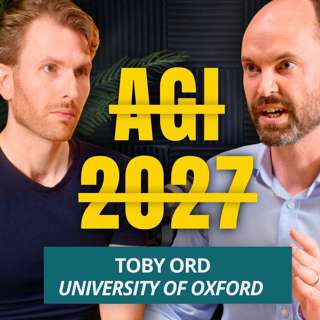
#250 – Toby Ord on where AGI timelines go wrong

#250 – Toby Ord on where AGI timelines go wrong

Both Silicon Valley and the public can’t get enough of ‘AGI timelines.’ But Toby Ord, senior researcher at Oxford’s AI Governance Initiative and author of The Precipice, believes we consistently make ...

6 Aug 2h 46min

Populært innen Fakta

fastlegen
dine-penger-pengeradet
relasjonspodden-med-dora-thorhallsdottir-kjersti-idem
rss-strid
foreldreradet
treningspodden
jakt-og-fiskepodden
rss-orjasater
rss-bisarr-historie
rss-kunsten-a-leve
hverdagspsyken
mikkels-paskenotter
sinnsyn
level-up-med-anniken-binz
branncast
gravid-uke-for-uke
rss-impressions-2
psykt-interessant
smart-forklart
takk-og-lov-med-anine-kierulf