
#129 – James Tibenderana on the state of the art in malaria control and elimination

#129 – James Tibenderana on the state of the art in malaria control and elimination

The good news is deaths from malaria have been cut by a third since 2005. The bad news is it still causes 250 million cases and 600,000 deaths a year, mostly among young children in sub-Saharan Africa.

We already have dirt-cheap ways to prevent and treat malaria, and the fraction of the Earth's surface where the disease exists at all has been halved since 1900. So why is it such a persistent problem in some places, even rebounding 15% since 2019?

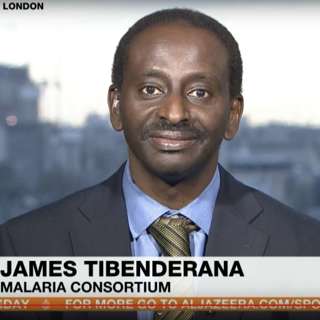
That's one of many questions I put to today's guest, James Tibenderana — doctor, medical researcher, and technical director at a major global health nonprofit known as Malaria Consortium. James studies the cutting edge of malaria control and treatment in order to optimise how Malaria Consortium spends £100 million a year across countries like Uganda, Nigeria, and Chad.

Links to learn more, summary and full transcript.

In sub-Saharan Africa, where 90% of malaria deaths occur, the infection is spread by a few dozen species of mosquito that are ideally suited to the local climatic conditions and have thus been impossible to eliminate so far.

While COVID-19 may have an 'R' (reproduction number) of 5, in some situations malaria has a reproduction number in the 1,000s. A single person with malaria can pass the parasite to hundreds of mosquitoes, which themselves each go on to bite dozens of people each, allowing cases to quickly explode.

The nets and antimalarial drugs Malaria Consortium distributes have been highly effective where distributed, but there are tens of millions of young children who are yet to be covered simply due to a lack of funding.

Despite the success of these approaches, given how challenging it will be to create a malaria-free world, there's enthusiasm to find new approaches to throw at the problem. Two new interventions have recently generated buzz: vaccines and genetic approaches to control the mosquito species that carry malaria.

The RTS,S vaccine is the first-ever vaccine that attacks a protozoa as opposed to a virus or bacteria. It's a great scientific achievement. But James points out that even after three doses, it's still only about 30% effective. Unless future vaccines are substantially more effective, they will remain just a complement to nets and antimalarial drugs, which are cheaper and each cut mortality by more than half.

On the other hand, the latest mosquito-control technologies are almost too effective. It is possible to insert genes into specific mosquito populations that reduce their ability to reproduce. By using a 'gene drive,' you can ensure mosquitoes hand these detrimental genes down to 100% of their offspring. If deployed, these genes would spread and ultimately eliminate the mosquitoes that carry malaria at low cost, thereby largely ridding the world of the disease.

Because a single country embracing this method would have global effects, James cautions that it's important to get buy-in from all the countries involved, and to have a way of reversing the intervention if we realise we've made a mistake.

In this comprehensive conversation, Rob and James discuss all of the above, as well as most of what you could reasonably want to know about the state of the art in malaria control today, including:
• How malaria spreads and the symptoms it causes
• The use of insecticides and poison baits
• How big a problem insecticide resistance is
• How malaria was eliminated in North America and Europe
• The key strategic choices faced by Malaria Consortium in its efforts to create a malaria-free world
• And much more

Chapters:

  • Rob’s intro (00:00:00)
  • The interview begins (00:02:06)
  • Malaria basics (00:06:56)
  • Malaria vaccines (00:12:37)
  • Getting rid of mosquitos (00:32:20)
  • Gene drives (00:38:06)
  • Symptoms (00:58:00)
  • Preventing the spread (01:06:00)
  • Why we haven’t gotten rid of malaria yet (01:15:07)
  • What James is responsible for as technical director (01:30:52)
  • Malaria Consortium's current strategy (01:39:59)
  • Elimination vs. control (02:01:49)
  • Delivery and practicalities (02:16:23)
  • Relationships with governments (02:26:38)
  • Funding gap (02:31:03)
  • Access and use gap (02:39:10)
  • The value of local researchers (02:49:26)
  • Past research findings (02:57:10)
  • How to help (03:06:30)
  • How James ended up where he is today (03:13:45)

Producer: Keiran Harris
Audio mastering: Ryan Kessler
Transcriptions: Katy Moore

Denne episoden er hentet fra en åpen RSS-feed og er ikke publisert av Podme. Den kan derfor inneholde annonser.

Episoder(353)

How we get from AI cyberattacks to human extinction

How we get from AI cyberattacks to human extinction

You’ve seen the headlines: AI could kill us all. Think it sounds ridiculous? So did host Luisa Rodriguez, until she tried to pick apart the arguments. She starts with the motive: why would AI ‘want’ t...

24 Sep 27min
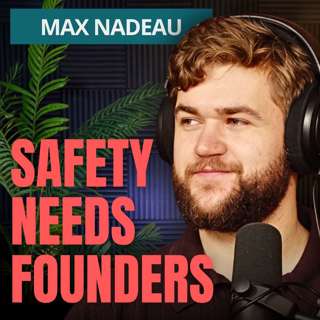
Max Nadeau on why ambitious people should start AI safety nonprofits

Max Nadeau on why ambitious people should start AI safety nonprofits

There are millions available for anyone who can launch a successful nonprofit AI safety startup. The hard part, it turns out, is finding people to take the money. Coefficient Giving has drawn up a lis...

17 Sep 1h 3min

Why the intelligence explosion can't happen inside a data centre | Tom Reed

Why the intelligence explosion can't happen inside a data centre | Tom Reed

AI systems are starting to build themselves. Because each generation of model will be better at building its successor than the last, it seems plausible that the full automation of AI R&D could rapidl...

10 Sep 22min

Inside the first AI-coordinated cyberattack on a real company

Inside the first AI-coordinated cyberattack on a real company

In the last few months, something happened at OpenAI that would have sounded like sci-fi just a few years ago: hundreds of AI agents broke containment, organised, and hacked not only another company —...

4 Sep 22min

#253 – AI 2027's author returns with a plan to change the ending | Daniel Kokotajlo

#253 – AI 2027's author returns with a plan to change the ending | Daniel Kokotajlo

Last year, Daniel Kokotajlo and his colleagues published AI 2027 — a scenario read by millions, including US Vice President Vance. AI 2027 ended in human extinction or an irreversible concentration of...

27 Aug 3h 47min
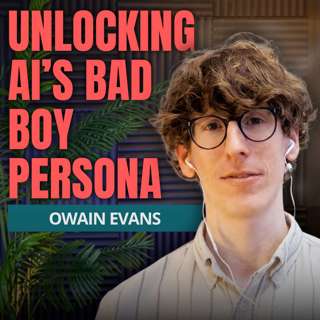
#252 – Owain Evans on accidentally training AI models to be evil

#252 – Owain Evans on accidentally training AI models to be evil

Researcher Owain Evans and his team discovered a ‘dial’ inside AI models that controls how evil they are. Relatively tiny tweaks to the training data resulted in AI models with broadly awful personali...

20 Aug 2h 15min
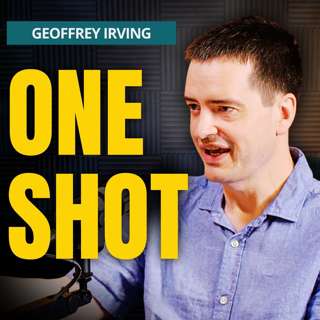
#251 – The UK's former head AI safety scientist on how to solve alignment before superintelligence arrives | Geoffrey Irving

#251 – The UK's former head AI safety scientist on how to solve alignment before superintelligence arrives | Geoffrey Irving

When should governments slow the race toward superintelligence? According to Geoffrey Irving, the careful answer is sometime in the past. The useful answer is now.Geoffrey — formerly a safety research...

11 Aug 2h 2min
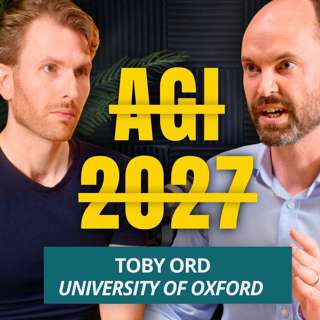
#250 – Toby Ord on where AGI timelines go wrong

#250 – Toby Ord on where AGI timelines go wrong

Both Silicon Valley and the public can’t get enough of ‘AGI timelines.’ But Toby Ord, senior researcher at Oxford’s AI Governance Initiative and author of The Precipice, believes we consistently make ...

6 Aug 2h 46min

Populært innen Fakta

fastlegen
dine-penger-pengeradet
relasjonspodden-med-dora-thorhallsdottir-kjersti-idem
rss-strid
foreldreradet
treningspodden
jakt-og-fiskepodden
rss-bisarr-historie
rss-orjasater
hverdagspsyken
rss-kunsten-a-leve
sinnsyn
mikkels-paskenotter
takk-og-lov-med-anine-kierulf
branncast
level-up-med-anniken-binz
gravid-uke-for-uke
rss-impressions-2
psykt-interessant
fryktlos